

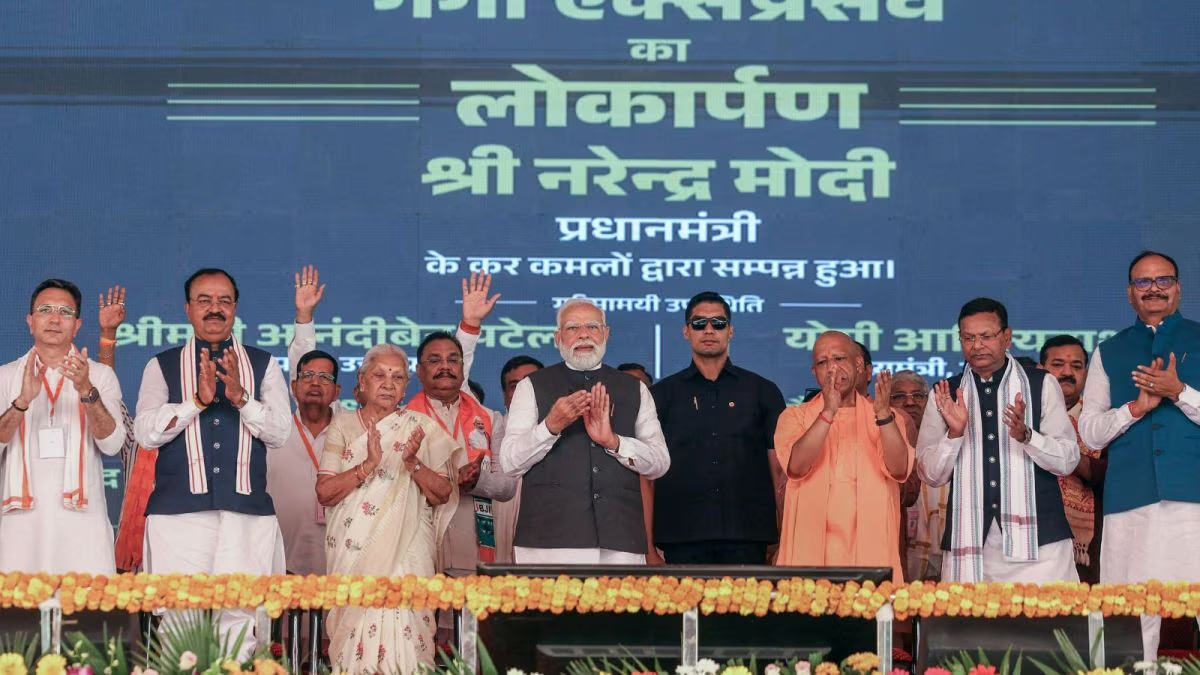
April 30, 2026 – In a historic move that signals a tectonic shift in Northern India’s infrastructure landscape, Prime Minister Narendra Modi officially inaugurated the 594-km-long Ganga Expressway on April 29, 2026. This mega-project, constructed at an estimated cost of ₹36,230 crore, now stands as one of India’s longest access-controlled greenfield expressways, seamlessly linking the western gateway of Meerut to the spiritual heart of Prayagraj.
Addressing a massive gathering in Hardoi, the Prime Minister described the expressway as the “identity of a New Uttar Pradesh.” He emphasized that just as the holy River Ganga has been the spiritual lifeline of India for millennia, this modern “Ganga of Asphalt” would become the economic lifeline for the state’s 240 million residents.
Bridging the Gap: From 12 Hours to 6
For decades, the journey from Meerut in Western UP to Prayagraj in the East was a grueling 12-hour ordeal through congested state highways and narrow town roads. With the opening of the Ganga Expressway, that travel time has been effectively slashed by half.
Commuters can now cover the distance in a mere 6 to 7 hours, maintained by a design speed of 120 km/h. This isn’t just a win for travelers; it is a revolution for the movement of perishable agricultural goods and industrial freight across the state.
The Route: 12 Districts, 519 Villages
The expressway begins at Bijauli village in Meerut and culminates at Judapur Dandu village in Prayagraj. It acts as a high-speed corridor weaving through the heart of Uttar Pradesh, touching 12 key districts:
- Meerut
- Hapur
- Bulandshahr
- Amroha
- Sambhal
- Budaun
- Shahjahanpur (Featuring a 3.5 km emergency airstrip)
- Hardoi
- Unnao
- Raebareli
- Pratapgarh
- Prayagraj
- Engineering Marvels and Strategic Features
The Ganga Expressway is more than just a road; it is a masterclass in modern civil engineering. Built on a Public-Private Partnership (PPP) model, the project utilized “Swiss technology” to monitor and rectify road defects in real-time.
Key Technical Specifications:
| Feature | Details |
|---|---|
| Total Length | 594.27 km |
| Lanes | 6 Lanes (Expandable to 8) |
| Right of Way (ROW) | 120 Meters |
| Major Bridges | 14 (Including crossings over Ganga and Ramganga) |
| Structures | 28 Flyovers, 7 Railway Overbridges, and 380+ Underpasses |
The Shahjahanpur Airstrip
One of the most talked-about features is the 3.5-kilometer emergency landing strip in Shahjahanpur. Designed to handle heavy transport planes and fighter jets like the Su-30MKI and Mirage 2000, this stretch doubles as a strategic asset for the Indian Air Force (IAF), ensuring national security readiness in the heart of the country.
An Economic Engine for $1 Trillion Goal
Chief Minister Yogi Adityanath, present at the inauguration, highlighted that the expressway is a cornerstone of UP’s mission to become a $1 trillion economy. The state government has identified 27 locations along the route for integrated industrial clusters and logistics hubs.
- Boost to Agriculture: Farmers in Hardoi and Budaun—often called the “potato and grain belts”—now have direct, high-speed access to the massive markets of the National Capital Region (NCR).
- Real Estate Boom: Property experts anticipate a 25–40% appreciation in land values in cities like Meerut and Prayagraj over the next three years as connectivity to the upcoming Noida International Airport at Jewar becomes more seamless.
- Religious Tourism: The corridor links major pilgrimage centers. Devotees traveling from Delhi or Haridwar can now reach the Sangam in Prayagraj or proceed toward Varanasi and Kashi with unprecedented ease.
“These expressways are not just roads; they are the foundations of social justice. They ensure that a youth in Badaun or a farmer in Pratapgarh has the same opportunities as someone living in Delhi.” — PM Narendra Modi
Environmental and Social Impact
While the project required the acquisition of approximately 6,500 hectares of land, it was completed with the cooperation of over one lakh farmers. To balance the environmental footprint, the Uttar Pradesh Expressways Industrial Development Authority (UPEIDA) has committed to extensive “green belt” development along the entire stretch, planting lakhs of trees to create a natural canopy.
The expressway is also equipped with Advanced Traffic Management Systems (ATMS), emergency trauma centers, and helipads for air ambulances, prioritizing passenger safety above all else.
What’s Next? Phase 2 and Beyond
The inauguration marks the completion of Phase 1. Plans are already in motion for Phase 2, which intends to extend the expressway further:
- Westward: From Meerut to the border of Uttarakhand (near Haridwar).
- Eastward: From Prayagraj to Ballia, linking with the Purvanchal Expressway.
Once these extensions are complete, the Ganga Expressway will serve as a continuous high-speed artery stretching from the western borders of the state to the easternmost edge, cementing Uttar Pradesh’s status as the “Expressway Capital of India.”
As the first toll-paying vehicles began their journey today, the atmosphere was one of celebration. For the millions living along the banks of the Ganga, the distance to the future just got a whole lot shorter.