

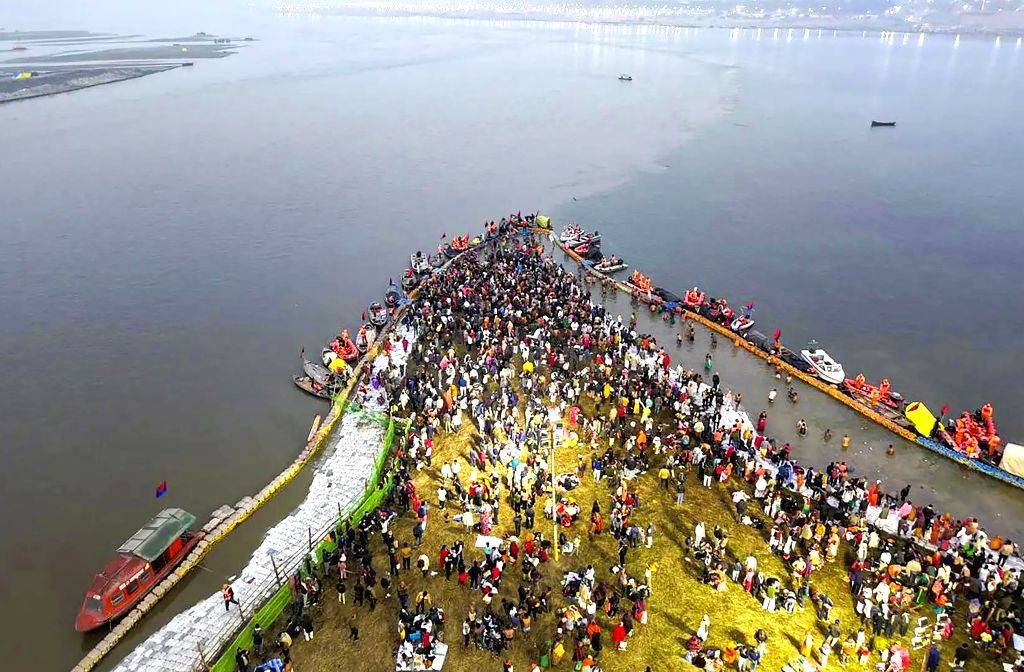
New Delhi, january 13, 2026: As the sun rises over the misty banks of the Triveni Sangam, recent aerial footage has captured a breathtaking spectacle of faith: a sprawling city of tents and millions of devotees gathered for the Magh Mela 2026. The annual 44-day pilgrimage, which officially commenced on January 3 with the Paush Purnima dip, has transformed the riverbanks into a vibrant tapestry of spirituality and tradition.
From the sky, the confluence of the Ganga, Yamuna, and the mythical Saraswati appears as a shimmering focal point for the massive influx of pilgrims. The “Zero Animal Zone” initiative is clearly visible in the orderly movement of crowds across the 800-hectare fairground, a significant expansion from previous years designed to enhance safety and cleanliness.
A City Built on Sand
The Magh Mela is often described as a “Mini Kumbh,” and this year’s scale justifies the title. The Uttar Pradesh government has invested nearly ₹120 crore to develop the infrastructure. Aerial views showcase a meticulously planned grid of:
- Pontoon Bridges: Temporary floating bridges connecting the different sectors of the Mela.
- Tent Cities: Thousands of colorful tents housing Kalpavasis—devotees who live a life of austerity by the river for the entire month.
- LED Illumination: As dusk falls, the entire Mela area lights up, resembling a “City of Stars” from above.
Safety and Modern Governance
While the roots of the festival are ancient, the management is cutting-edge. The administration has deployed AI-powered surveillance and drone monitoring to manage the dense crowds. For the first time, the entire area has been divided into sub-sectors (like 1 and 1A) to prevent bottlenecks.
Medical preparedness is also at an all-time high, with two 20-bed hospitals and over 50 ambulances stationed within the Mela grounds to handle emergencies. Despite the “bone-chilling” January cold, the spirit of the pilgrims remains undeterred.
Key Upcoming Dates
The Mela is currently building momentum toward the most auspicious bathing dates. If you are planning a visit, keep these high-traffic days in mind:
| Auspicious Occasion | Date (2026) | Significance |
| Makar Sankranti | January 14 | The first “Shahi Snan” (Royal Bath) |
| Mauni Amavasya | January 18 | The most sacred and crowded day of the fair |
| Basant Panchami | January 23 | Celebration of spring and Goddess Saraswati |
| Maghi Purnima | February 1 | Completion of the month-long Kalpvas vow |
| Mahashivratri | February 15 | The final ritual dip and closing of the Mela |
A Spiritual Legacy
Beyond the rituals, the Magh Mela serves as a cultural hub. Visitors can witness daily Ganga Aarti, listen to discourses by renowned saints, and explore various Akharas. For many, the aerial view of millions of people moving in harmony toward the water is a powerful reminder of India’s enduring spiritual heritage.
Whether you are a devout pilgrim or a curious traveler, the Magh Mela 2026 offers a unique glimpse into a world where faith transcends the physical challenges of the elements.