

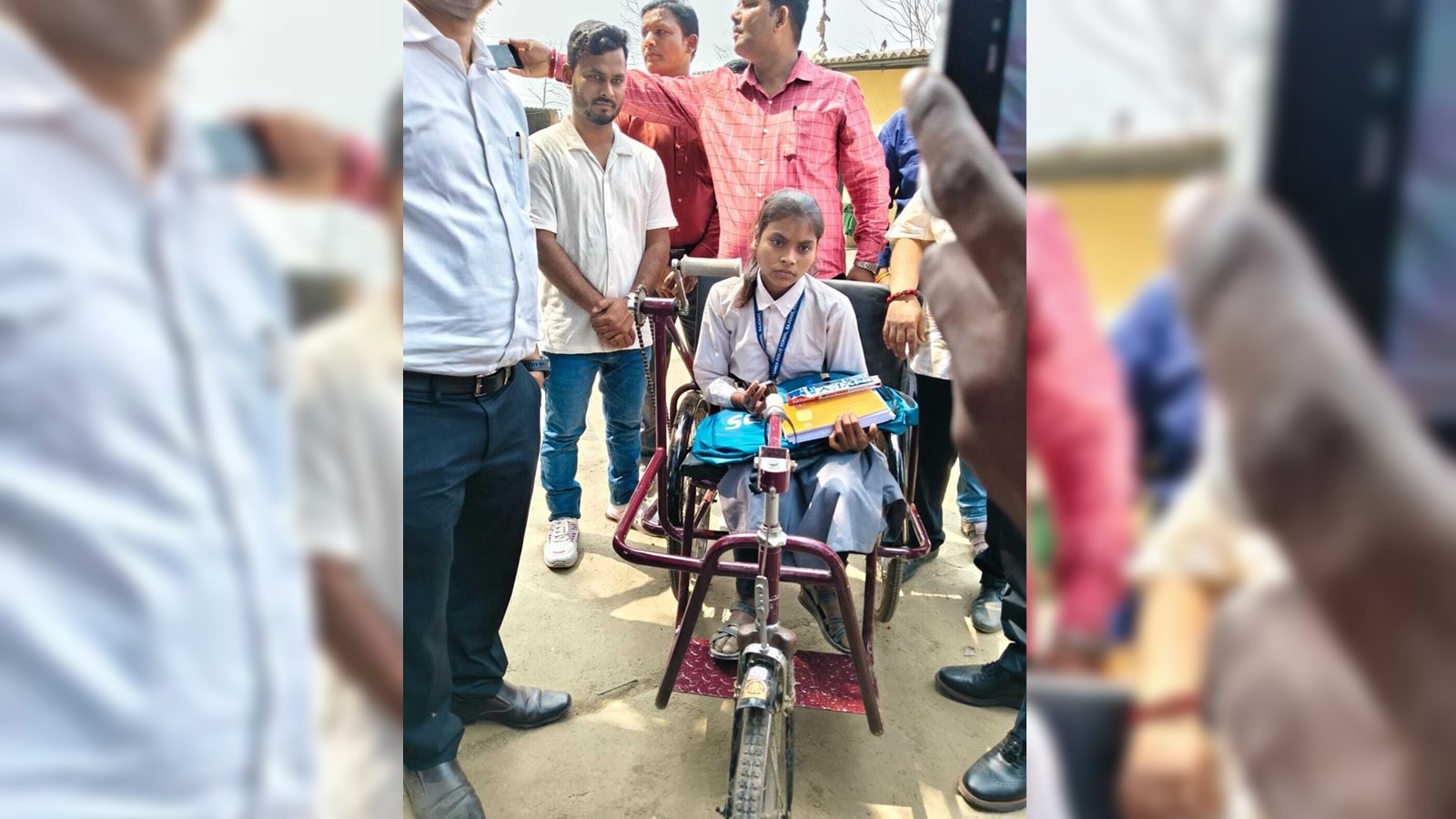
New Delhi, March 18, 2026: A significant wave of public sympathy followed by sharp disappointment has been triggered across Bihar following the update on a young disabled student’s journey. In the initial footage, which gained massive traction in mid-March 2026, 15-year-old Soni Kumari from Gopalganj was observed dragging herself nearly two kilometers to reach her school. It is noted that following the viral success of the video, district officials moved swiftly to provide her with a manual tricycle to ease her commute. This startling visual of a “quick fix” was initially celebrated as a primary victory for social media activism in the state.
The Mechanics of a Rapid Failure
The specifics of the vehicle’s quality and its subsequent breakdown are being meticulously discussed by local residents and social activists. It is observed in recent reports that within only a few days of being handed over by the administration, the tricycle became completely unusable. It is reported by several digital observers that a broken handle and damaged tires were discovered, rendering the “gift” a useless piece of scrap in the girl’s courtyard. The visual of the abandoned, broken vehicle has provided a grounding narrative for the broader discussion regarding the subpar quality of government-issued aid for the disabled.
Also Read: Netanyahu Mocks Death Rumors in New Video with US Ambassador
Social Media Reacts: A Symphony of Outrage and Demand for Quality
A massive conversation regarding “photo-op politics” and the lack of accountability in social welfare has been ignited by this digital revelation. It is noted that the video of the broken tricycle was met with an outpouring of angry comments, with many netizens remarking that “giving a broken tool is worse than giving no help at all.” The local administration is being widely criticized for prioritizing social media photographs over the actual durability of the equipment provided to a vulnerable child. Thousands of analytical comments have been left by users who expressed their frustration, stating that such incidents serve as a stark reminder of the systemic apathy that often follows a viral moment.
Impact on the Student’s Unwavering Resolve
The impact of this failure has extended beyond simple mechanical issues to highlight the incredible resilience of the student herself. It is frequently mentioned by her family that despite the tricycle being broken, Soni’s determination to attend her Class 1 lessons remains unshaken. A renewed sense of urgency is being observed among independent donors and actors like Sonu Sood, who had previously offered more sustainable assistance. It is believed that the viral nature of this specific “Broken Tricycle Video” will prompt a dialogue on the necessity of providing high-quality, long-lasting support rather than temporary, low-grade solutions.
A Stark Reminder of Accountability in Aid
As the situation continues to develop in late March 2026, it serves as a powerful and resilient reminder that a “viral fix” is rarely a permanent solution. It is believed that the story of “Soni’s Broken Tricycle” will remain a primary highlight of the month’s most discussed and socially relevant news features. The legacy of this viral event is expected to be a heightened public awareness of the need for rigorous quality checks on government-distributed medical aids. Until a durable and motorized solution is provided, this story remains a stark testament to the fact that for many,