

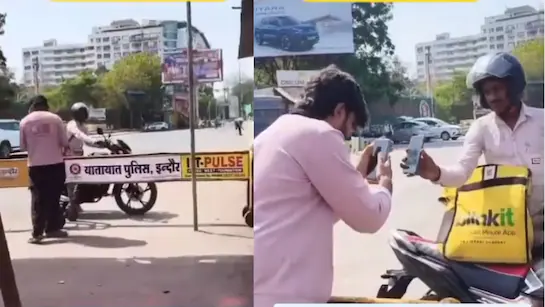
New Delhi, March 20, 2026: A significant wave of digital amusement and debate has been triggered across India following a viral video involving a quick-thinking motorcyclist and a rapid delivery service. In the footage, which gained massive traction on March 17, 2026, a biker in Indore was observed being pulled over by traffic police during a routine helmet check. It is noted that instead of paying a fine or engaging in an argument, the rider immediately turned to his smartphone to find a “technological” workaround. This startlingly resourceful act has been widely shared as a primary example of how quick-commerce is changing everyday urban interactions.
The Mechanics of the “Spot Delivery” Escape
The specifics of the interaction were meticulously captured by bystanders and have since been discussed by millions online. It is observed in the viral reports that the biker placed an order for a new helmet through the delivery app Blinkit while still standing at the police checkpoint. It is reported by several digital observers that a delivery executive arrived at the exact location within minutes, handing over the package directly to the rider in front of the surprised traffic officials. The visual of the biker unboxing and wearing the brand-new gear on the spot has provided a grounding narrative for the phrase “Blinkit serves faster than a challan.”
Also Read: Afroman Secures Legal Victory in Music Video Defamation Trial
Netizens React: Efficiency vs. Safety Ethics
A massive conversation regarding “Indian Jugaad” and “delivery speed” has been ignited by this digital revelation. It is noted that while some users praised the rider’s presence of mind and the app’s efficiency, others raised serious concerns about the trivialization of road safety rules. The incident is being widely discussed as a reflection of a mindset where regulations are viewed as obstacles to be bypassed rather than life-saving measures. Thousands of analytical comments have been left by users who expressed that while the “10-minute delivery” was impressive, the “common sense” to wear a helmet should have arrived before the bike was even started.
Impact on Traffic Enforcement and Startup Services
The impact of this viral event has extended beyond the meme to influence a broader discussion on the role of startups in public life in 2026. It is frequently mentioned by tech analysts that such “real-world use cases” serve as free marketing for quick-commerce platforms, highlighting their reliability in crunch situations. However, a renewed sense of scrutiny is being observed from traffic authorities, who argue that the primary goal of a checkpoint is to ensure safe habits, not just to collect revenue. It is believed that the viral nature of this specific “Blinkit Helmet Video” will prompt a dialogue on whether offenders should be allowed to rectify their mistakes on the spot to avoid a penalty.
A Stark Reminder of Personal Responsibility
As the footage continues to circulate in late March 2026, it serves as a powerful and resilient reminder that technology can provide a cure, but it cannot replace prevention. It is believed that the account of the “Indore Biker’s Quick Buy” will remain a primary highlight of the month’s most discussed and socially polarizing viral features. The legacy of this viral event is expected to be a heightened public awareness of the incredible speed of Indian logistics. Until the next “jugaad” goes viral, this story remains a stark testament to the fact that while a fine can be avoided in ten minutes, the consequences of an accident can last a lifetime.