
 Bill, 2026—a legislative package aimed at implementing 33% reservation for women in the Lok Sabha)
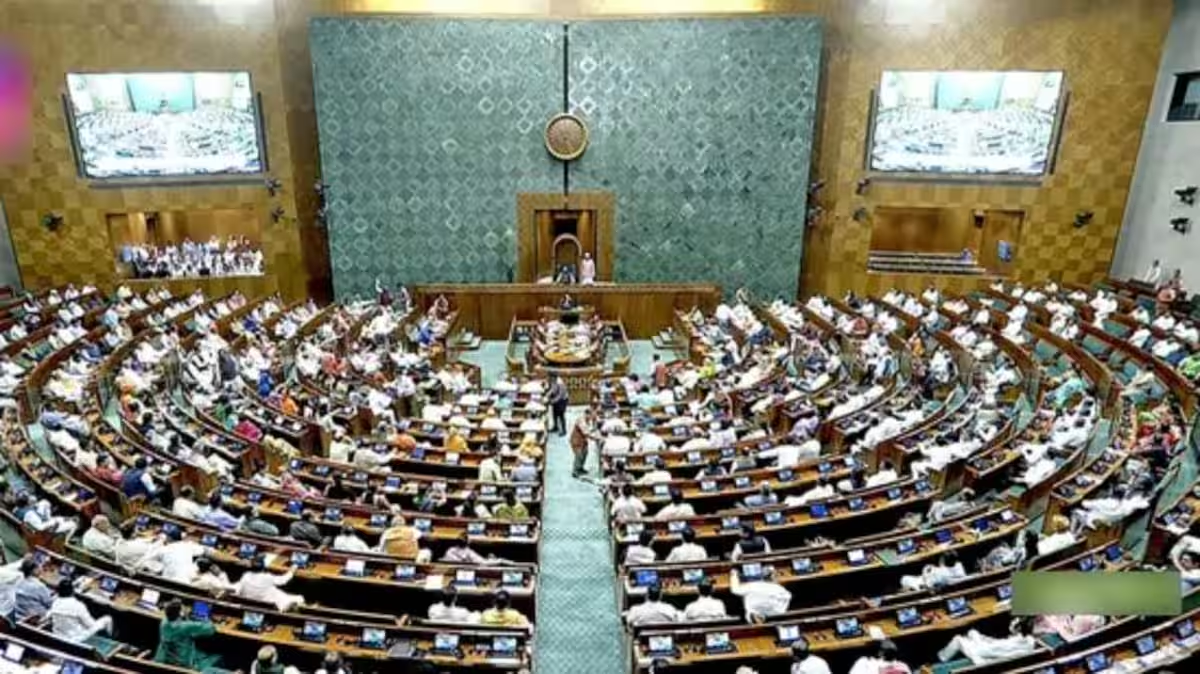
On April 18, 2026, the Constitution (131st Amendment) Bill, 2026—a legislative package aimed at implementing 33% reservation for women in the Lok Sabha through a major delimitation exercise—failed to pass in the Lok Sabha.
The bill required a two-thirds majority of members present and voting to pass (as it was a constitutional amendment). The final tally was 298 votes in favour and 230 against, falling short of the 352 votes required.
The conflicting claims of victory stem from the different political narratives each side is building around the event:
The Government (NDA) Position: “Opposition as Obstructionist”
The ruling BJP-led government is framing the defeat as a deliberate act of sabotage by the opposition, effectively positioning the episode as a campaign issue for the future.
- “Anti-Women” Narrative: The government has accused the opposition (specifically Congress, TMC, DMK, and Samajwadi Party) of being “anti-women” and denying the country’s female population their rightful representation.
- Political Strategy: Home Minister Amit Shah and other leaders warned that the opposition will face the “wrath of women” in upcoming elections. The government’s goal is to simplify the complex debate into a binary choice: those who want to empower women versus those who blocked it.
- Narrative of Governance: They are using the defeat to paint the opposition as a group that prioritizes narrow political interests over national progress.
Also Read: TCS Nashik Controversy: Clarifying the ‘HR Head’ Claim Amid Ongoing Probe
The Opposition (INDIA Bloc) Position: “Defending Democracy”
The opposition parties are framing the outcome as a major victory for the Constitution, arguing that they succeeded in stopping what they viewed as a Trojan horse.
- Delinking Reservation from Delimitation: The opposition consistently argued they are not against women’s reservation, but against the mechanism proposed. They claimed the government was using women’s reservation as a “mask” to force through a controversial delimitation exercise (based on the 2011 Census), which they fear would politically disadvantage certain regions of India.
- Unified Resistance: The opposition views the defeat as a rare and successful instance of coalition unity, proving they can effectively challenge the government on major constitutional amendments.
- “Unconstitutional Trick”: Figures like Rahul Gandhi and Priyanka Gandhi have characterized the defeat as a “big win for democracy,” arguing they successfully blocked an attempt to reshape India’s political structure under the guise of empowerment.
Key Takeaway
The failure of the bill has created a political deadlock. The government intends to take the issue directly to the public to pressure the opposition, while the opposition is holding firm on its demand to implement women’s reservation without linking it to the contentious delimitation process. Following the defeat, the government withdrew two related bills (the Delimitation Bill, 2026, and the Union Territories Laws (Amendment) Bill, 2026), further stalling the package.