

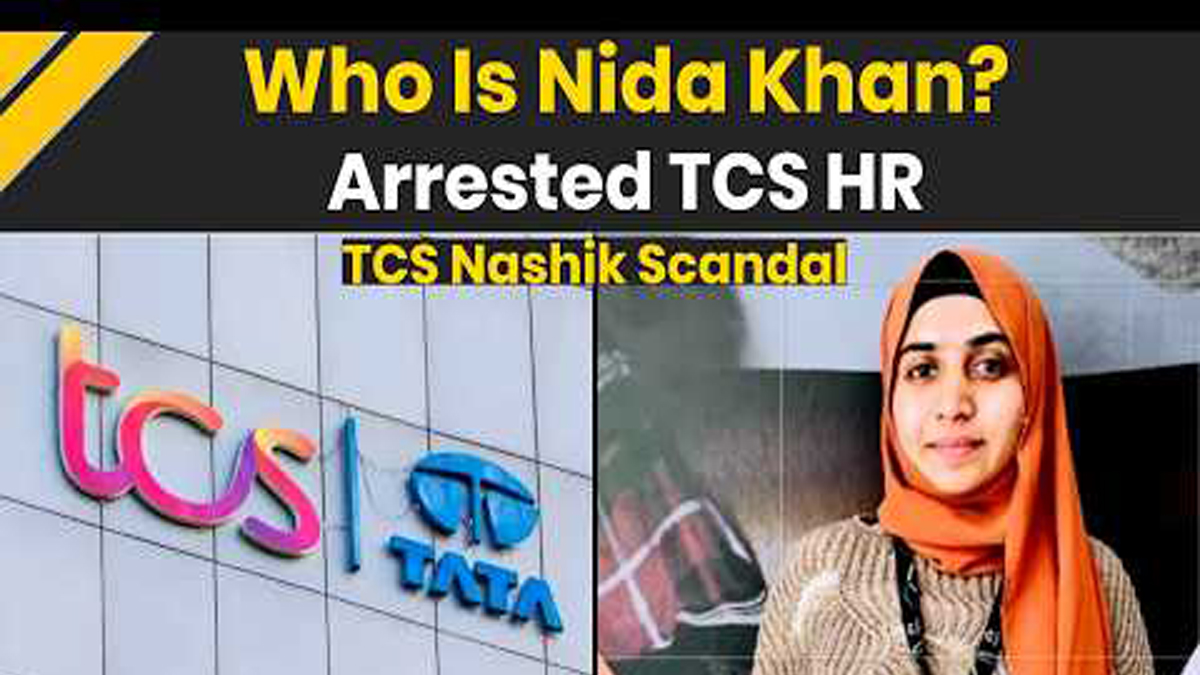
April 18, 2026 — As investigations continue into the disturbing allegations of workplace harassment and coerced religious conversion at a TCS-affiliated Business Process Outsourcing (BPO) unit in Nashik, a significant point of contention has been clarified by the company and investigative reports: the professional designation of one of the key accused, Nida Khan.
Amid the viral spread of claims on social media naming Nida Khan as the “HR Head” who allegedly facilitated a culture of coercion and ignored employee grievances, Tata Consultancy Services (TCS) and associated investigative reports have moved to correct the record.
The Misconception: Telecaller, Not HR Head
As the scandal began to unfold earlier this week, social media platforms were flooded with posts identifying a woman named Nida Khan as the “HR Head” of the Nashik unit. The narrative suggested that she held a position of significant power, which she allegedly used to intimidate subordinates and suppress internal complaints regarding sexual harassment and religious pressure.
However, recent reports and statements from those close to the investigation have revealed that this characterization is inaccurate. Sources have confirmed that Nida Khan is not an HR professional; rather, she was employed as a telecaller at the facility.
Her family has also publicly contested the accusations, stating that the 26-year-old was a junior employee and was not in any position to oversee HR policies or internal grievance redressal. Her family further noted that she had moved to Mumbai earlier this year and was shocked to find her name linked to such a grave scandal. They maintain that her involvement, if any, has been grossly misrepresented by the viral nature of the allegations.
TCS Stance: “No Internal Complaints Received”
One of the central questions in this case has been why, if these incidents of harassment were occurring, the company’s internal grievance redressal mechanisms did not flag them.
In its response to the mounting public pressure and the ongoing police probe, TCS has stated that it had not received any formal internal complaints regarding the specific allegations of forced conversion or systemic sexual harassment prior to the police investigation. This statement highlights a common challenge in large-scale corporate environments: the gap between the existence of internal reporting channels and their actual usage by employees who may feel intimidated or unaware of their rights.
TCS has reiterated its commitment to a “zero-tolerance” policy regarding harassment and has pledged full cooperation with law enforcement agencies. The company has also initiated its own internal investigation, reportedly engaging external legal firms to ensure impartiality.
The Core of the Investigation
The controversy first made headlines following an FIR registered by Nashik police based on a complaint from a 23-year-old employee. The complainant alleged that she was subjected to sexual harassment by a senior colleague, who she claimed had hidden his marital status to lure her into a relationship.
As the police probe widened, the allegations escalated to include claims of a “gang-like” operation within the office. According to police reports, multiple victims have since come forward, alleging:
- Forced Religious Conversion: Coercion to follow specific religious practices and pressure to adopt a different faith.
- Harassment: Accounts of verbal abuse, including disparaging remarks about Hindu deities and traditions.
- Intimidation: Allegations that senior staff—some of whom have already been arrested—used their professional authority to create a hostile environment, specifically targeting women employees between the ages of 18 and 25.
To date, police have arrested eight individuals, including seven men and one woman. The investigation has drawn the attention of the National Commission for Women (NCW), which has taken suo motu cognizance of the case, and there are growing calls for strict legal action to be taken against all perpetrators.
Corporate Accountability and POSH Compliance
The TCS Nashik case has sparked a broader, nationwide debate regarding workplace safety and the efficacy of the Prevention of Sexual Harassment (POSH) Act in India’s IT and BPO sectors.
While companies often highlight their robust POSH training and grievance portals in annual disclosures, experts argue that the existence of these systems is insufficient if employees do not feel safe enough to use them. The delay in reporting in this instance—or the alleged suppression of complaints—serves as a stark reminder of the vulnerability of young employees in high-pressure, target-driven work environments.
Industry observers note that the increase in harassment complaints seen in annual reports across the IT sector in recent years may not necessarily reflect a rise in total incidents, but rather an improvement in systemic awareness and reporting. However, cases like the one in Nashik expose the severe “blind spots” that can still persist within the administrative layers of large organizations.
Also Read: Jubin Nautiyal Marries Childhood Sweetheart in Intimate Uttarakhand Ceremony: A Private Affair
Current Status
The situation at the Nashik unit remains fluid. While there were initial reports of the office being shut down, sources indicate that operations have continued with employees given the flexibility to work from home.
As the police continue their interrogations and the judicial process begins to take its course, the focus remains on ensuring justice for the victims. For TCS, the challenge lies not only in cooperating with the law but in restoring the trust of its workforce—a process that will require a transparent and thorough examination of how such serious allegations could have gone unnoticed by the local management structure for as long as they allegedly did.
As of Saturday, April 18, the case remains under active investigation, with the oversight panel established by the company working alongside law enforcement to uncover the full scope of the activities at the center of the controversy.