

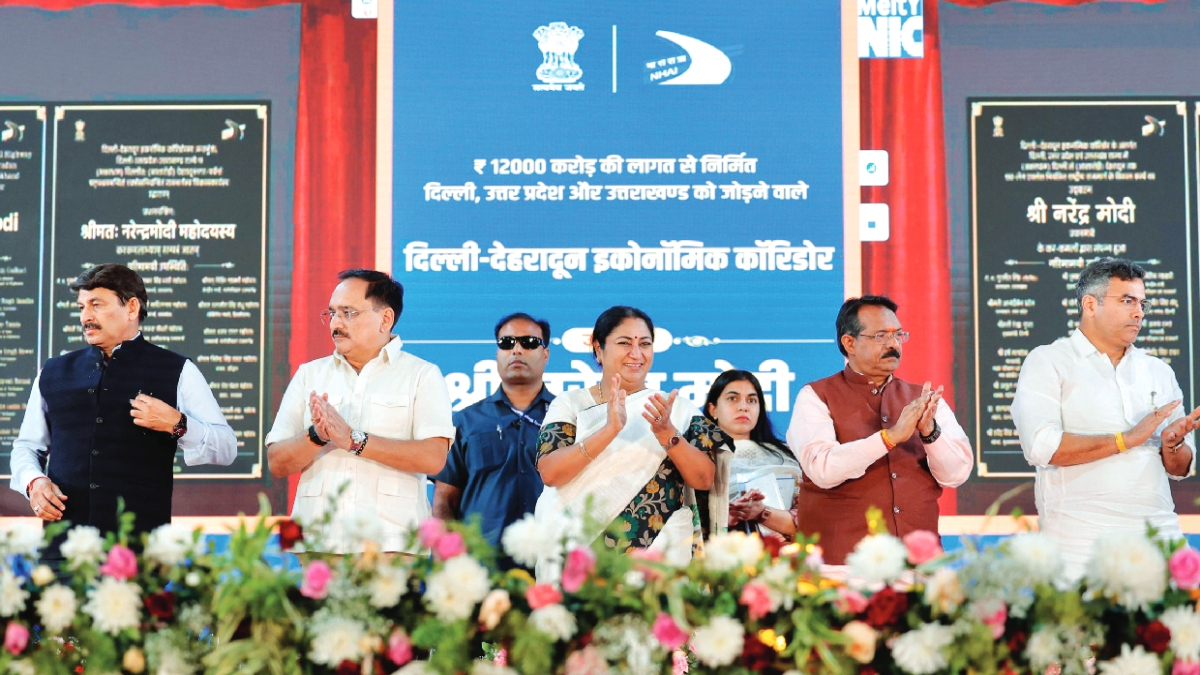
New Delhi, April 15, 2026 – In a move signaling a transformative shift in North India’s logistics and travel landscape, Delhi Chief Minister Rekha Gupta on Tuesday lauded Prime Minister Narendra Modi’s relentless infrastructure push, headlined by the grand inauguration of the Delhi-Dehradun Economic Corridor.
Speaking virtually during the inauguration ceremony held on the birth anniversary of Dr. B.R. Ambedkar, Chief Minister Gupta described the project as more than just a roadway; she called it a “confluence of development and faith” that bridges the modern infrastructure of the national capital with the spiritual heart of Uttarakhand.
The expressway, built at an estimated cost of ₹12,000 crore, is expected to slash travel time between Delhi and Dehradun from the current grueling six to seven hours to a mere 2.5 hours. For the millions of commuters, pilgrims, and logistics operators who frequent this route, the opening marks the end of decades of traffic congestion and the beginning of a high-speed era.
A Vision for a ‘Viksit Bharat’
CM Rekha Gupta, joined by Cabinet Ministers and Delhi BJP Chief Virendra Sachdeva, emphasized that the completion of this 210-km corridor is a pivotal milestone in the Prime Minister’s vision of a Viksit Bharat (Developed India).
“This is a special and auspicious occasion. The Prime Minister has spearheaded multiple projects aligned with Delhi’s growing needs, reshaping our urban landscape. Under his leadership, Delhi’s transformation is no longer a plan on paper—it is visible on the ground,” Gupta stated.
The Chief Minister noted that the national capital is currently the site of massive infrastructure investment, with projects worth nearly ₹1.25 lakh crore underway under the Union Ministry of Road Transport and Highways. She highlighted that the “double-engine governance”—referring to the synergy between the Central government and the Delhi administration—is the primary catalyst for this accelerated pace of development.
Engineering Marvel: Speed Meets Sustainability
The Delhi-Dehradun Expressway is not just a feat of speed; it is being hailed as a benchmark for environmentally conscious engineering.
A standout feature of the project is Asia’s largest elevated wildlife corridor, spanning 12 kilometers through the Shivalik forest range and Rajaji National Park. This section allows for the unhindered movement of wildlife, including elephants and leopards, beneath the highway, effectively eliminating the risk of animal-vehicle collisions.
LG TS Sandhu, who also attended the event, pointed out the project’s commitment to sustainability:
- Decongestion: The seamless, signal-free connectivity starting from Akshardham, Geeta Colony, and Shastri Park will significantly reduce the traffic load on Delhi’s internal arterial roads.
- Waste to Wealth: In a remarkable display of circular economy principles, nearly one million metric tonnes of waste from the Ghazipur landfill were processed and used in the construction of the expressway.
Economic and Social Impact
The ripple effects of the expressway are expected to be felt across multiple sectors:
1. Tourism and Spirituality
The “Devbhoomi” of Uttarakhand, home to Haridwar and Rishikesh, will now be accessible to weekend travelers from Delhi with unprecedented ease. This is expected to provide a massive boost to the hospitality and tourism sectors in both states.
2. Regional Trade and Industry
The Saharanpur-Baghpat-Dehradun belt is a hub for agriculture and small-scale industries. The reduction in transit time will lower logistics costs, making local produce more competitive in the national capital’s markets.
3. Real Estate and Urban Growth
The first phase of the expressway, connecting Akshardham to Baghpat, has already reduced travel time to that sector from two hours to just 25 minutes. This shift is expected to trigger a real estate surge in the outskirts of Delhi and along the corridor.
Comparing the Growth: 2014 vs. 2026
During her address, CM Rekha Gupta provided a statistical perspective on India’s infrastructure journey over the last decade. She noted that since 2014, the national highway network has grown from approximately 51,000 km to nearly 1,46,000 km. Furthermore, India’s expressway and high-speed corridor network has now expanded to over 3,000 km.
“Infrastructure is the backbone of any economy,” Gupta said. “The fact that around 73,000 vehicles are now bypassing Delhi daily due to peripheral expressways is proof of how strategic planning is improving the quality of life for our citizens by reducing pollution and travel time.”
Looking Ahead: The Road to 2027
The inauguration of the Dehradun corridor comes on the heels of CM Rekha Gupta’s presentation of a ₹1.03 lakh crore “Green Budget” for Delhi for the 2026–27 fiscal year.
The Chief Minister confirmed that more projects are in the pipeline to complement the new expressway. One such project is the proposed ₹5,000 crore elevated road along the Munak Canal, which aims to further streamline traffic flow within the city. Additionally, several key roads have been handed over to the National Highways Authority of India (NHAI) for maintenance and upgrades to ensure they match the international standards set by the new expressway.
Conclusion
As the first fleet of vehicles began their journey on the 210-km stretch this Tuesday, the mood in the capital was one of optimism. The Delhi-Dehradun Expressway stands as a testament to modern Indian engineering—balancing the urgent need for speed and economic connectivity with a deep-seated respect for the environment and spiritual heritage.
For CM Rekha Gupta, this project is a victory for “governance over politics.” For the average citizen, however, it is something much simpler: the gift of time. In a city that never stops, the ability to reach the serene hills of Dehradun in under three hours is a luxury that has finally become a reality.
At a Glance: The Delhi-Dehradun Expressway
| Feature | Details |
| Total Length | 210 km |
| Total Cost | ~ ₹12,000 Crore |
| Travel Time | Reduced from 6.5 hours to 2.5 hours |
| Key Entry Point | Akshardham, Delhi |
| Wildlife Protection | 12-km elevated corridor (Asia’s largest) |
| Environmental Impact | Used 1 million tonnes of Ghazipur landfill waste |
| Connectivity | Connects Delhi, Baghpat, Saharanpur, and Dehradun |