

New Delhi, April 25, 2026 — The diplomatic machinery of the United States and Iran has converged on the Pakistani capital this weekend, setting the stage for what officials hope could be a path to de-escalation, yet observers remain cautious as the prospects for direct dialogue remain clouded by uncertainty.
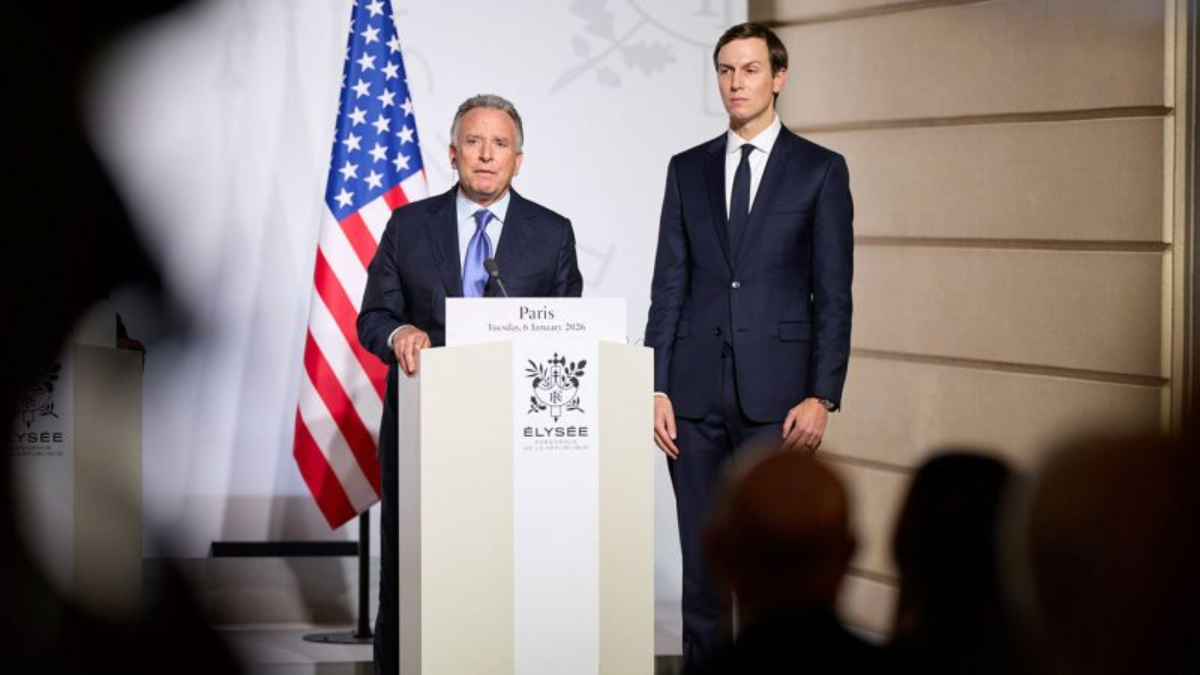
On Saturday morning, April 25, 2026, U.S. Special Envoy Steve Witkoff and former senior White House advisor Jared Kushner arrived in Islamabad. Their mission, confirmed by White House Press Secretary Karoline Leavitt on Friday, is to engage in a new round of talks aimed at addressing the ongoing conflict between the United States and Iran. However, as the delegation landed, the primary question lingering over the diplomatic proceedings is whether the parties involved are actually prepared to sit across from one another.
A High-Stakes Mission
The visit comes at a precarious moment in the broader West Asian conflict. Tensions have remained elevated for months, with global energy markets shaken by disruptions in the Strait of Hormuz and a U.S.-led naval blockade of Iranian ports.
President Donald Trump, who has been navigating a complex strategy of pressure and limited diplomatic overtures, unilaterally extended a two-week ceasefire with Iran earlier this week. The extension was seen as a deliberate 11th-hour move to create a “diplomatic window,” providing negotiators the space to pivot from battlefield tactics to the bargaining table.
“The Iranians want to talk,” Leavitt told reporters at the White House on Friday, framing the mission as a direct response to perceived progress. “They want to talk in person, and the president is always willing to give diplomacy a chance. We hope progress will be made.”
The U.S. delegation, led by Witkoff and Kushner, carries the weight of a presidency that has oscillated between firm warnings of economic collapse for Tehran and a stated desire to avoid a wider, uncontrollable war. Vice President J.D. Vance, who spearheaded the first, ultimately unsuccessful round of talks earlier this month, remains in the United States on “standby,” ready to join the delegation if initial discussions show promise.
The Iranian Narrative: A Cautious Approach
If the White House is projecting optimism, the Iranian government is projecting skepticism. As news of the American envoys’ departure broke, officials in Tehran appeared to move in the opposite direction.
Iranian Foreign Minister Abbas Araghchi, who also arrived in Islamabad on Friday, has maintained a disciplined public stance. Iranian state media and official spokespeople have pushed back against the narrative of a pre-planned U.S.-Iran summit. Esmaeil Baqaei, the Iranian Foreign Ministry spokesperson, stated clearly on social media that no meeting with the U.S. delegation was on the agenda.
“FM Araghchi will be meeting with Pakistani high-level officials in concert with their ongoing mediation,” Baqaei stated. The implication is that any potential communication between Washington and Tehran will be strictly indirect, likely conducted through the good offices of the Pakistani government.
For the Iranian leadership, the optics of these talks are as important as the substance. Engaging in direct negotiations could be seen domestically as a concession under the pressure of the U.S. naval blockade and the recent string of military losses. By keeping the talks mediated, Tehran avoids the appearance of direct compliance while still testing the U.S. position.
Also Read: Viral Clip of “Gay Music” Played for Unborn Baby
Why Islamabad?
The choice of Islamabad as the venue for this diplomatic drama is not accidental. Pakistan has long maintained a delicate balancing act in regional geopolitics, seeking to preserve strong ties with both the United States and its neighbor, Iran.
For Pakistan, success in facilitating a breakthrough would be a massive diplomatic victory, bolstering its standing as a regional stabilizer. However, the costs of being the host are visible on the streets. Islamabad has been under a tight security lockdown for over a week. Arterial roads are sealed, the “Red Zone”—which houses key government buildings and foreign embassies—is under a strict security cordon, and businesses in the commercial districts are facing significant disruptions.
For the residents of the capital, the uncertainty is palpable. This is the second major lockdown in recent weeks, leaving many to wonder if the high-level shuttle diplomacy will lead to peace or merely extend the period of regional instability.
The Broader Context: A Region on Edge
The urgency behind these talks is driven by the reality on the ground. The conflict has moved beyond rhetoric into a tangible crisis for the global economy.
The Strait of Hormuz, a critical artery for global energy, remains a flashpoint. While the U.S. blockade continues to squeeze Iran’s economy, there is growing anxiety in international capitals—notably in Brussels—about the long-term impact on global fuel prices. European Commission President Ursula von der Leyen recently noted that European security is intrinsically linked to the stability of the Persian Gulf, warning that disruptions there act as an immediate threat to the European industrial base.
Furthermore, internal Iranian developments have added a layer of complexity. Reports from the New York Times suggest that the new Iranian leader, Mojtaba Khamenei, remains in a stable, albeit wounded, condition following the strike that claimed his predecessor. While the leadership succession seems to have held, the regime is grappling with internal dissent, evidenced by recent security actions and harsh crackdowns on perceived sabotage within the country.
The Road Ahead
As Witkoff and Kushner begin their work in Islamabad, the international community is left to parse the conflicting messages coming out of the meetings.
Are the two sides closer to a deal than they are publicly admitting? Or is this, like the previous round, destined to end in a deadlock?
The White House seems to be betting on the latter scenario being avoidable. By deploying high-profile envoys rather than mid-level diplomats, the Trump administration is signaling that it is treating this as a serious attempt to end the war. Yet, the persistent Iranian denial of direct talks suggests that the “breakthrough” the White House hopes for is far from guaranteed.
For now, the world watches Islamabad. Whether this mission results in a historic de-escalation or another missed opportunity remains to be seen. What is clear, however, is that the clock is ticking—not just for the negotiators in the room, but for a region bracing for the consequences of the next move.