

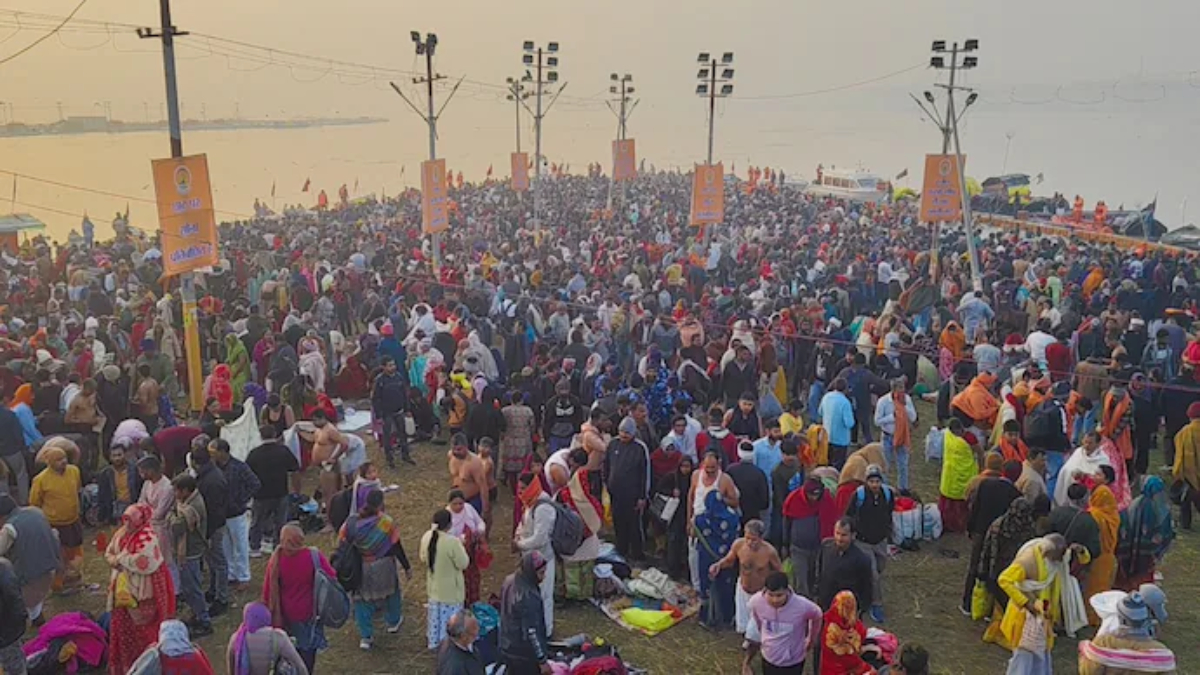
New Delhi, january 16, 2026: The banks of the Triveni Sangam transformed into a sprawling “sea of humanity” as over 10 million devotees braved the biting January cold to take a sacred dip on the auspicious occasion of Makar Sankranti. Marking the second major bathing festival of the Magh Mela 2026, the event saw a record-breaking surge in pilgrims, reaffirming Prayagraj’s status as the spiritual heart of India.
A Confluence of Devotion and Tradition
Makar Sankranti, which signals the Sun’s transition into the Capricorn zodiac (Makar) and the beginning of its northward journey (Uttarayan), is considered one of the most spiritually potent days in the Hindu calendar.
At the Sangam—the celestial meeting point of the Ganga, Yamuna, and the mythical Saraswati—the atmosphere was electric with the sounds of Vedic chants and bells. Devotees believe that a dip in these holy waters during this window washes away lifetimes of sins and paves the path toward Moksha (liberation).
Massive Turnout Despite the Chill
While the official bathing day was observed on January 15, 2026, the influx of pilgrims began as early as January 14 due to the Udaya Tithi.
- Day 1 (Jan 14): Approximately 8.5 million devotees arrived, many observing the Shatila Ekadashi fast.
- Day 2 (Jan 15): The crowd swelled significantly, with over 10.3 million people completing the ritual by sunset.
- Cumulative Impact: Over the two-day period, authorities estimated a staggering 18.5 million people visited the Mela area.
High-Tech Governance and Safety
To manage a gathering of this magnitude, the Uttar Pradesh administration deployed a massive security and logistical apparatus.
| Feature | Details of Arrangements |
| Security Personnel | Over 10,000 police, NDRF, SDRF, and ATS personnel. |
| Surveillance | AI-enabled CCTV cameras and drones for real-time crowd density analysis. |
| Bathing Area | 24 ghats spanning a total length of 12,100 feet. |
| Health & Safety | Two 20-bed hospitals, river ambulances, and 24-hour medical camps. |
| Sanitation | 25,000+ toilets and 3,500+ sanitation workers to maintain hygiene. |
For the first time, river ambulances were stationed directly at the Sangam to provide immediate rescue and medical aid to devotees in the water. The administration also utilized AI-based monitoring to prevent bottlenecks at entry points like the Naini and Shastri bridges.
The Spirit of Kalpavas
Amidst the moving crowds are the Kalpavasis—devotees who spend the entire month of Magh in simple tents, leading a life of extreme austerity. For them, the Makar Sankranti dip is a pivotal milestone in their 30-day penance of meditation, prayer, and “Satvik” living.
The festival also emphasized the tradition of charity (Daan). Thousands were seen donating Khichdi, jaggery, and woolens to the needy, embodying the festival’s core message of selfless giving.
Looking Ahead
As the Makar Sankranti festivities conclude peacefully, the focus now shifts to the next major bathing dates of the Magh Mela:
- Mauni Amavasya: January 18
- Basant Panchami: January 23
- Maghi Purnima: February 1
- Maha Shivratri: February 15
The successful management of the 10-million-strong crowd serves as a significant rehearsal for the state administration as it prepares for future mega-events at this sacred site.