

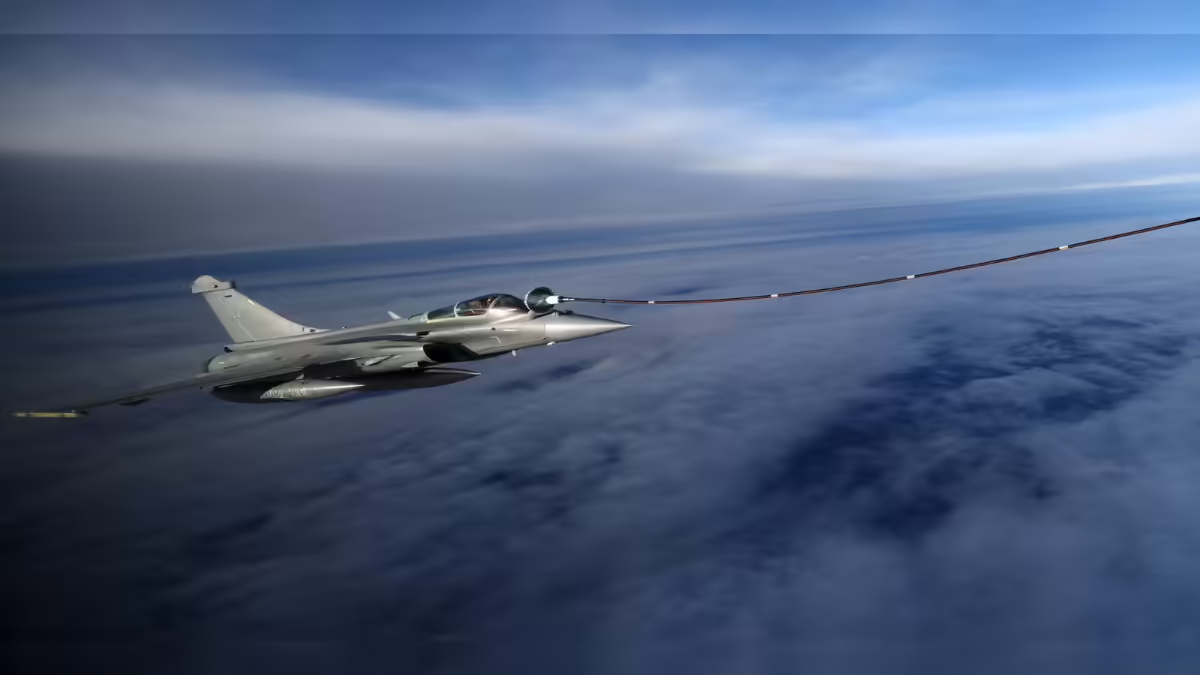
NEW DELHI, June 13, 2026: — The geopolitical landscape of military aviation has been dramatically reshaped following the formal collapse of Europe’s flagship Next-Generation Weapon System (NGWS). The multi-billion-dollar Future Combat Air System (FCAS), a joint venture launched in 2017 by France, Germany, and Spain to build a highly sophisticated sixth-generation fighter ecosystem, has been officially terminated.
The collapse, driven by irreconcilable structural disputes, has triggered a diplomatic scramble in Europe while simultaneously opening a major door of opportunity elsewhere. Far from the skies of Paris and Berlin, a new alignment is taking shape: a potential bilateral mega-programme between France and India to co-develop a definitive sixth-generation combat aircraft.
Why Europe’s Grand Vision Fractured
The FCAS was envisioned as a €100 billion “system of systems.” It aimed to integrate a sixth-generation stealth jet—the New Generation Fighter (NGF)—with unmanned “loyal wingman” drones, advanced sensors, and an AI-driven “combat cloud” for real-time battlefield data sharing.
However, the program unraveled under the heavy weight of industrial rivalry, political compromises, and national mistrust. The core friction lay between France’s Dassault Aviation and Germany’s representative partner, Airbus Defence and Space.
Mediation attempts failed, and political pressure mounted, leading German and French officials to officially pull the plug on the joint fighter project. While peripheral research into AI and combat networking may survive independently, Europe’s dream of a unified next-gen fighter is dead. Germany is reportedly exploring entry into the rival, UK-led Global Combat Air Programme (GCAP) alongside Japan and Italy, leaving France to find a new strategic partner capable of funding and absorbing its advanced aerospace technology.
Enter India: A Golden Strategic Opportunity
For New Delhi, the timing of the European split is remarkably advantageous. India has been carefully mapping its own multi-decade air power roadmap. While the Indian Air Force (IAF) remains committed to its indigenous fifth-generation fighter program, the Advanced Medium Combat Aircraft (AMCA), defense planners recognize that developing sixth-generation capabilities requires immense capital, deep tech-sharing, and advanced engineering foundations.
Rather than trying to navigate complex multi-nation consortia like GCAP, where industrial roles are already rigidly locked in place, India is viewing France as an ideal single, reliable partner. Bilateral discussions on a collaborative sixth-generation fighter program have accelerated, following high-level interactions between Indian Defence Minister Rajnath Singh and French Minister of the Armed Forces Catherine Vautrin.
A Partnership Built on Established Foundations
The potential for an India-France sixth-generation fighter project is not built from scratch; it is the logical evolution of a deeply entrenched, multi-decade defense partnership. Unlike other Western suppliers who attach restrictive geopolitical strings to their hardware, Paris has consistently proved to be a highly dependable ally to New Delhi.
The ongoing jet engine joint venture between French engine giant Safran and India’s Gas Turbine Research Establishment (GTRE) provides the perfect technological stepping stone. Developing a highly reliable, high-thrust turbofan engine is arguably the hardest part of building a modern fighter jet. Because France and India are already working to master this technology together for the upcoming AMCA Mark 2, expanding that relationship into a comprehensive, sixth-generation combat ecosystem is a natural progression.
What a 6th-Gen Project Brings to the Table
A sixth-generation fighter goes far beyond basic low-observable “stealth” structures. Should New Delhi and Paris cement this alliance, the resulting aircraft will incorporate technologies that will redefine aerial dominance through the middle of the 21st century.
- Manned-Unmanned Teaming (MUM-T): The fighter will act as an airborne command center, controlling a swarm of low-cost, semi-autonomous “remote carrier” drones that can scout ahead, jam enemy radars, or strike targets.
- Cognitive AI Architecture: Advanced algorithms will instantly process massive influxes of data from onboard and off-board sensors, filtering out the noise to give the pilot a clear, actionable picture of the battlefield.
- Direct-Energy Weapons (DEWs): Next-generation electrical architectures designed to power laser systems capable of disabling incoming missiles or hostile electronics.
- True Smart Skin & Multi-Spectral Stealth: Moving beyond basic geometric shapes to integrate sensors directly into the composite skin of the jet, completely masking its thermal, radar, and acoustic signatures.
Navigating the Path Ahead
While the strategic alignment is undeniable, the road to a joint fifth-to-sixth-generation leap requires careful policy navigation. India’s immediate priority remains successfully rolling out the AMCA prototypes via its newly structured private-sector defense consortia, aimed at breaking the historical state monopoly on military aircraft production. Balancing the domestic development timeline of the AMCA while simultaneously allocating funds and engineering talent to a parallel, cutting-edge bilateral project with France will challenge the defense ministry’s resources.
However, defense experts point out that the long-term rewards far outweigh the structural friction. By joining hands with Dassault and Safran on a bilateral basis, India stands to gain genuine technology transfers, true intellectual property co-ownership, and a seat at the absolute pinnacle of global aerospace engineering. With the European FCAS project officially in the rearview mirror, Paris and New Delhi possess a rare, historic window to create an unshakeable, independent axis of advanced air dominance.