

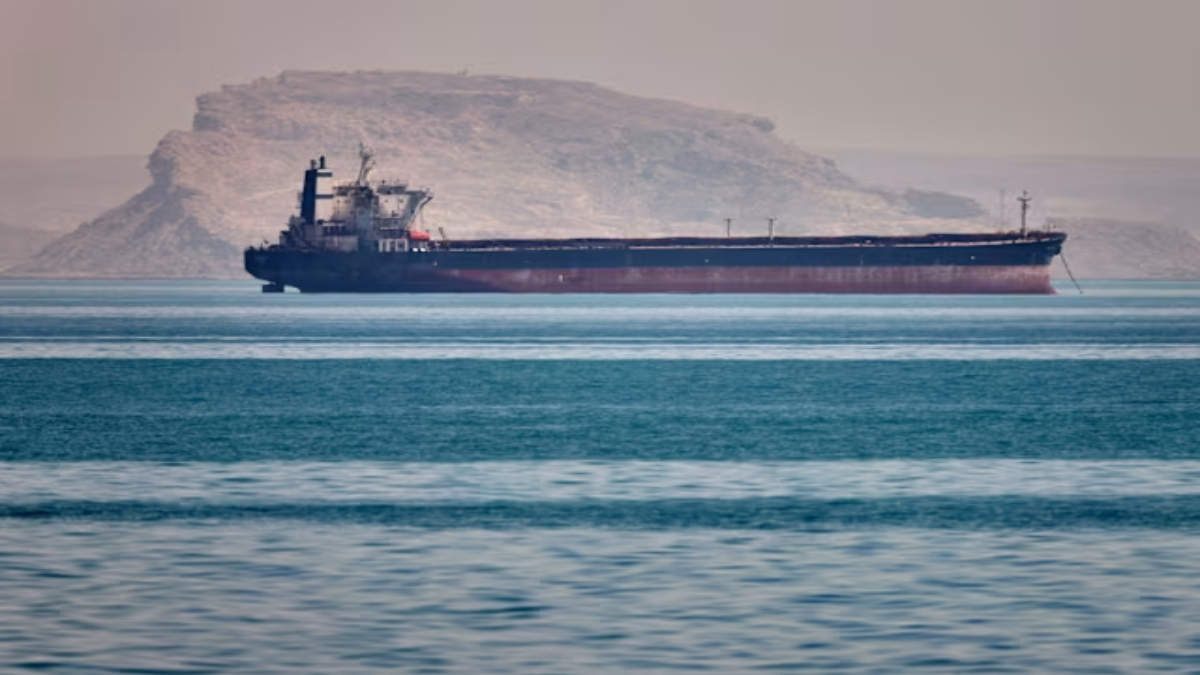
May 5, 2026: The fragile peace that has held the Middle East in a state of nervous tension since early April appears to be rapidly unraveling. In a significant escalation of the ongoing conflict that began in late February 2026, the United States military engaged in direct combat with Iranian forces on Monday, May 4, as part of a high-stakes mission to reopen the Strait of Hormuz. Simultaneously, the United Arab Emirates (UAE) reported coming under attack from Iran for the first time in nearly a month, marking a volatile return to hostilities.
Operation “Project Freedom” and the Strait of Hormuz
The latest spark in this intensifying confrontation involves “Project Freedom,” an initiative spearheaded by U.S. President Donald Trump to restore navigation through the Strait of Hormuz. The strait, a vital artery for global energy and trade, has been effectively closed or heavily restricted since the war broke out on February 28, when U.S. and Israeli forces launched a massive joint operation targeting Iranian military infrastructure and leadership.
For weeks, Iran has maintained a blockade of the strait as a primary bargaining chip, attempting to assert control over the waterway to counter U.S. economic and military pressure. On Monday, U.S. naval assets moved to escort merchant vessels through the strait. The U.S. military reported that the operation was a success, confirming that two American-flagged merchant ships safely navigated the passage.
However, the transit was far from peaceful. According to U.S. Central Command, American forces were forced to engage Iranian vessels attempting to interfere with the operation. U.S. helicopters reportedly sank six small Iranian boats that were targeting civilian ships under U.S. protection. U.S. officials emphasized that their commanders on the scene have full authority to defend both their units and commercial shipping from any interference.
UAE Faces New Wave of Attacks
While the naval confrontation unfolded in the strait, the United Arab Emirates faced a barrage of attacks, testing the endurance of the ceasefire that had been in place since April 8. UAE authorities reported that Iranian forces launched a series of missiles and drones, marking the first such assault on Emirati soil in nearly a month.
The attacks had immediate, real-world consequences. In the eastern emirate of Fujairah, a drone strike sparked a fire at a critical oil facility, causing injuries to three Indian nationals. Additionally, the British military reported that two cargo vessels were ablaze off the coast of the UAE, further highlighting the precarious situation for maritime traffic in the region.
Residents across parts of the UAE were placed under emergency missile alerts, prompting a temporary halt to regional air travel as commercial flights diverted or turned back in mid-air.
A Test of Diplomatic Brinkmanship
The return to active engagement has cast serious doubt on the sustainability of the current ceasefire. Iran, while not outright confirming the attacks on the UAE, has utilized vague rhetoric through state media and official channels. Iranian Foreign Minister Abbas Araghchi warned on social media that both the U.S. and the UAE “should be wary of being dragged back into a quagmire,” suggesting that Tehran views the U.S. efforts to reopen the strait as an act of military adventurism rather than a security initiative.
Conversely, President Trump has taken a hardline stance, warning that Iran would be “blown off the face of the Earth” if it continued to target U.S. vessels. Despite these fiery exchanges, the President has also indicated that these specific skirmishes—while serious—might not constitute a total breakdown of the ceasefire, noting that there has been no “heavy firing” on the scale seen earlier in the conflict.
The Broader Economic and Geopolitical Impact
The closure of the Strait of Hormuz has had a profound impact on the global economy, choking off vital energy supplies and forcing expensive rerouting of shipping traffic. The U.S. blockade of Iranian ports and the Iranian counter-blockade of the Gulf have turned the region into a focal point of economic attrition.
Efforts to resolve the crisis through diplomacy, including high-level talks mediated by Pakistan, have struggled to gain traction. The core sticking points—Iran’s nuclear program, the status of the Strait of Hormuz, and the desire of both nations to project strength without yielding ground—have left negotiators at an impasse.
As the international community watches with growing concern, the situation remains fluid. Markets have already reacted to the uncertainty, with stocks experiencing volatility as fears of a return to full-scale regional war intensify.
Looking Ahead
The events of the past 24 hours represent a dangerous escalation. With both the U.S. and Iran seemingly locked into binary, non-negotiable positions regarding the Strait of Hormuz, the risk of miscalculation remains extremely high.
While the U.S. has successfully demonstrated the ability to escort ships through the waterway, it has done so at the cost of renewed combat and intensified regional insecurity. For now, the world waits to see whether these latest engagements will serve as a definitive end to the ceasefire, or if diplomatic channels can be salvaged before the conflict spirals into a broader, more destructive phase.