

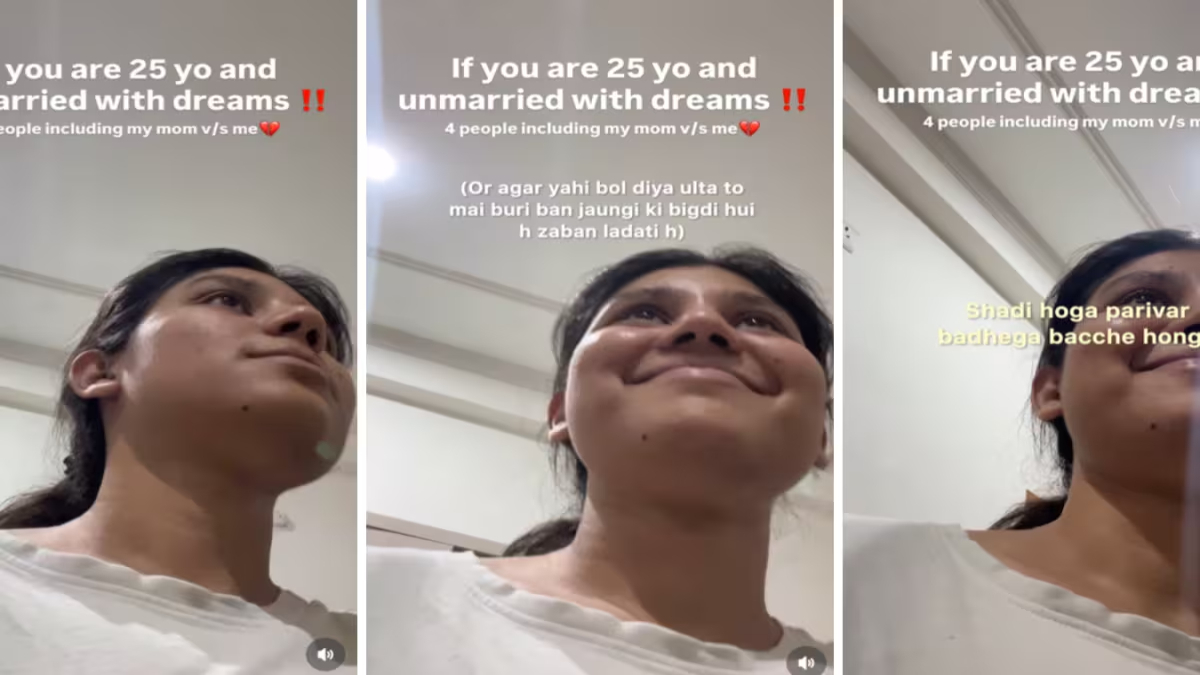
New Delhi, May 14, 2026: In a digital age where young professionals are shattering glass ceilings and charting global careers, some societal expectations remain stubbornly frozen in time. A 2026 viral video featuring a 25-year-old Indian woman has reignited a fierce national debate over the relentless “marriage pressure” faced by young adults in South Asian households.
The video, which has amassed millions of views across Instagram and X (formerly Twitter), captures a candid, albeit uncomfortable, conversation between a young woman and her relatives. What started as a personal recording has become a cultural touchstone, highlighting the disconnect between the aspirations of Gen Z and the traditional anxieties of their elders.
The Video That Shook the Internet
The clip features the young woman surreptitiously filming a family gathering. In the background, voices of older female relatives—including her mother—can be heard escalating a discussion about her marital status. The tone shifts from casual persuasion to what many netizens have labeled as “emotional blackmail” and “ageist shaming.”
The centerpiece of the controversy is a specific remark made by an aunt in the video: “Glow khatam ho jata hai” (The glow fades away).
The relative argued that at 25, the woman was reaching her “peak,” and that waiting any longer would lead to a loss of physical beauty, making it difficult to find a “suitable” match. The commentary didn’t stop at aesthetics; it veered into unsolicited medical advice, with relatives suggesting that “old age” (referring to the late 20s) would bring complications for future pregnancies.
A Mirror to Societal Obsessions
The video has resonated deeply because it documents a nearly universal experience for young Indian women. While 25 is objectively young—an age where many are just finishing postgraduate degrees or entering the mid-levels of their careers—in the “marriage market,” it is often treated as a ticking clock.
Key themes highlighted in the viral footage include:
- The “Expiry Date” Myth: The idea that a woman’s value is tied to a fleeting window of youth.
- Health Misinformation: Using biological fears (like fertility) as a tool for coercion.
- Lack of Autonomy: The assumption that marriage is a communal decision rather than an individual choice.
Internet Reacts: Solidarity vs. Tradition
The comments section under the viral post became a battleground of perspectives, though the overwhelming majority of young users stood in solidarity with the woman.
1. The “Relatability” Factor
Thousands of women shared similar anecdotes. One user commented, “I’m 26 and my parents have started talking about me like I’m a decaying fruit. This video is my life every Sunday lunch.” Another wrote, “It’s never about your happiness; it’s about ‘log kya kahenge’ (what will people say) and the fear that you’ll become ‘unmarketable’.”
2. Men Join the Conversation
Interestingly, the video sparked dialogue among young men as well. Many pointed out that while the pressure on women is often focused on beauty and biology, men face a different brand of “settling down” pressure linked to financial milestones. “If we aren’t earning six figures by 26, we are told we’ll never get a ‘good girl.’ The pressure is suffocating for everyone,” a viral tweet read.
3. The Traditionalist View
A small segment of the internet defended the parents, arguing that their concerns stem from love and a desire for security. These users argued that in Indian culture, parents feel it is their duty to see their children “settled” before they retire, fearing that the child might end up lonely in an increasingly fast-paced world.
The Evolving Definition of “Settled”
This viral moment comes at a time when the Indian socio-economic landscape is shifting. With the rise of the “solo economy” and a surge in women’s workforce participation, the traditional timeline for marriage is being pushed back.
According to recent social trends in 2026, the average age for marriage in urban Indian pockets has climbed to 28-32. Yet, as this video proves, the “mental age” of the collective society hasn’t always kept pace with the data.
“We are expected to be CEOs by day and traditional ‘bahus-in-waiting’ by night,” says social psychologist Dr. Ananya Verma. “The ‘glow’ the relatives are talking about isn’t skin-deep; it’s the light of independence that they fear might make a woman ‘too choosy’ or ‘too difficult to control’.”
Conclusion: Beyond the Viral Clip
The “Glow Khatam Ho Jata Hai” girl has inadvertently become the face of a movement demanding a “right to time.” As the video continues to circulate, it serves as a reminder that for many young Indians, the hardest part of growing up isn’t the professional hustle or the economic climate—it’s navigating the dinner table conversations that treat their lives like a race with a looming finish line.
The internet’s reaction makes one thing clear: the modern “glow” comes from self-fulfillment and choice, not from meeting a deadline set by a neighbor or a distant relative.