

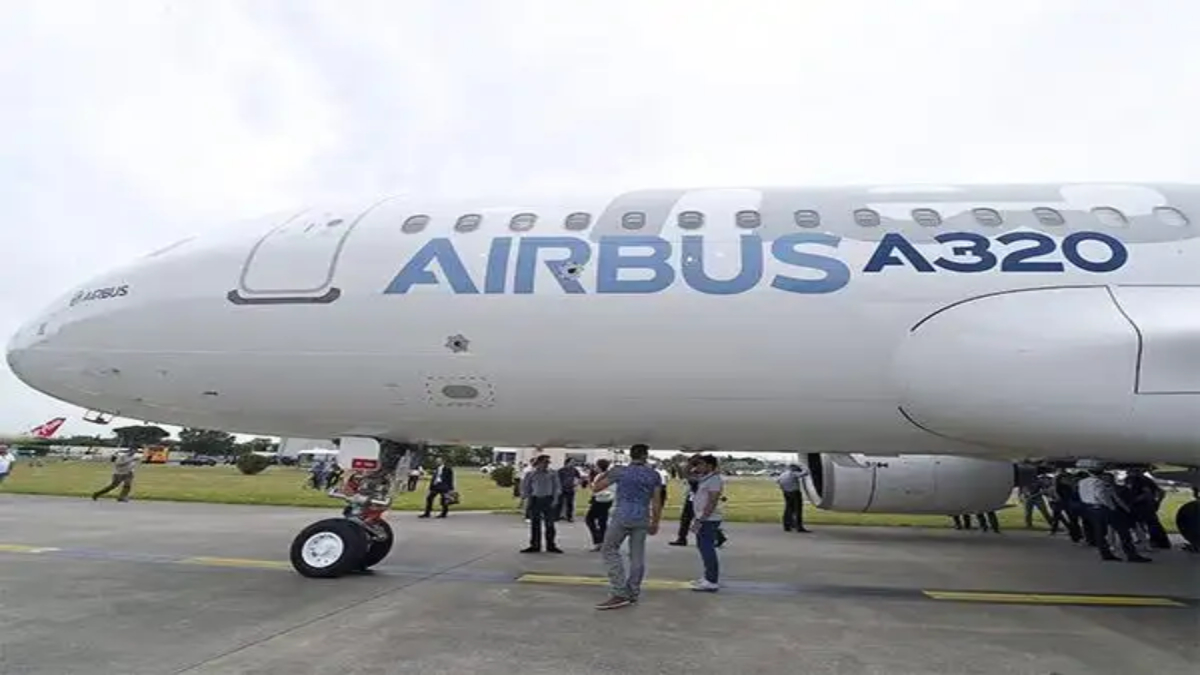
New Delhi, November 29, 2025: Air travel across India is facing significant disruption this weekend after the Directorate General of Civil Aviation (DGCA) issued a mandatory directive to ground a large portion of the popular Airbus A320 family of aircraft. The ban, which affects certain A319, A320, and A321 models, will remain in place until airlines complete urgent safety modifications to the planes’ flight control systems.
The grounding comes in response to a global safety alert from Airbus, the aircraft manufacturer, following a serious in-flight incident involving an A320.
The Safety Concern: Corrupted Flight Data
Airbus stated that its analysis of a recent incident indicated that intense solar radiation has the potential to corrupt crucial data within the aircraft’s Electronic Localised Aircraft Controller (ELAC) flight control computer. In the worst-case scenario, this could lead to an “uncommanded and limited pitch down event”—meaning the plane’s nose unexpectedly dips without the pilot initiating the action.
The European Union Aviation Safety Agency (EASA) quickly issued an Emergency Airworthiness Directive (EAD) to address this critical fault, and the DGCA is enforcing the same immediate precautionary measure in India.
Impact on Indian Airlines and Travellers
Indian carriers, particularly those who rely heavily on the A320 family like IndiGo and Air India Group, are bearing the brunt of the mandate.
- Widespread Grounding: Over 350 aircraft belonging to IndiGo and Air India Group are affected in India. Globally, thousands of planes require the update.
- Delays and Cancellations: Passengers should brace for widespread flight delays and cancellations throughout the weekend. Airlines, including Air India and IndiGo, have acknowledged the disruptions and apologised for the inconvenience, stating that safety is their paramount priority.
- The Fix is Quick for New Planes: For the newer A320 variants, the necessary software upgrade is a relatively quick process, potentially taking only about half an hour per aircraft. However, older models may require additional hardware changes, which will extend the time each plane is grounded.
Aviation experts suggest operations for the majority of the grounded Indian fleet could normalize by early next week, likely Monday or Tuesday, as airlines work round-the-clock to implement the required modifications.
What Passengers Should Do
Air travel safety regulations require immediate action when such a critical flaw is identified. While the inconvenience is high, the grounding is a necessary step to ensure that no aircraft operates until its flight control systems are fully protected against the identified risk.
Passengers scheduled to fly on an Airbus A320-family aircraft this weekend are strongly advised to:
- Check with their airline directly for the most current status of their specific flight.
- Monitor airport announcements for potential delays or cancellations.
- Prepare for possible schedule adjustments and rebooking options offered by their carrier.
The DGCA has affirmed that this move is non-negotiable, ensuring that no plane under the scope of this mandatory modification can take off without being fully compliant.