

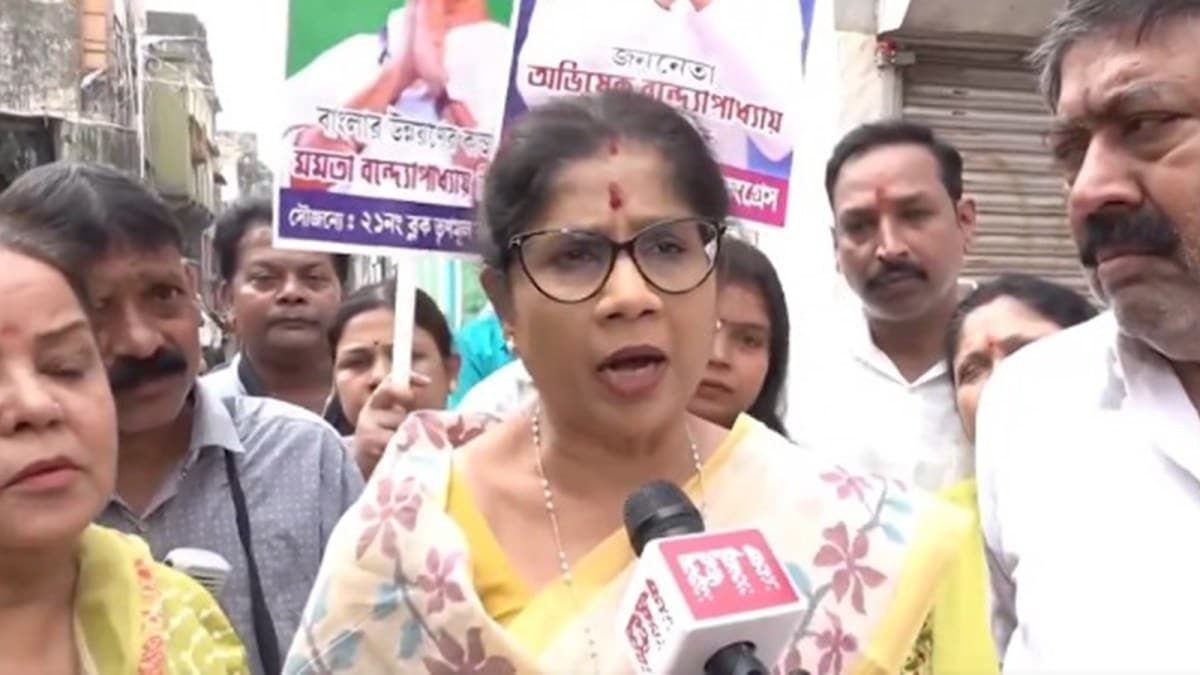
New Delhi, March 27, 2026 — In a dramatic turn of events ahead of the 2026 West Bengal Legislative Assembly elections, state Cabinet Minister Dr. Shashi Panja has expressed shock and indignation after discovering that her name, along with thousands of others, was placed under “judicial adjudication” during the Election Commission’s latest voter list revision.
The senior Trinamool Congress (TMC) leader, who is the candidate for the Shyampukur constituency, found herself unable to verify her voter status just weeks before the state goes to the polls. Speaking to reporters during her campaign, Panja highlighted the absurdity of the situation, noting that such mass “adjudication” of established citizens is unprecedented in Indian electoral history.
“This hasn’t happened in any other state. It is baffling and insulting,” Panja remarked. “While I was out campaigning, people kept asking me if they would be able to vote. I didn’t know what to tell them because I don’t even know if my own name has been cleared.”
The “Under Adjudication” Crisis
The controversy stems from a Special Intensive Revision (SIR) of the electoral rolls conducted by the Election Commission of India (ECI). According to reports, approximately 60 lakh voters—nearly 8.5% of the state’s electorate—have been marked under the “adjudication” category. This status implies that their citizenship or residency is under further scrutiny, often requiring them to attend hearings to prove their eligibility.
The impact of this revision has been felt across the political and social spectrum in West Bengal:
- High-Profile Targets: Alongside Dr. Panja, other prominent figures including Minister Ghulam Rabbani, Chief Secretary Nandini Chakravorty, and even Nobel laureate Amartya Sen have reportedly faced notices or status issues.
- A “Backdoor NRC”: The TMC has labeled the SIR process as a “backdoor entry for the National Register of Citizens (NRC),” alleging that the BJP-led central government is using the ECI to disenfranchise genuine voters.
- Technical Confusion: Even after the publication of the first supplementary rolls on March 23, 2026, many voters found the online portal displaying vague messages like “No adjudication pertaining to this part till 5 PM.”
Political Firestorm
The ruling Trinamool Congress has launched a fierce offensive against the ECI, accusing it of a “nexus” with the Bharatiya Janata Party (BJP). Chief Minister Mamata Banerjee recently held a five-day sit-in protest against the mass deletions and adjudications, claiming that over 58 lakh names were deleted in the first phase alone.
For candidates like Shashi Panja, the uncertainty is not just personal but also functional. Without a clear serial number and part number in the final electoral roll, a candidate’s nomination can be legally challenged or rejected during scrutiny.
ECI and BJP Response
The Election Commission has maintained that the SIR is a routine, albeit thorough, exercise meant to ensure a “clean” voter list by removing duplicates and “unmapped” voters. Chief Electoral Officer Manoj Agarwal stated that the process is being supervised by the Calcutta High Court and that supplementary lists are being published as cases are disposed of by judicial officers.
Meanwhile, the BJP has dismissed the TMC’s allegations as “fear-mongering.” State BJP leaders argue that the revision is necessary to identify “infiltrators” and ensure that only genuine Indian citizens participate in the democratic process.
Key Election Dates (2026)
As the legal and political battle over the voter list continues, the state remains on high alert for the upcoming two-phase election:
| Event | Phase I | Phase II |
| Notification Date | March 30, 2026 | April 2, 2026 |
| Last Date for Nomination | April 6, 2026 | April 9, 2026 |
| Polling Date | April 23, 2026 | April 29, 2026 |
| Counting of Votes | May 4, 2026 |
With the notification for the first phase just days away, the fate of millions of “adjudicated” voters—and the candidates seeking their support—remains hanging in the balance.