

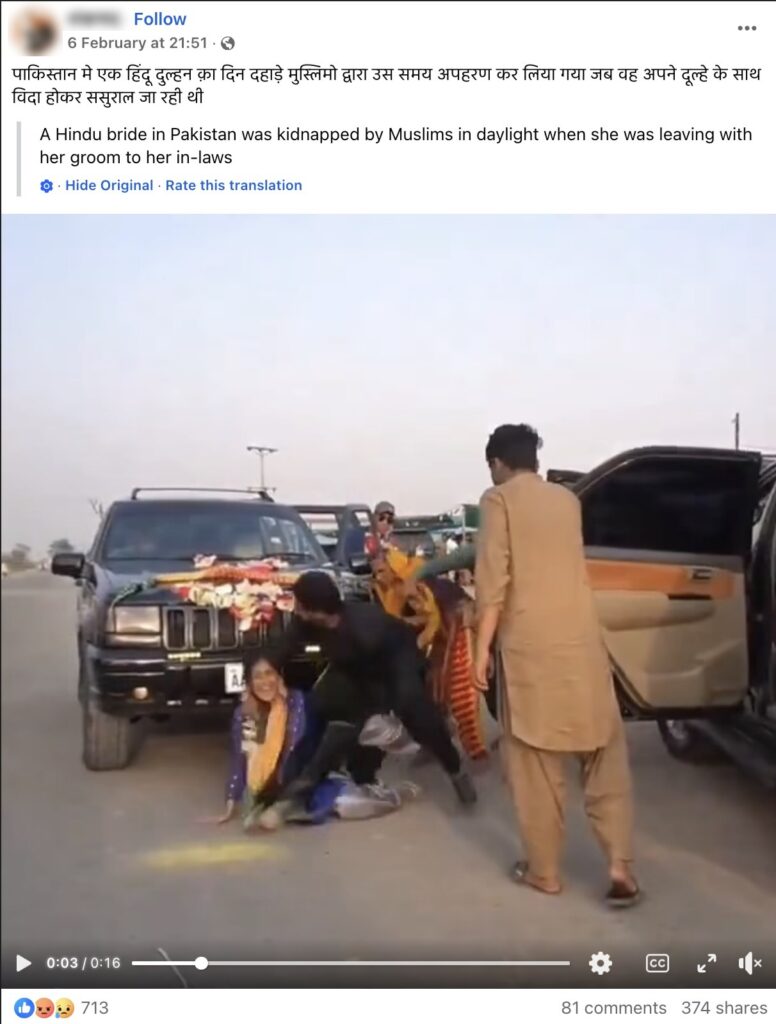
New Delhi, February 12, 2026: A significant wave of communal tension and international concern has been triggered following the emergence of a viral video allegedly depicting the kidnapping of a newly married Hindu woman in Pakistan. In the footage, which gained massive traction on February 12, 2026, a woman in bridal attire is observed being forcibly taken by a group of armed men. It is noted that the clip was circulated with inflammatory captions, leading many to believe a genuine crime had occurred. This distressing interaction between visual storytelling and social media amplification has been widely shared as a primary example of how easily sensitive narratives can be manipulated for engagement.
The Mechanics of the Scripted Revelation
The specifics of the video’s origin and production are being meticulously discussed by fact-checking organizations and digital forensic experts. It is observed in the investigative reports that the footage was actually produced as a scripted drama or an awareness short film by a local content creator. It is reported by several independent observers that the actors involved have been identified, and the original source of the video contained disclaimers that were intentionally removed by third-party uploaders. The visual of the “abduction” has provided a grounding narrative for the dangerous trend of using staged scenarios to generate outrage and polarize online communities.
Also Read: Failed Ship Boarding in Bangladesh Stuns Netizens
Social Media Reacts: A Symphony of Outrage and Caution
A massive conversation regarding the ethics of “shock-value” content and the responsibility of social media platforms has been ignited by this digital revelation. It is noted that the video was met with an initial outpouring of anger, with many netizens calling for immediate diplomatic intervention before the truth surfaced. The creators are being widely discussed for their lack of foresight in producing content that could incite real-world violence or communal disharmony. Thousands of analytical comments have been left by users who expressed their frustration, stating that such videos serve as a stark reminder of the urgent need for critical thinking in the consumption of viral news.
Impact on Regional Sensitivity and Digital Literacy
The impact of this viral event has extended beyond simple misinformation to influence a broader discussion on the fragility of cross-border relations in the digital age. It is frequently mentioned by sociologists that the exploitation of religious and gender-based vulnerabilities is a common tactic used by bad actors to sow discord. A renewed sense of urgency is being observed among digital literacy advocates to educate the public on how to verify sources before sharing emotionally charged content. It is believed that the viral nature of this specific “Kidnapping Video” will prompt a dialogue on the necessity of stricter penalties for creators who fail to clearly label staged or scripted performances.
A Stark Reminder of Verification
As the debunked footage continues to be flagged by platforms in mid-February 2026, it serves as a powerful and resilient reminder that visual evidence is not always synonymous with truth. It is believed that the “Scripted Pakistan Kidnapping” story will remain a primary highlight of the month’s most discussed and socially sensitive fact-checks. The legacy of this viral event is expected to be a heightened public awareness of the manipulative potential of synthetic or staged media. Until a more robust system for content authentication is established, this video remains a stark testament to the fact that in the era of information warfare, the first casualty is often the context.