

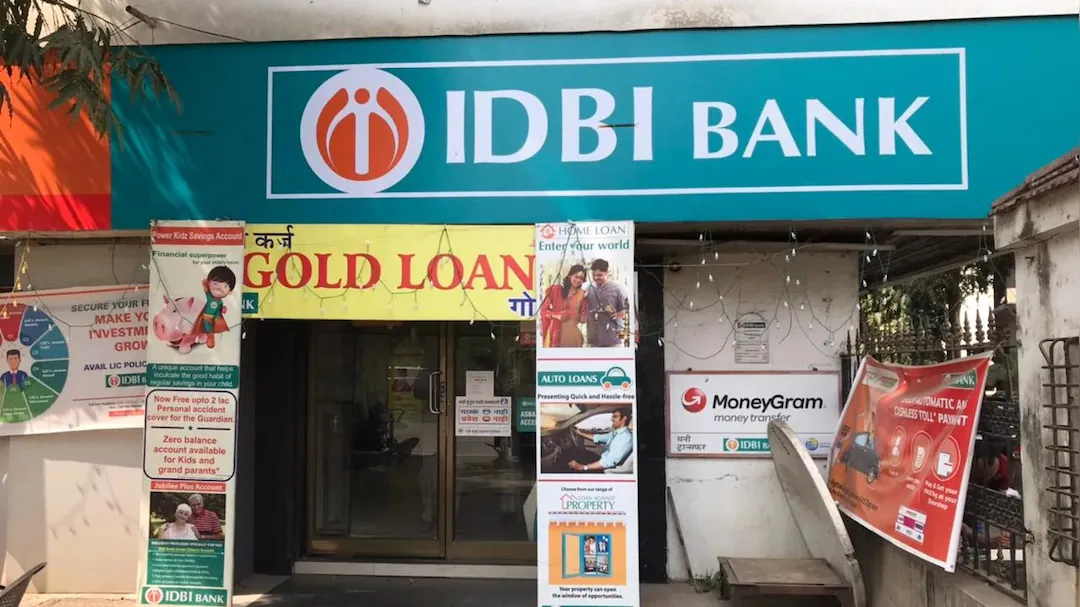
On Friday, April 24, 2026, the financial sector buzzed with renewed energy as IDBI Bank’s share price rallied by up to 8% following comments from Finance Minister Nirmala Sitharaman. Speaking on the sidelines of an event in Mumbai, the Finance Minister addressed the elephant in the room: the long-anticipated privatization of IDBI Bank. In a clear and decisive message, she reaffirmed the government’s intent to proceed with the divestment process, effectively putting to rest the swirling rumors that the sale had been scrapped.
For investors and market analysts who had been bracing for a potential abandonment of the deal following reports of underwhelming bids earlier this spring, the Finance Minister’s statement served as a critical course correction.
A Long and Winding Road
The journey to privatize IDBI Bank has been anything but straightforward. Since the Cabinet Committee on Economic Affairs (CCEA) gave its in-principle approval for the strategic disinvestment back in 2021, the process has faced a series of complex hurdles.
The proposed transaction is significant in scale: the Government of India and the Life Insurance Corporation of India (LIC) are looking to offload a combined 60.72% stake in the lender. This involves the government selling 30.48% and LIC divesting 30.24% of their respective holdings. The deal is structured not just as a financial transaction, but as a strategic pivot, aiming to transfer management control to a private player who can bring in fresh capital, advanced technology, and professional management expertise.
Why the Process Hit Turbulence
The primary reason for the delay—and the recent market anxiety—has been a gap in valuation expectations. In early 2026, reports surfaced that financial bids submitted by prospective buyers fell short of the government’s internal reserve price.
For the government, the challenge is balancing the need for a successful divestment with the requirement to ensure public assets are sold at fair, value-maximizing prices. For the bidders, the challenge lies in the complex regulatory landscape of the Indian banking sector. Every prospective buyer must undergo a rigorous “Fit and Proper” assessment by the Reserve Bank of India (RBI), a process designed to ensure that the new owner is capable of maintaining the stability and integrity of the banking system.
Adding to the complexity are shifting market conditions. Geopolitical uncertainties and fluctuating valuations of banking assets have made investors more cautious, leading to a disconnect between the bids on the table and the government’s asking price. This mismatch led to the recent narrative that the deal was effectively “stalled” or “scrapped,” a sentiment that caused significant volatility in IDBI Bank’s stock price over the past two months.
The Significance of the Sale
Why is the government so determined to see this through? The IDBI Bank divestment is viewed as a bellwether for the government’s broader economic reforms.
Since the “twin balance sheet” challenges of the early 2010s, the Indian banking sector has undergone a massive transformation. Under the current management, IDBI Bank has successfully turned around its financials, posting healthier balance sheets, improved asset quality, and robust credit growth. It is now seen as an attractive asset, which is precisely why the government is unwilling to rush into a “fire sale” that doesn’t capture its true value.
Furthermore, for the Finance Minister, this is part of a larger, coherent economic strategy. The government has been moving away from rigid, headline-grabbing annual disinvestment targets, focusing instead on “value maximization.” The goal is not just to raise funds, but to empower public sector enterprises to operate with the same efficiency and professional autonomy as their private sector counterparts.
What Lies Ahead?
The market’s positive reaction on April 24th highlights just how crucial “policy certainty” is for investor sentiment. With the Finance Minister’s explicit commitment to continuing the process, the focus now shifts back to the technical and procedural steps.
Observers expect the government to likely recalibrate its approach. This might involve revisiting valuation benchmarks, engaging further with prospective investors, or adjusting the terms of the offer to better reflect current market realities while protecting the government’s interests.
While the timeline for the final sale remains fluid, the message from the government is clear: privatization is not off the table. The “on-again, off-again” perception has been replaced by a renewed commitment to take the transaction to its “logical conclusion.”
For IDBI Bank, the road ahead is likely to remain busy. The bank’s strong operational performance and the backing of the government suggest that it remains a key asset in the banking landscape. As the government resumes its efforts to find the right partner at the right price, both the bank and the broader market will be watching closely—not just for the eventual sale, but for what it signals about the future of banking in India.
Ultimately, this saga is a reminder that the path to major economic reform is rarely a straight line. It is a process of negotiation, patience, and rigorous regulatory scrutiny—a process that, according to the Finance Minister, is still very much in progress.