

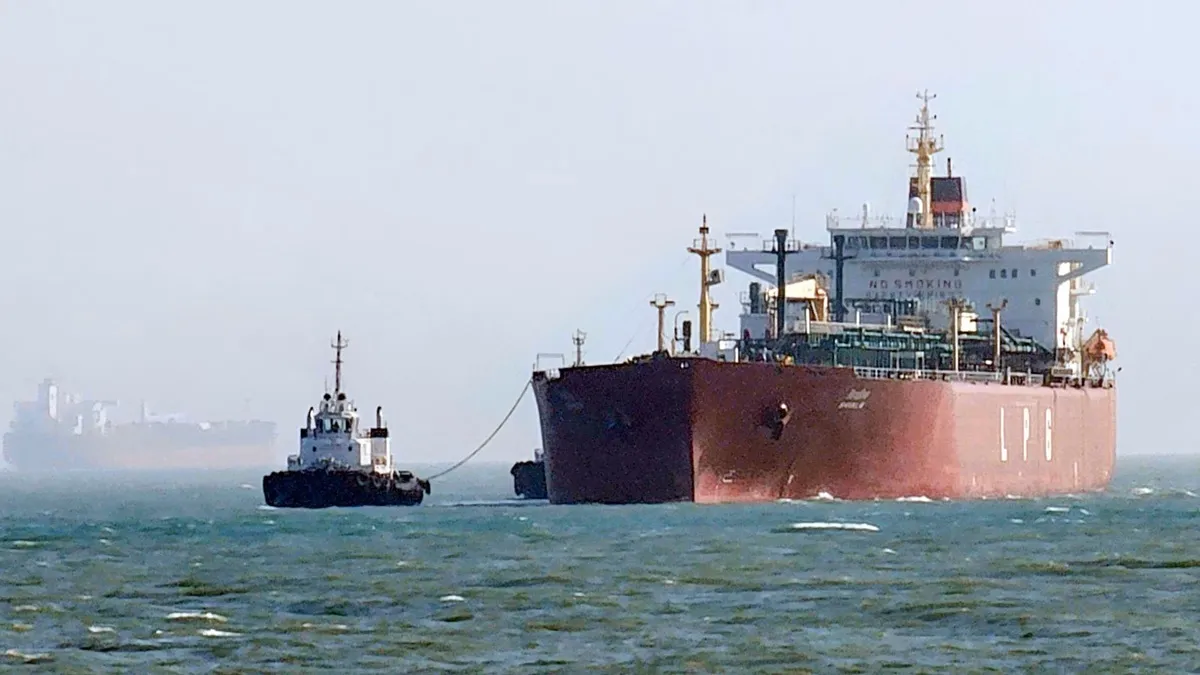
NEW DELHI, March 24, 2026 – In a significant boost to India’s energy security, the Indian-flagged LPG carrier Pine Gas has successfully navigated the high-risk Strait of Hormuz. The vessel, which had been among dozens of tankers stranded due to the escalating conflict in West Asia, cleared the strategic choke point on Monday evening, March 23, 2026.
The transit marks a critical success for Indian diplomacy and maritime coordination as the country maneuvers to secure essential cooking gas supplies amidst a regional war that has largely paralyzed global shipping in the Persian Gulf.
Strategic Transit and Tactical Routing
The Pine Gas, a Very Large Gas Carrier (VLGC) owned by Seven Islands Shipping, performed an “unusual” transit maneuver to ensure its safety. According to real-time ship-tracking data, the vessel, along with another Indian tanker, the Jag Vasant, bypassed the conventional, shorter shipping lanes. Instead, they navigated through a narrow corridor between the Iranian islands of Larak and Qeshm.
Industry analysts suggest this route was likely designated by Iranian authorities as a “safe passage” for verified vessels. By sailing closer to the Iranian coastline, the Pine Gas was able to signal its identity clearly to local forces, minimizing the risk of being misidentified or targeted. During the transit, the ship’s transponders were updated to explicitly broadcast its status as an “INDIAN SHIP WITH INDIAN CREW,” a precautionary measure now common in the conflict zone.
Relief for India’s Energy Supply
The Pine Gas is reportedly carrying a substantial portion of the 92,000 tonnes of LPG shared with the Jag Vasant. This shipment is estimated to represent roughly a full day’s worth of India’s national cooking gas consumption.
The vessel had been stuck in the region since late February, having loaded its cargo from Ruwais in the UAE just as major hostilities broke out on February 28. Its successful exit follows the safe arrival of two other tankers, the Shivalik and Nanda Devi, earlier this month.
Key Vessel Details: Pine Gas
- Type: LPG / VLGC (Very Large Gas Carrier)
- Capacity: ~58,585 Deadweight Tonnes (DWT)
- Charterer: Indian Oil Corporation (IOC)
- Estimated Arrival: Expected at Indian ports (likely Dahej or Kandla) by March 26–27, 2026.
The Broader Maritime Crisis
The Strait of Hormuz remains “effectively closed” for the majority of global commercial traffic. While no formal legal blockade has been declared, the threat of drone strikes and naval interceptions has reduced daily transits by over 80%. Approximately 500 vessels remain confined within the Persian Gulf, awaiting clearance or safe-passage frameworks.
India, which imports nearly 60% of its LPG and 88% of its crude oil, has been engaging in high-level diplomatic talks to protect its interests. Prime Minister Narendra Modi recently held discussions with Iranian President Masoud Pezeshkian to ensure the “unhindered movement” of Indian vessels.
What’s Next?
As the Pine Gas enters the open waters of the Arabian Sea, it is expected to be monitored by the Indian Navy to ensure a secure final leg of its journey. Government officials have confirmed that while this transit is a major relief, about 20 Indian-flagged vessels—including crude oil and chemical tankers—still remain in the conflict-hit region.
The safe arrival of this shipment will provide much-needed stability to the domestic LPG market, which has faced mounting pressure and supply concerns since the start of the West Asia war.