

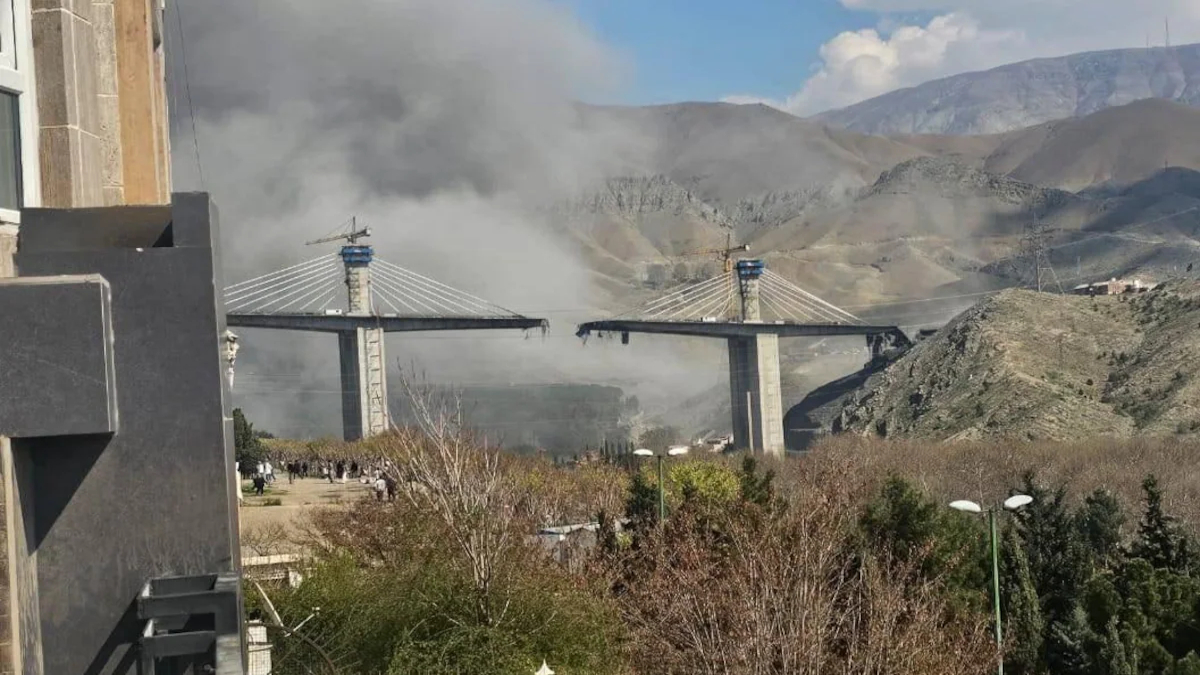
New Delhi, April 3, 2026 — Tensions in the Middle East have reached a fever pitch as Iran officially vowed “crushing revenge” against the United States and its regional allies following a devastating airstrike on the B1 Bridge near Karaj. In a direct escalatory move, Tehran has identified eight strategic bridges across the Gulf and Jordan as potential targets for retaliatory strikes.
The list, published by the semi-official Fars News Agency—an outlet closely aligned with the Islamic Revolutionary Guard Corps (IRGC)—signals a shift toward a “tit-for-tat” strategy targeting critical civilian and economic infrastructure across the region.
The Strike on the B1 Bridge: A Human and Symbolic Toll
On Thursday, April 2, 2026, a powerful airstrike targeted the newly constructed B1 Bridge in Alborz Province. The structure, which stands at 136 meters and was designed to be one of the tallest in the region, served as a vital link between Tehran and Karaj.
According to Iranian state media and reports from the Associated Press:
- Casualties: At least eight civilians were killed and 95 others injured.
- Context: Many victims were reportedly gathered near the bridge and riverbank for “Nature Day” (Sizdah Be-dar) celebrations when the blast occurred.
- Responsibility: U.S. President Donald Trump claimed responsibility for the strike on social media, sharing footage of the collapse and warning that Iran must “make a deal” or face further destruction of its power plants and infrastructure.
The ‘Hit List’: Iran’s 8 Strategic Targets
In response to what it termed the “cowardly destruction of civilian infrastructure,” Iran’s military apparatus has signaled that it will no longer confine its retaliation to military installations. The “hit list” specifically names eight iconic and economically vital bridges:
| Country | Targeted Infrastructure |
| Kuwait | Sheikh Jaber Al-Ahmad Al-Sabah Causeway (One of the world’s longest sea bridges) |
| Saudi Arabia / Bahrain | King Fahd Causeway (The primary land link between the two nations) |
| United Arab Emirates | Sheikh Zayed Bridge (Abu Dhabi) |
| United Arab Emirates | Al Maqta Bridge (Abu Dhabi) |
| Jordan | King Hussein (Allenby) Bridge (Critical crossing to the West Bank) |
| Jordan | Damia Bridge |
| Jordan | Sheikh Khalifa Bridge |
| Jordan | Abdoun Bridge (Amman’s landmark cable-stayed bridge) |
Regional Fallout and International Reaction
The naming of these targets has sent shockwaves through regional capitals. The Sheikh Jaber Bridge and King Fahd Causeway are not merely transport links; they are essential arteries for trade and regional stability.
“Striking civilian structures, including unfinished bridges, will not compel Iranians to surrender,” stated Iranian Foreign Minister Abbas Araghchi. “It only conveys the defeat and moral collapse of an enemy in disarray.”
Meanwhile, the conflict has already begun to spill over into other sectors:
- Energy Markets: Oil prices surged by 7% following the strike, reaching $108 per barrel amid fears of a prolonged blockade of the Strait of Hormuz.
- Escalating Attacks: Just hours after the bridge strike, Kuwait reported drone attacks on its Mina al-Ahmadi refinery, while Saudi Arabia claimed to have intercepted seven drones in its airspace.
- Military Claims: Tehran recently asserted that its air defenses shot down a second U.S. F-35 fighter jet over central Iran, though the Pentagon has yet to confirm these reports.
A Region on the Brink
The targeting of the B1 Bridge marks a significant departure from the previous five weeks of conflict, which had largely focused on military bases and proxy positions. By placing major Gulf landmarks in its crosshairs, Iran is signaling a “total war” footing that threatens to draw the entire Middle East into a direct, high-intensity confrontation.
As UN Secretary-General António Guterres warned, the world is now “on the edge of a wider war,” with the safety of millions of civilians and the stability of the global economy hanging in the balance