

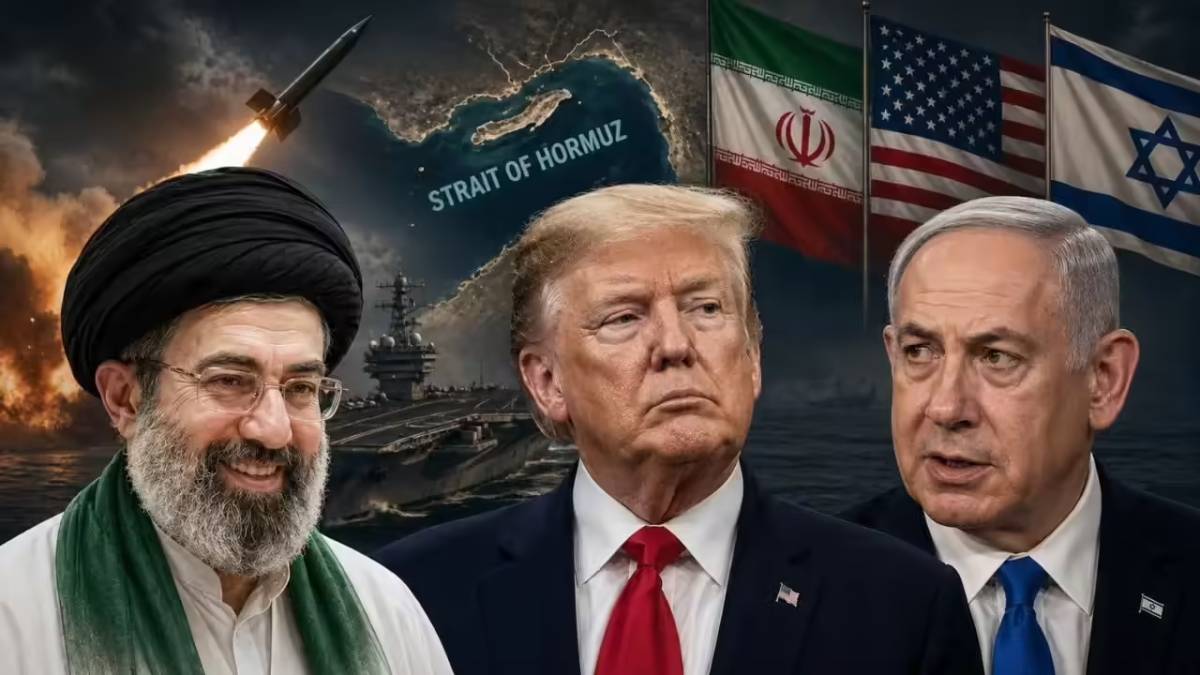
New Delhi, May 30, 2026 — The diplomatic stand-off over the 3-month-old war between the United States and Iran has reached a critical turning point. US President Donald Trump recently concluded a high-stakes, two-hour meeting with his top national security advisors in the White House Situation Room. The goal of the meeting was to make what he termed a “final determination” on whether to move forward with a tentative framework agreement with Tehran.
The proposed deal, brokered through international intermediaries including Pakistan and Oman, aims to formally extend a fragile seven-week ceasefire by an additional 60 days. This extension would provide a stable window for deeper negotiations concerning Iran’s nuclear program, regional military activities, and maritime security. While negotiators on both sides have hammered out a draft Memorandum of Understanding (MOU), a formal announcement remains on ice as President Trump evaluates if the terms align with his strict policy redlines.
What Is on the Table?
The emerging agreement focuses heavily on stabilizing global energy supplies and pausing the military exchanges that have disrupted the Middle East over the past quarter. According to US and international diplomatic sources, the framework outlines a series of synchronized, step-by-step actions intended to cool down the conflict:
- The Strait of Hormuz: Iran must agree to a completely toll-free, unhindered passage for commercial shipping through the vital waterway. Tehran would also be required to completely remove all naval mines from the area within a 30-day window.
- Lifting the Maritime Blockade: In return for opening the strait, the United States would gradually dismantle its naval blockade on Iranian ports, allowing standard commercial trade to resume.
- Access to Frozen Funds: The draft framework suggests that Iran could gain managed access to approximately $12 billion in previously frozen overseas financial assets. This capital would be tied directly to compliance milestones.
- Easing Oil Sanctions: The US would relax specific economic penalties, allowing Iran to legally export limited quantities of crude oil and petrochemicals to help stabilize volatile global markets.
The Crucial Battle Over Nuclear Uranium
While the immediate goal of the MOU is preventing a return to active combat, the underlying friction centers entirely on Iran’s rapid nuclear development. The UN’s watchdog, the International Atomic Energy Agency (IAEA), reports that Iran currently holds 440.9 kilograms (972 pounds) of uranium enriched up to 60% purity. This concentration is a short, technical step away from the 90% threshold required to build military weapons.
Under the proposed 60-day window, the first order of business would be determining the fate of this highly enriched stockpile. The Trump administration has demanded that this material be entirely turned over or safely neutralized. Furthermore, the US has proposed a joint operation alongside the IAEA to safely clear and neutralize residual “nuclear dust” generated during previous B-2 bomber strikes on Iranian facilities last year.
Tehran, however, remains highly resistant to surrendering its stockpiles permanently without sweeping, permanent economic rollbacks. Iranian Foreign Ministry spokesman Esmail Baghaei publicly stated that the text of the agreement is “not yet finalized nor confirmed,” downplaying assertions from Western media outlets that an agreement is ready to sign.
Extreme Distrust on Both Sides
The diplomatic push is playing out against a backdrop of deep military suspicion. The current ceasefire has repeatedly wavered over the past 48 hours. US Central Command (CENTCOM) recently confirmed that Iranian forces launched a series of one-way attack drones and missiles toward a US ally in the Gulf, resulting in a successful interception by Kuwaiti air defenses. In response, American F-16 fighters carried out targeted defensive strikes against an active drone control facility in Bandar Abbas, Iran.
This constant trading of blows has fueled aggressive rhetoric from political figures in Iran. The Speaker of the Iranian Parliament, Mohammad Bagher Qalibaf, expressed blatant skepticism regarding Washington’s intentions during a recent statement on social media.
Broader Regional and Global Implications
The economic and political fallout of this conflict is rippling far beyond the borders of the Middle East. Because the Strait of Hormuz serves as the highway for roughly 20% of the world’s petroleum liquids, the ongoing blockade has driven global oil prices past $100 a barrel, triggering sharp spikes in household energy bills and agricultural fertilizer costs worldwide. US Secretary of Agriculture Brooke Rollins noted that accelerating a resolution is vital for “farm security and national security,” predicting that global commodity prices will stabilize rapidly once shipping channels clear out safely.
Additionally, regional dynamics complicate the final text. Tehran has continually insisted that any long-term peace plan must be linked to a total cessation of Israeli military operations against Hezbollah in southern Lebanon. This condition remains highly controversial among US allies, as Israel argues it leaves their northern borders vulnerable to regrouping militant forces.
As the White House security team processes the data from the latest Situation Room briefing, the world watches to see if President Trump will sign off on the 60-day cooling-off period, or if the US military will pivot back to a strategy of maximum pressure. For now, US naval assets and Air Force patrols remain on high alert throughout the Persian Gulf, ready to respond if the diplomatic window slams shut.