
Now Reading: Massive Arrival Queues at Dubai International Amid Regional Tension
-
01
Massive Arrival Queues at Dubai International Amid Regional Tension

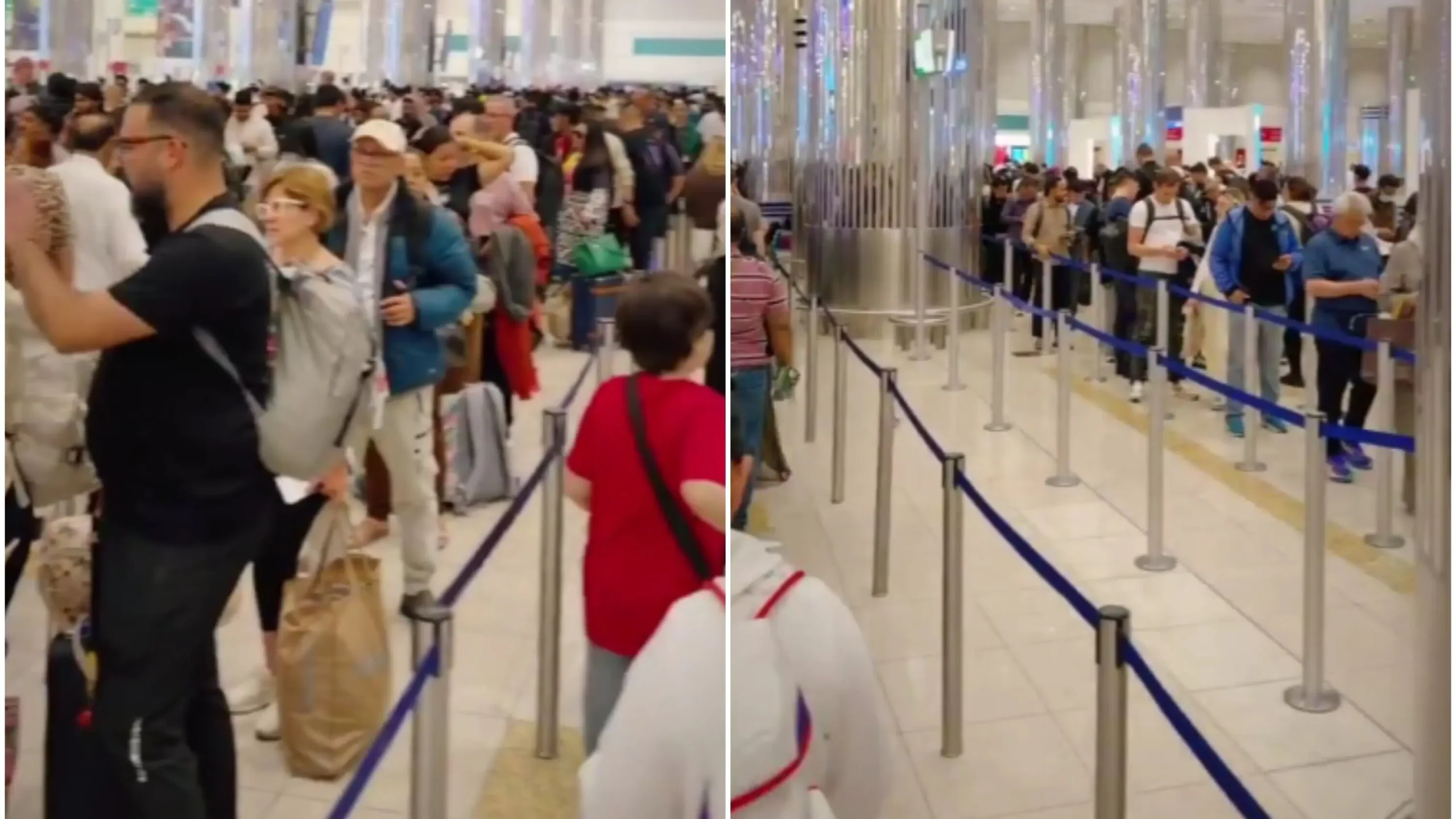
New Delhi, March 19, 2026: A significant wave of digital concern and traveler frustration has been triggered across social media platforms following the emergence of startling footage from Dubai International Airport (DXB). In the video, which gained massive traction on March 19, 2026, thousands of passengers are observed navigating through serpentine queues that stretch deep into the arrival halls of Terminal 3. It is noted that the congestion has reached critical levels, with wait times for immigration and baggage claim reportedly exceeding several hours. This startling visual of a packed transit hub has been widely shared as a primary example of the strain currently being placed on global aviation infrastructure.
The Mechanics of Systematic Delay
The specifics of the bottleneck and the underlying causes of the gridlock are being meticulously discussed by aviation analysts and stranded tourists. It is observed in the viral reports that the influx of travelers has coincided with a series of significant flight disruptions across the Middle East. It is reported by several digital observers that numerous carriers have been forced to reroute or cancel services due to escalating war fears and airspace closures in neighboring regions. The visual of exhausted families sleeping on luggage trolleys has provided a grounding narrative for the logistical nightmare that occurs when a primary global gateway becomes a secondary refuge for displaced passengers.
Also Read: Dhurandhar 2: Ending & Sequel News
Social Media Reacts: A Symphony of Anxiety and Travel Warnings
A massive conversation regarding “travel safety” and “hub vulnerability” has been ignited by this digital revelation. It is noted that the video was met with an outpouring of worried comments, with many netizens remarking that “the glamor of Dubai transit has been replaced by survival mode.” The airport management is being widely discussed for its struggle to maintain order as the sheer volume of arrivals outpaces the available staffing at security checkpoints. Thousands of analytical comments have been left by users who expressed their fear, stating that such videos serve as a stark reminder of how quickly international travel can be paralyzed by geopolitical instability.
Impact on Global Tourism and Airline Scheduling
The impact of this viral event has extended beyond simple travel delays to influence a broader discussion on the resilience of the UAE’s tourism sector. It is frequently mentioned by industry experts that Dubai serves as a vital artery for East-West connectivity, meaning any disruption here is felt globally from London to Sydney. A renewed sense of urgency is being observed among airline operators, many of whom are now reportedly being urged to provide more transparent communication regarding “at-risk” flight paths. It is believed that the viral nature of this specific “Dubai Queue Video” will prompt a dialogue on the necessity of enhanced emergency contingency plans for mega-hubs during times of regional conflict.
A Stark Reminder of Fragile Connectivity
As the footage continues to accumulate millions of views in late March 2026, it serves as a powerful and resilient reminder that even the most advanced airports are not immune to the winds of war. It is believed that the account of the “Billion-Dollar Bottleneck” will remain a primary highlight of the month’s most discussed and socially significant news features. The legacy of this viral event is expected to be a heightened public awareness of the risks involved in transiting through high-sensitivity zones. Until the geopolitical situation stabilizes and flight paths are fully restored, this video remains a stark testament to the fact that in a globalized world, a crisis anywhere is a delay everywhere.