

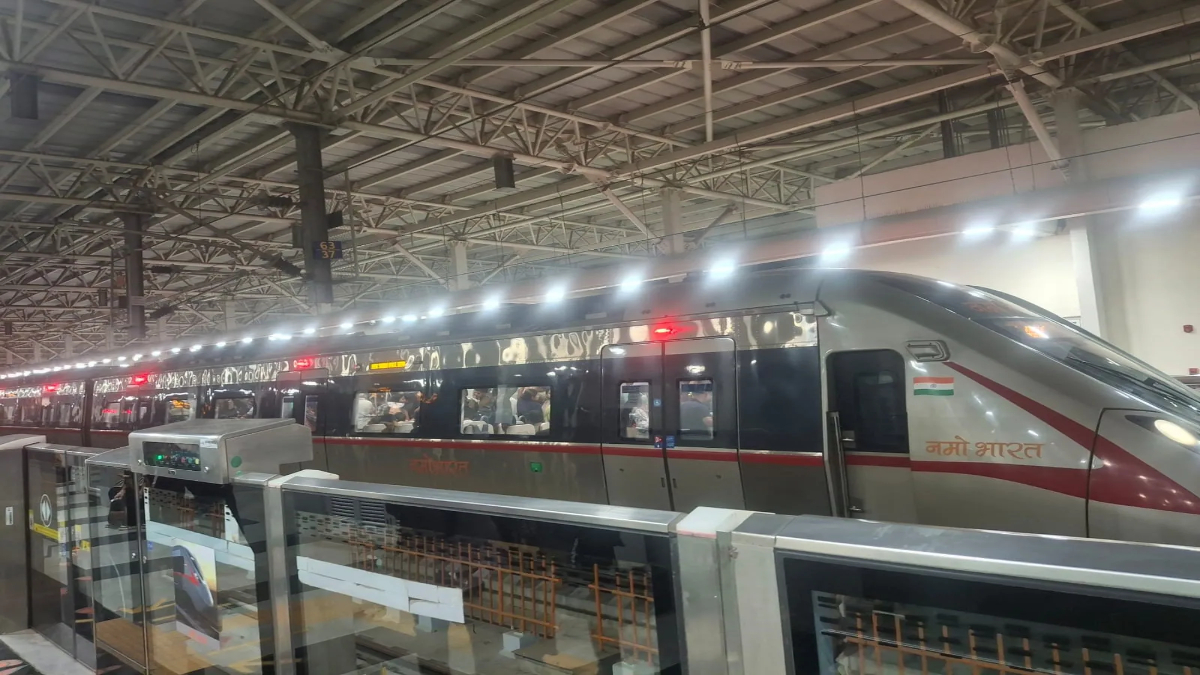
New Delhi, March 18, 2026: In a landmark shift for urban mobility in India, the Meerut Metro—operating as a vital intra-city component of the 82-km Delhi-Ghaziabad-Meerut corridor—is witnessing a massive surge in popularity. Recent data indicates that daily ridership on the Namo Bharat corridor has climbed to nearly 92,000, with officials optimistic that the figure will soon breach the 1.5 lakh mark.
At the heart of this success is a clever engineering solution: the ‘Island Platform’ design. By integrating high-speed regional rail with local metro services on a single platform, the National Capital Region Transport Corporation (NCRTC) has solved the “last-mile” friction that often plagues public transit.
What is the Island Platform Design?
An island platform is a station layout where a single platform is positioned between two sets of tracks. In the context of Meerut, this design serves a dual purpose:
- The “Same Platform” Interchange: At key stations like Meerut South, Shatabdi Nagar, Begumpul, and Modipuram, commuters can deboard a Namo Bharat (Regional) train and simply walk across the same platform to board a Meerut Metro (Local) train.
- Dual-Sided Access: Passengers can board or deboard from both sides, which significantly reduces “dwell time” (the time a train spends at a station) and prevents the platform from becoming a bottleneck during peak hours.
Pushing Ridership to New Heights
Before the full integration and the operationalization of these designed stations, average ridership hovered around 60,000. The jump to 92,000 daily passengers as of March 2026 is attributed to three primary factors:
1. Eliminating Transit Friction
Historically, switching from a regional train to a city metro involved exiting the station, passing through security again, and navigating complex foot-over-bridges. The island platform design eliminates this. For a professional traveling from Delhi to a local office in Meerut, the transition is now as seamless as switching lines on the same floor.
2. Time Efficiency
With Namo Bharat trains reaching speeds of 160 km/h and the Meerut Metro operating as India’s fastest metro at 120 km/h, every second counts. The island platform saves an estimated 5 to 7 minutes per transfer. This efficiency has made the rail corridor more attractive than the Delhi-Meerut Expressway, where traffic congestion remains unpredictable.
3. High-Frequency “One Network” Experience
Under the “One Network” philosophy, both services use a common ticketing system. Whether a passenger is on a three-coach Meerut Metro train or a six-coach Namo Bharat train, the experience is unified. Currently, trains are available every 10 minutes, ensuring that the island platforms never remain overcrowded for long.
Key Stations Leading the Charge
| Station | Design Feature | Significance |
| Begumpul | Underground Island Platform | Located in a dense business district; currently the busiest station in Meerut. |
| Shatabdi Nagar | Elevated Interchange | Serves as a major hub for commuters switching between local and regional lines. |
| Modipuram | Integrated Terminal | Connects the northern end of the city directly to the regional high-speed line. |
Future Outlook: The 1.5 Lakh Milestone
The NCRTC spokesperson noted that the “improved station design addresses congestion before it even happens.” As more commuters shift from private vehicles to public transport—a trend already visible in the 63% modal share shift toward rail—the infrastructure is ready to handle the load.
With the success of the island platform in Meerut, transport experts suggest this model will likely be replicated in upcoming RRTS corridors, including the Delhi-Panipat and Delhi-Alwar lines. For now, Meerut stands as a blueprint for how thoughtful design can turn a transit project into a daily lifeline for nearly a hundred thousand people.