

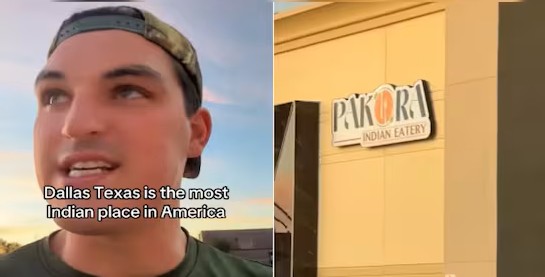
New Delhi, November 27, 2025: A recent viral video that attempted to define the “Most Indian Place in America” has drawn a sharp and varied reaction from internet users across the globe. The clip, which showcased a specific commercial area known for its concentration of Indian stores, restaurants, and businesses, was circulated widely and quickly became the subject of intense debate concerning cultural identity, assimilation, and representation.
The Location Is Showcased
The video was created by an online content creator and featured a tour of a particular neighborhood, believed to be in a major metropolitan area of the United States. Scenes showing bustling grocery stores stocked with Indian staples, colorful clothing shops, and signage predominantly displayed in Indian languages were captured. The area was presented as a cultural enclave where traditions and tastes of the subcontinent are openly maintained and celebrated.
The video was narrated with commentary that labeled the location as the “Most Indian Place in America,” suggesting that the area offered a genuine, immersive experience of India for immigrants and visitors alike. This label was the primary catalyst for the strong reactions that followed its posting.
Also Read: Bengaluru Auto Driver’s Honesty Goes Viral
Diverse Reactions Are Received
The response to the video was sharply divided. On one hand, the clip was welcomed by many as a heart-warming depiction of the Indian diaspora successfully establishing and maintaining its cultural identity abroad. Sentiments were expressed that such places provide a vital sense of community and belonging for immigrants. The existence of these enclaves was celebrated as a positive example of multiculturalism in the US.
Conversely, significant criticism was leveled against the video. Objections were voiced concerning the reductive nature of the label, which was seen by some as stereotyping the entire community based on a single commercial district. Arguments were put forth that true ‘Indian-ness’ cannot be confined to a shopping center and that the video ignored the diverse and assimilated lives lived by the majority of the Indian population across America. Concerns were also raised about the term potentially promoting segregation rather than integration.
A Debate on Identity Ensues
The clip inadvertently triggered a deeper discussion among internet users about what constitutes “Indian identity” in a global context. Questions were frequently asked about whether cultural preservation should be prioritized over complete assimilation, and how Indian-Americans navigate their dual identities. The comments section of the video was filled with personal anecdotes and philosophical arguments, highlighting the complexity of immigrant life.
Ultimately, the video was widely viewed, not just for its content but for the powerful debate it inspired. It underscored the fact that cultural representation on social media is a sensitive topic, and labels, even those meant to be celebratory, can be perceived and interpreted in widely different ways.