

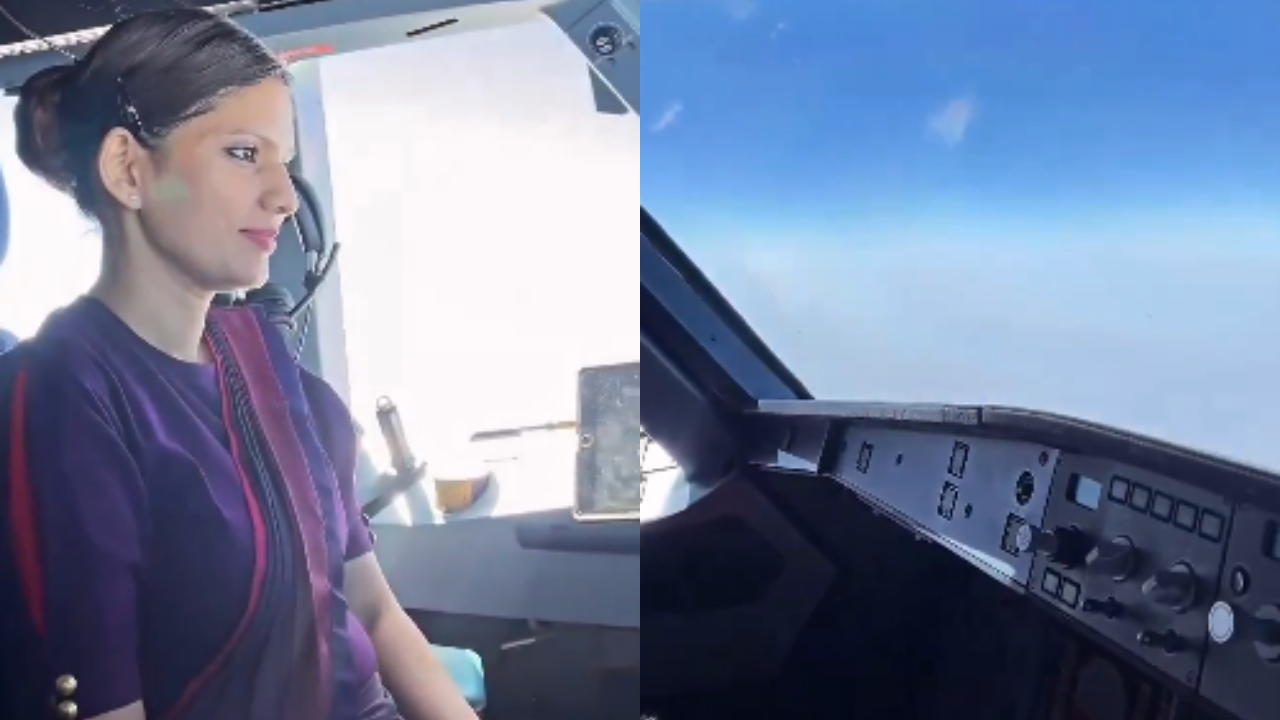
New Delhi, March 12, 2026: A video of a former Air India cabin crew member posing inside the cockpit of an airborne aircraft has gone viral, sparking a wave of online criticism and a formal internal investigation by the airline. The clip, which surfaced in early March 2026, has reignited a heated debate over aviation safety and the growing trend of “reels culture” compromising professional protocols.
The Viral Incident: “Heart of the Aircraft”
The controversy began when a 20-second reel, titled “Welcome to the heart of the aircraft – cockpit,” was posted on Instagram. The footage shows a woman in a full Air India uniform seated in the pilot’s chair. As the camera pans, it captures the flight instruments and the view through the cockpit windscreen, clearly showing clouds and suggesting the aircraft was at cruise altitude.
While the video was intended as a lighthearted social media post, it quickly drew the ire of aviation enthusiasts and safety advocates. Critics on platforms like X (formerly Twitter) labeled the act “disturbing,” questioning how a crew member—let alone a former employee—was allowed to use the high-security flight deck as a backdrop for social media content.
Air India’s Response and Investigation
In response to the mounting backlash, Air India issued a statement confirming that an internal probe is underway. The airline clarified that the individual in the video is a former employee who reportedly left the company in February 2026.
“Air India has strict protocols governing access to the cockpit, and any deviation from these standards is treated with utmost seriousness. While we are verifying the authenticity of the video, we have initiated an internal investigation to establish the facts and circumstances surrounding it,” an Air India spokesperson stated.
The airline is currently investigating several key factors:
- Authenticity: Determining if the video was filmed during an actual commercial flight or in a simulator/stationary aircraft.
- Timing: Establishing when the video was recorded, specifically if it occurred while the individual was still employed.
- Authorization: Identifying the flight crew who permitted the entry and recording, as they could face disciplinary action for a safety breach.
The “Two-Person Rule” vs. Social Media Reels
The incident has led to a discussion regarding the Directorate General of Civil Aviation (DGCA) regulations. Under Indian aviation rules, at least two authorized personnel must be in the cockpit at all times. If one pilot needs to take a physiological break, a cabin crew member is often required to step into the cockpit to maintain the “two-person rule.”
However, aviation experts point out that this rule is a safety measure to prevent a pilot from being locked out—not an invitation for photo opportunities. Sitting in the pilot’s seat and recording videos is strictly prohibited, as it distracts the remaining pilot and can lead to accidental interference with flight controls.
Historical Precedents
This is not the first time Air India has faced “cockpit guest” controversies. In 2023, the DGCA fined the airline ₹30 lakh and suspended a pilot’s license for allowing a female friend into the cockpit during a Dubai-Delhi flight. The recurrence of such incidents has led many to call for stricter enforcement of “sterile cockpit” environments.
Public Sentiment and “Trolling”
Online reaction has been swift and largely critical. While some users joked about the “new pilot in town,” the majority expressed concern over passenger safety. Many trolled the airline for a perceived “lax culture” despite its recent rebranding and modernization efforts.
- “Is passenger safety a joke for reels?” one user commented.
- “Strict protocols mean nothing if the crew treats the cockpit like a photo booth,” remarked another.
As the investigation continues, the aviation industry remains under pressure to draw a hard line between digital engagement and operational safety.