

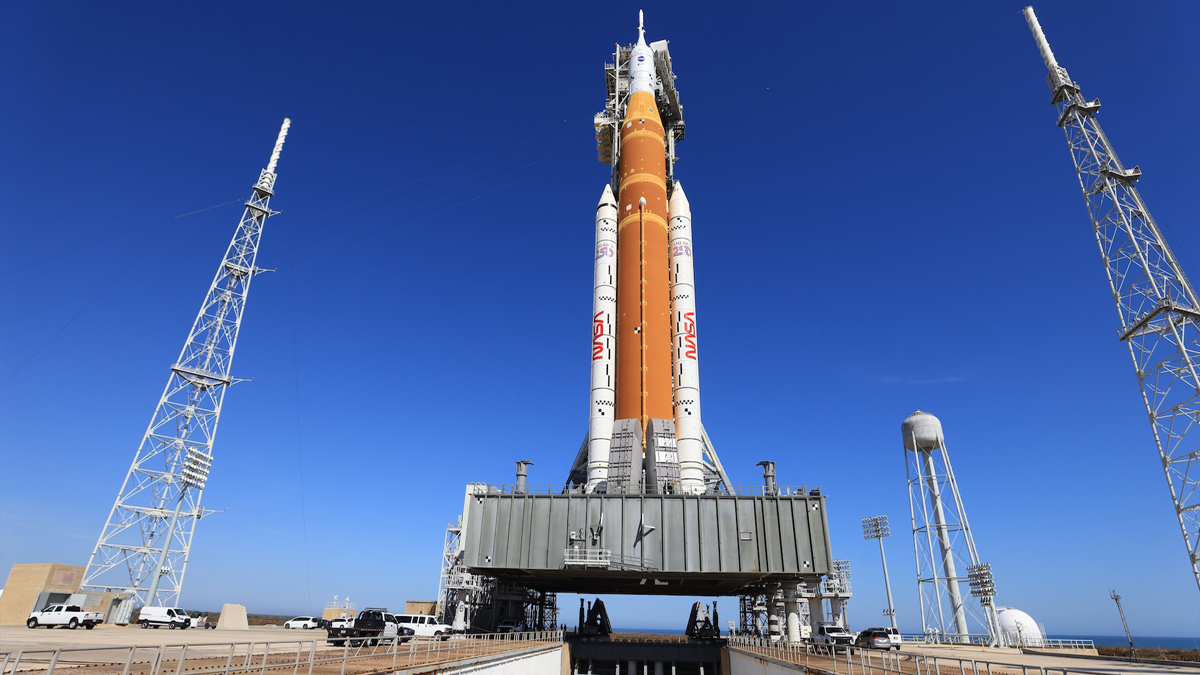
New Delhi, February 21, 2026: – In a move that signals the dawn of a new era in human space exploration, NASA has officially announced a target launch date of March 6, 2026, for the highly anticipated Artemis II mission. This milestone marks the first time in over 50 years—since the conclusion of the Apollo program—that humans will venture beyond low-Earth orbit to the vicinity of the Moon.
The announcement comes on the heels of a successful “wet dress rehearsal” completed on February 19. During this critical test, engineers at the Kennedy Space Center successfully loaded the massive Space Launch System (SLS) rocket with super-chilled liquid hydrogen and oxygen propellants, clearing a primary technical hurdle that had previously caused minor delays due to fuel leaks.
The Mission: A Journey Around the Lunar Far Side
Artemis II is a 10-day flight test designed to prove that the Orion spacecraft’s life-support systems are ready to sustain astronauts in deep space. While the crew will not land on the lunar surface, they will travel approximately 4,700 miles (7,600 km) beyond the far side of the Moon.
- The Crew: The mission features a diverse team of four: Commander Reid Wiseman, Pilot Victor Glover, Mission Specialist Christina Koch (all from NASA), and Mission Specialist Jeremy Hansen from the Canadian Space Agency.
- The Trajectory: Using a “free-return trajectory,” the spacecraft will use the Moon’s gravity to naturally pull it back toward Earth, ensuring a safe return even if the primary propulsion systems encounter issues.
- The Goal: This flight serves as the final bridge to Artemis III, the mission currently slated for 2027-2028, which aims to land the first woman and first person of color on the lunar South Pole.
Overcoming Technical Hurdles
The road to the March launch window has not been without challenges. Earlier in February, NASA technicians identified a hydrogen leak and a minor issue with the Orion hatch’s pressurization valve.
“Last night was a big step in us earning our right to fly,” said Artemis Launch Director Charlie Blackwell-Thompson following the successful fueling test. “I’m very proud of the team for resolving the persistent leak issues that are often inherent with such a complex, high-energy vehicle.”
The SLS remains the world’s most powerful rocket, capable of producing 8.8 million pounds of thrust at liftoff—roughly 15% more power than the legendary Saturn V.
What’s Next for the Crew?
To ensure the mission remains on track, the four astronauts entered a “soft quarantine” this week. This protocol is a standard safety measure to prevent the crew from contracting any illnesses before their historic journey.
NASA officials will conduct a final Flight Readiness Review (FRR) next week. If the data from the recent rehearsal holds up, the countdown for the March 6 liftoff will begin in earnest.
Launch Details at a Glance: | Feature | Details | | :— | :— | | Target Date | March 6, 2026 | | Launch Site | Launch Complex 39B, Kennedy Space Center | | Spacecraft | Orion MPCV | | Rocket | Space Launch System (SLS) Block 1 | | Duration | 10 Days | | Destination | Lunar Flyby (Free-return trajectory) |
Would you like me to draft a social media announcement or a follow-up piece regarding the specific roles of the four astronauts on this mission?