
 rocket)
New Delhi, january 19, 2026: In a momentous step toward returning humanity to deep space, NASA’s Artemis II Space Launch System (SLS) rocket and Orion spacecraft reached Launch Pad 39B at the Kennedy Space Center on Saturday, January 17, 2026. This arrival signals the final countdown for a mission that will see the first crewed flight to the lunar vicinity in over 50 years.
The towering 322-foot-tall rocket emerged from the iconic Vehicle Assembly Building (VAB) early Saturday morning, beginning a painstaking four-mile journey. Carried by the massive Crawler-Transporter 2, the 11-million-pound stack moved at a top speed of just 0.82 mph, taking nearly 12 hours to reach its seaside destination.
A Gateway to the Stars: Modifications at Pad 39B
Launch Pad 39B, a historic site that previously hosted Apollo and Space Shuttle missions, has undergone significant upgrades to support the sheer power of the SLS. Key modifications for the Artemis II mission include:
- Emergency Egress System: A new “roller coaster” style basket system designed to whisk the four-person crew to safety in the event of a pad emergency.
- Hydrogen Storage: Increased capacity to hold the massive amounts of liquid hydrogen needed for the SLS core stage.
- Liquid Nitrogen Upgrades: Enhanced systems to support the cooling and purging of the rocket’s internal components.
- Enhanced Sound Suppression: A massive water deluge system designed to protect the rocket and its crew from the deafening acoustic energy of the 8.8 million pounds of thrust produced at liftoff.
The Road Ahead: Testing and Rehearsal
Now that the vehicle is “hard-down” on the pad, engineers are entering a high-stakes testing phase. The most critical milestone is the “Wet Dress Rehearsal,” currently targeted for early February.
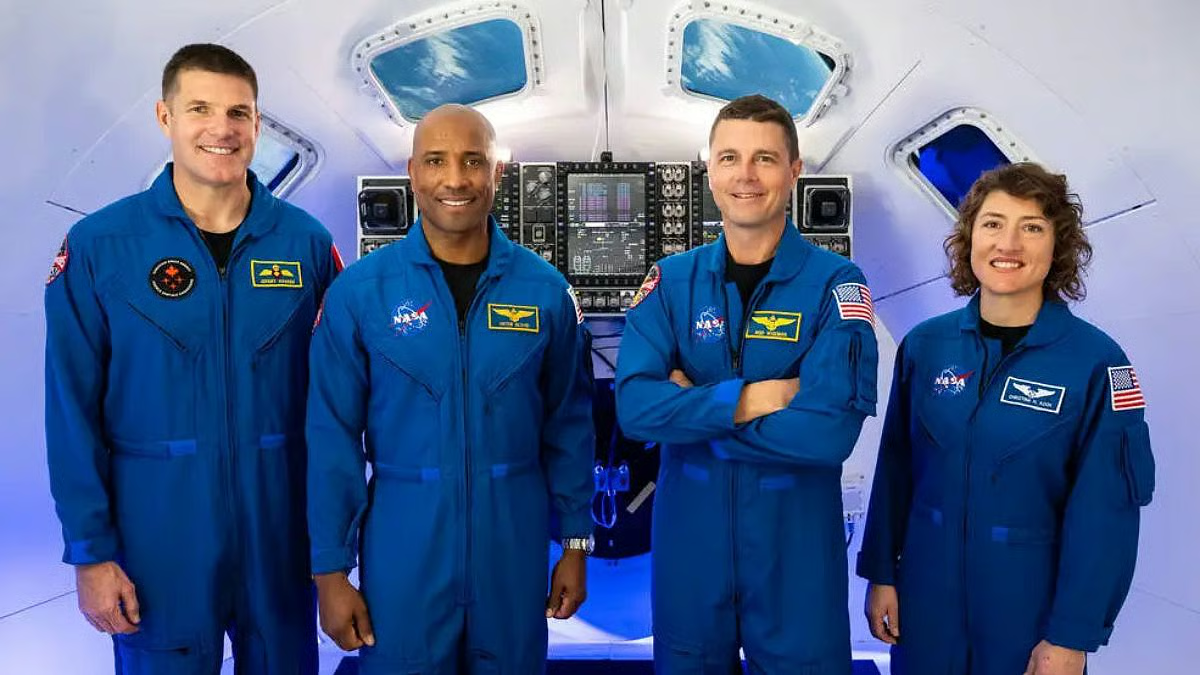
During this test, teams will practice the complex “cryogenic loading” process—pumping hundreds of thousands of gallons of super-cold liquid oxygen and liquid hydrogen into the rocket. While the astronauts—Reid Wiseman, Victor Glover, Christina Koch, and Jeremy Hansen—will not be on board for the rehearsal, the mission management team will use the data to confirm that every valve, sensor, and software line is ready for flight.
Mission Significance
Artemis II is more than just a flight; it is a 10-day test of the Orion spacecraft’s life-support systems. The crew will travel approximately 6,400 miles beyond the far side of the Moon, marking the furthest any human has traveled into the cosmos since Apollo 17 in 1972.
“This is the definitive signal that humanity is no longer just dreaming of the Moon; we are standing on the doorstep,” NASA officials noted during the rollout.
If the upcoming pad tests are successful, NASA is eyeing a primary launch window that opens as early as February 6, 2026, with backup dates extending through April. As the world watches, the “cathedral of rocketry” at Kennedy Space Center stands ready to propel the next generation of explorers into the history books.