

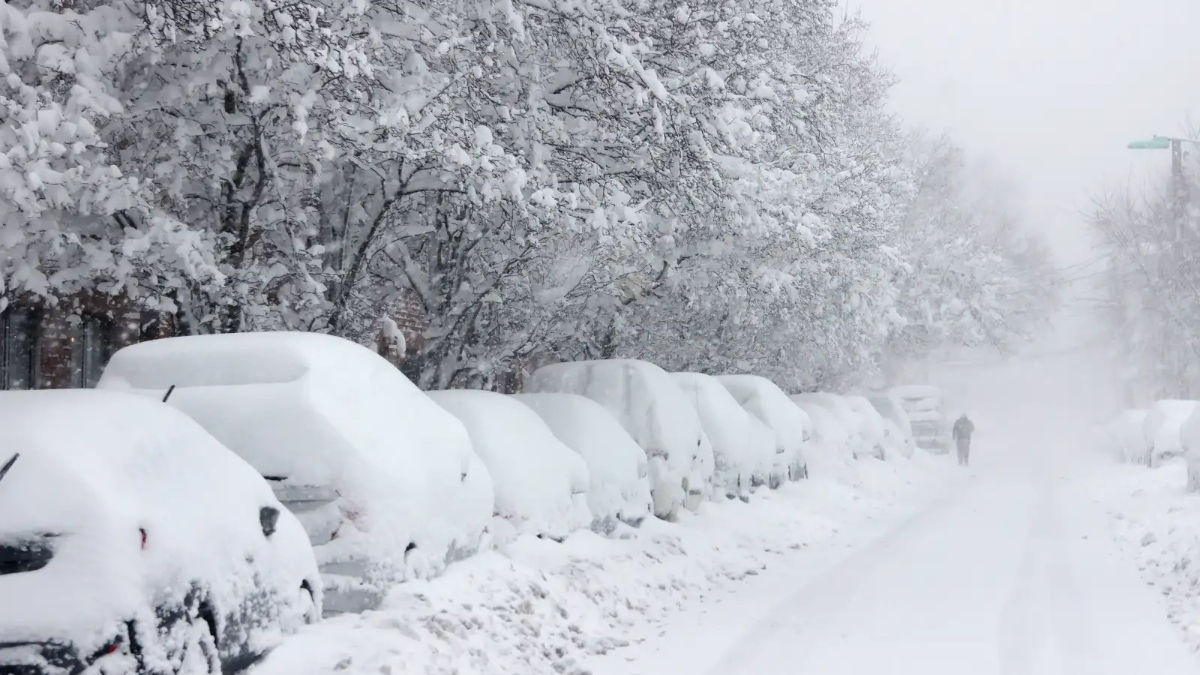
New Delhi, February 24, 2026: A monster winter storm, unofficially dubbed “Winter Storm Hernando,” has left the U.S. Northeast reeling after a weekend of explosive intensification. The “bomb cyclone” delivered a historic punch, shattering decades-old snowfall records from New Jersey to Rhode Island and plunging major metropolitan hubs into a state of frozen paralysis.
As of Tuesday, February 24, 2026, recovery efforts are underway, but the scale of the disruption remains staggering. With snowfall totals exceeding three feet in some areas and wind gusts clocking in at hurricane force, the storm has effectively rewritten the record books for 21st-century winter weather.
Record-Breaking Accumulations
The storm’s rapid intensification—a process known as bombogenesis—occurred when the central pressure dropped over 30 millibars in under 24 hours. This meteorological “bomb” unleashed localized snow rates of up to 3 inches per hour.
- Providence, RI: Recorded a staggering 37.9 inches, officially surpassing the city’s all-time record set during the Great Blizzard of 1978.
- New York City: Central Park saw 19.7 inches, ranking as the ninth-heaviest snowfall in the city’s 157-year history and the most since 2021.
- Newark, NJ: Totaled 27.1 inches, breaking a daily record that had stood since 2016.
- Warwick, RI: Topped the charts with over 3 feet (36.2 inches) of accumulation.
Travel Meltdown: 11,000+ Flights Grounded
The transportation sector faced a near-total collapse as the storm peaked on Monday. Flight tracking data from FlightAware confirmed that more than 10,000 flights were cancelled between Sunday and Monday, with an additional 1,600 cancellations already hitting the boards for Tuesday.
Major hubs including JFK, LaGuardia, and Logan International suspended operations entirely during the height of the blizzard. On the ground, the situation was equally dire. Amtrak suspended Northeast Corridor service between New York and Boston, while governors in eight states issued strict travel bans, citing “zero-visibility” conditions that turned Interstate 95 into a graveyard of stranded vehicles.
Utility Crisis and Public Safety
The combination of heavy, “concrete-like” wet snow and wind gusts reaching 84 mph at Montauk Point took a heavy toll on the region’s aging infrastructure.
- Power Outages: Over 600,000 customers lost electricity at the storm’s peak. Massachusetts and New Jersey bore the brunt of the outages, with utility providers warning that restoration could take several days due to blocked roads and deep snowdrifts.
- Fatalities: Tragically, the storm has been linked to several deaths, including two in Maryland caused by falling trees and a cold-related fatality in South Carolina.
- Emergency Response: Hundreds of National Guard members were activated across New England to assist in high-water rescues and to help clear essential routes for emergency vehicles.
What’s Next?
While the main body of the bomb cyclone has exited into the Canadian Maritimes, the danger has not passed. Meteorologists are warning of a “flash freeze” today as temperatures remain well below freezing, turning slushy roads into sheets of black ice.
New York City Mayor Zohran Mamdani announced that public schools would reopen today, Tuesday, following the city’s first “traditional” snow day since 2022. However, residents are urged to remain cautious, as a weaker “clipper” system is expected to bring a fresh dusting of snow to the region by Wednesday morning.