

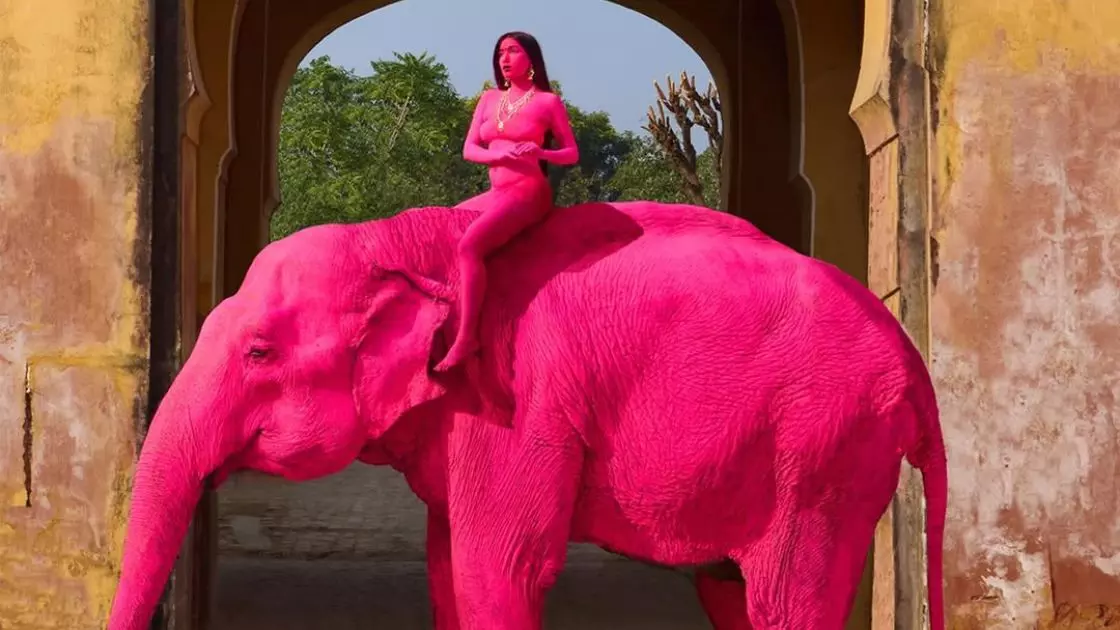
New Delhi, March 30, 2026: A high-profile art project in the “Pink City” has ignited a firestorm of controversy after a Russian photographer shared images of a live elephant painted entirely in bright pink. The photoshoot, conducted by Barcelona-based conceptual photographer Julia Buruleva, features a model posing alongside the vividly colored animal against the backdrop of Jaipur’s historic architecture. Since surfacing on March 29, 2026, the footage has drawn sharp condemnation from animal rights activists and local residents, who have labeled the act as a form of “aesthetic abuse.”
The “truth” behind the creative choice was shared by Buruleva, who explained that the concept was inspired by her six-week stay in Jaipur. She described the elephant as a “cultural symbol” of Rajasthan and chose the solid pink hue to mirror the city’s iconic identity. While she claimed that the shoot was an attempt to merge art with reality, many critics argued that the animal was treated as a “lifeless prop” rather than a sentient being. The choice of an abandoned Ganesha temple as the location has further added a layer of cultural insensitivity to the debate.
Organic Paint Claims and Animal Welfare Concerns
In response to the mounting backlash, the photographer has clarified that the process was handled with the utmost care. It is stated by Buruleva that the paint used was organic, non-toxic, and locally sourced—the same variety used during traditional Indian festivals. She emphasized that the session was brief and that the elephant, a 65-year-old female named Chanchal, was not harmed. However, this defense has been rejected by activists who argue that an elephant’s skin is highly porous and sensitive, making any extensive chemical or organic coating potentially stressful and invasive.
The reaction from the digital community has been a massive push for the use of modern technology over live animals. It is argued by several prominent netizens that such a visual effect could have been easily achieved through post-production or Artificial Intelligence (AI) without subjecting a senior animal to a lengthy “makeover.” The passive endorsement of the shoot by the elephant’s owner, Shadik Khan, has also been scrutinized, although it was later reported that the elephant featured in the video had unfortunately passed away in February, raising questions about the actual timeline of the footage.
Also Read: Love Beyond Borders: YouTubers Kanika Sharma and Saqib Saifi Tie the Knot in Interfaith Ceremony
Forest Department Inquiry and Legal Repercussions
The controversy has reached the halls of local governance, with the Rajasthan Forest Department taking formal cognizance of the viral video. It is reported that an inquiry has been ordered to determine whether the necessary permissions were obtained for painting a scheduled animal and if the welfare norms under the Wildlife Protection Act were violated. Authorities have stressed that “creative freedom” does not grant a license to alter or exploit protected species for commercial or artistic gain.
As of March 30, 2026, the #PinkElephant controversy remains a top trending topic, serving as a significant case study on the boundaries of “travel photography” in the age of social media accountability. While the photographer maintains that her intent was to celebrate Rajasthani culture, the incident has highlighted a deep divide between artistic expression and ethical responsibility. For now, the images of the pink-painted Chanchal stand as a stark reminder that in the quest for a “perfect shot,” the welfare of the subject must always come first.