

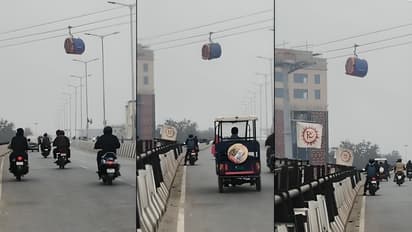
New Delhi, January 6, 2026: A storm of public controversy has been ignited in Varanasi following the emergence of a viral video involving the city’s highly anticipated ropeway system. In early January 2026, footage began circulating across social media platforms showing a cable car gondola swaying violently during a trial run. The dramatic movement of the cabin, high above the congested streets of the holy city, has led many netizens to label the project a “swinging death bell,” raising urgent questions about the safety of commuters in high-wind conditions.
Engineering Marvel or Public Safety Risk?
The ropeway project, which was designed to provide a modern solution to Varanasi’s chronic traffic congestion, is being viewed with increasing skepticism by the local population. It was observed in the viral clip that the gondola appeared unstable as it traversed a section of the line near the Varanasi Junction area. Critics have argued that the narrow lanes and high-density urban environment through which the ropeway passes could turn mechanical or weather-related malfunctions into major catastrophes.
Also Read: Yoga Murals Defaced with Vulgar Scratches in Viral Video
Official Clarification Amidst Growing Panic
In response to the mounting public backlash, an official clarification has been issued by the project’s executing agency and the Varanasi Development Authority (VDA). It was stated by officials on January 5, 2026, that the swaying observed in the video was part of a “controlled stress test” designed to evaluate the system’s resilience under extreme lateral pressure. The public has been assured that the ropeway is equipped with state-of-the-art anti-sway technology and that operational safety is guaranteed by international certifications.
Technical Scrutiny and Demands for Transparency
Despite the official reassurances, the incident has triggered a demand for greater transparency regarding the project’s technical specifications. It was highlighted by urban planning experts that the unique topography and wind corridors of Varanasi require a bespoke approach to cable transit. The viral video has been cited as evidence that more rigorous public safety drills and independent audits are needed before the system is opened for commercial use. Calls for a “safety white paper” have been echoed by local community leaders to restore public confidence.
The Future of Kashi’s Urban Mobility
As of January 6, 2026, the ropeway remains in its testing phase, with authorities monitoring public sentiment closely. The project is a key component of the city’s smart infrastructure plan, but it now faces the challenge of overcoming a negative digital narrative. It has been emphasized that while the ropeway promises a faster commute, it must first prove that it is not a “death trap” in the eyes of the citizens it is meant to serve. A series of public demonstrations and open-house sessions are reportedly being planned to showcase the system’s safety features.