

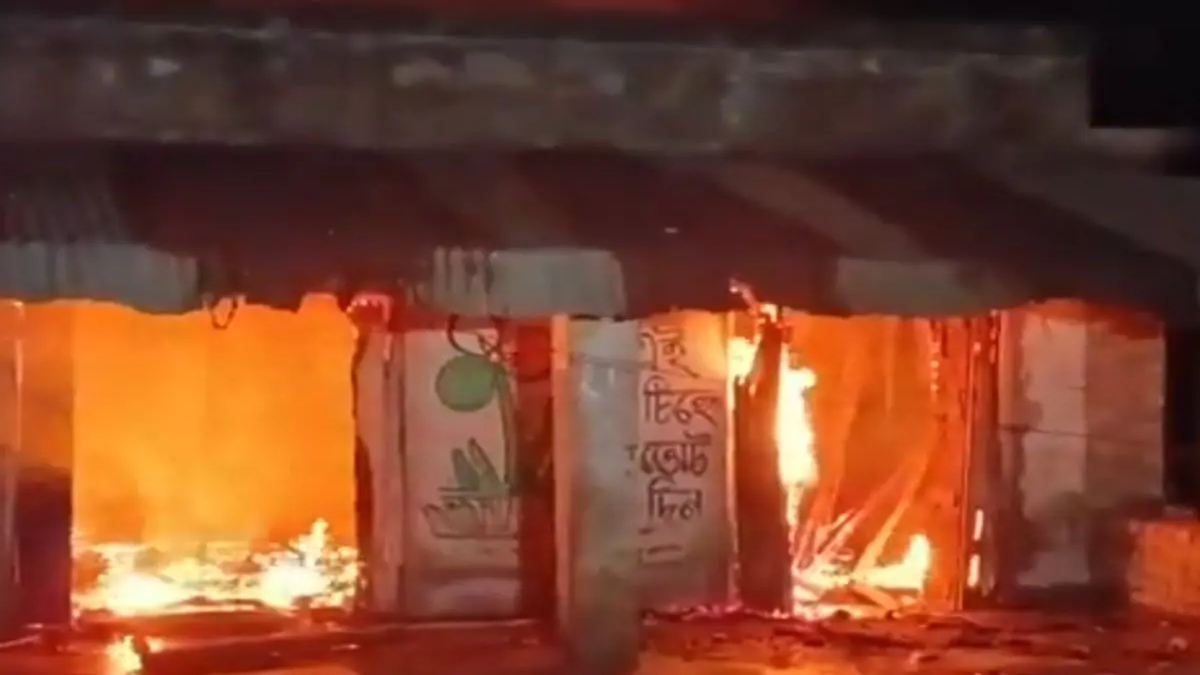
New Delhi, May 6, 2026 – A wave of post-election violence has gripped West Bengal in the aftermath of the state assembly election results declared on Monday, May 4, 2026. As the Bharatiya Janata Party (BJP) secured a sweeping victory, ending the 15-year tenure of the Trinamool Congress (TMC), reports of arson, vandalism, and violent clashes have surfaced from across the state. Official reports and party statements indicate that at least four individuals have lost their lives in the unrest, with both major political factions trading blame for the deteriorating law and order situation.
A State in Turmoil: The Clashes
Since the election results were announced, violence has spread rapidly from the capital city of Kolkata to several districts, including Howrah, Birbhum, North 24 Parganas, and Murshidabad.
In Kolkata, incidents of vandalism have been reported in areas like Tollygunge, Kasba, and the Chief Minister’s constituency of Bhowanipur, where a councillor’s office was reportedly targeted. Party offices have been ransacked, flags torn down, and vehicles damaged in widespread confrontations between rival party cadres.
The human toll has been significant. Police and party spokespersons have confirmed fatalities in separate incidents across the state:
- Beleghata, Kolkata: A TMC poll agent, Biswajit Pattanaik, was found dead near his home. His family alleges he was chased and beaten, while police are investigating the circumstances, noting he may have suffered fatal injuries while attempting to flee.
- New Town, Kolkata: A BJP worker, Madhu Mondal, died following a clash between TMC and BJP supporters over control of a local party office.
- Nanoor, Birbhum: A TMC worker, Abir Sheikh, was reportedly hacked to death. His family has blamed BJP activists, while the BJP has dismissed the allegation as the result of internal TMC factional rivalry.
- Udaynarayanpur, Howrah: BJP activist Jadav Bar was allegedly lynched. Local police have arrested four suspects and are investigating whether the incident was politically motivated or stemmed from personal enmity.
The Political Blame Game
The aftermath of the election has triggered a fierce battle of narratives between the incoming BJP administration and the outgoing TMC government.
Trinamool Congress (TMC) Allegations: Chief Minister Mamata Banerjee has vocally condemned the violence, accusing the BJP of selectively targeting TMC workers and attempting to instill fear across the state. “They have started torturing all our people. From south Bengal to north Bengal, they have started atrocities,” Banerjee stated. She has formed a committee of senior party leaders to visit the affected areas and document the incidents.
Bharatiya Janata Party (BJP) Response: The BJP leadership has sought to distance the party from the violence, calling for calm and urging workers to focus on governance rather than retribution. State BJP president Samik Bhattacharya issued a stern warning, stating that any party member found engaging in violence or intimidation would face immediate expulsion. “The political culture of Bengal must change,” Bhattacharya remarked, emphasizing that the party will not tolerate political revenge. Prime Minister Narendra Modi, speaking from New Delhi, also urged for an end to the cycle of violence, stressing that the administration’s focus should be on serving all citizens of Bengal regardless of their political affiliation.
Administration and Judicial Oversight
The surge in violence has placed immense pressure on local law enforcement. While the police maintain that the situation is “under control,” they have advised the public to be wary of misinformation and urged caution in sharing unverified footage online.
On the judicial front, the Supreme Court of India recently declined to hear an urgent plea seeking the indefinite extension of central forces in the state to curb post-poll violence. The bench, led by Chief Justice Surya Kant, advised the petitioners to approach the Calcutta High Court, noting that maintaining law and order remains the primary responsibility of the state’s political executive.With 700 companies of central forces still deployed in the state to assist with security, authorities are working to restore normalcy. However, the atmosphere remains tense as both parties monitor the situation closely, awaiting the formal transition of power, with the new government scheduled to take the oath of office on May 9, 2026.
Looking Ahead
The coming days will be critical in determining whether the violence is a temporary flare-up or a sign of deeper, sustained unrest. As the new administration prepares to take charge, the primary challenge for political leadership in West Bengal will be to move beyond the politics of vengeance and restore public confidence in the state’s security apparatus.
For now, the people of West Bengal remain on high alert, hoping that the calls for peace from both party headquarters will translate into reality on the ground.