

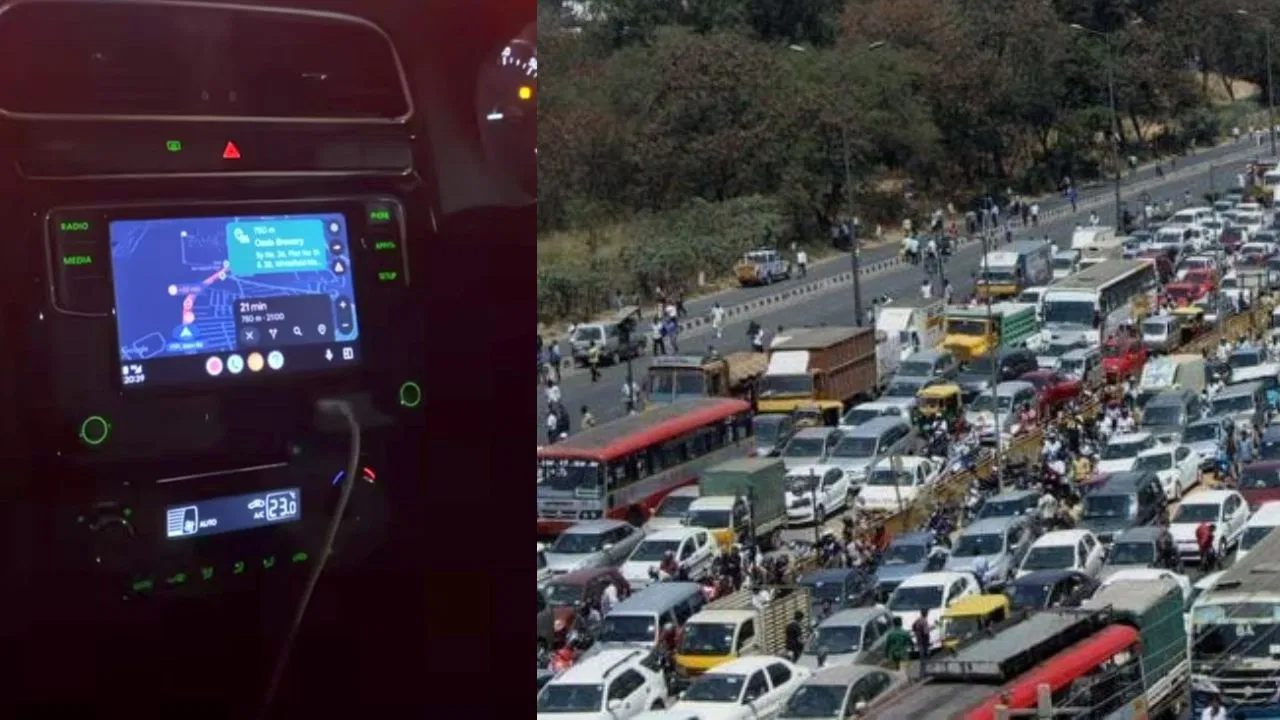
New Delhi, January 6, 2026: The notorious reputation of Bengaluru’s traffic has been further solidified by a startling video that has captivated the digital world in early January 2026. A local resident named Anjali was observed capturing her car’s infotainment screen, which displayed a navigation nightmare that many found hard to believe. In the viral footage, a distance of a mere 750 metres—typically a five-minute walk—was estimated by Google Maps to take a staggering 21 minutes to navigate by vehicle.
“Just Bengaluru Things”: The Viral Disbelief
The video, which was shared on Instagram with the caption “Me, after trusting Google Maps,” was seen quickly amassing hundreds of thousands of views and relatable comments. The screen was observed being lit up with deep red traffic indicators, signaling a complete gridlock that transformed a short hop into a prolonged test of patience. It was remarked by netizens that the footage perfectly encapsulates the daily “existential dread” felt by commuters in India’s tech capital, where travel time is no longer dictated by distance but by the sheer density of vehicles.
Also Read: Viral Dance to ‘Shararat’ Sweeps Pakistani Weddings
Weekend Nightmares and Infrastructure Gaps
The incident reportedly took place on a weekend night, a time when the city’s roads are often choked by residents visiting major hubs like Phoenix Marketcity or tech corridors like ITPL Road. It was noted by frustrated users that the infrastructure in these areas was never designed to handle the massive surge of vehicles that accompany festive seasons and weekend outings. One user was heard jokingly suggesting that a “diet mode” should be installed in cars to prevent fuel wastage during such indefinite idling.
The Walkability Argument and Public Outcry
The digital conversation was seen shifting toward the impracticality of using private transport for short distances in a congested city. Many commenters were observed advising the commuter that “walking would have been faster,” highlighting a growing sentiment that Bengaluru is becoming a city where pedestrian movement is more efficient than vehicular travel. However, the lack of safe, well-maintained footpaths was also pointed out as a reason why many are “forced” to remain in their cars despite the agonizingly slow pace of traffic.
A Systemic Challenge in 2026
As 2026 begins, the viral video serves as a stark reminder of the city’s unresolved mobility crisis. Despite promises of long-term solutions and metro expansions, the reality for the average citizen remains one of “crawling through corridors.” The 21-minute wait for 750 metres has been described by urban planners as a “statistical anomaly” that has unfortunately become an “everyday reality.” Until the gap between rapid urban growth and stagnant infrastructure is bridged, Bengaluru’s roads are expected to continue providing more “viral content” than smooth commutes.