

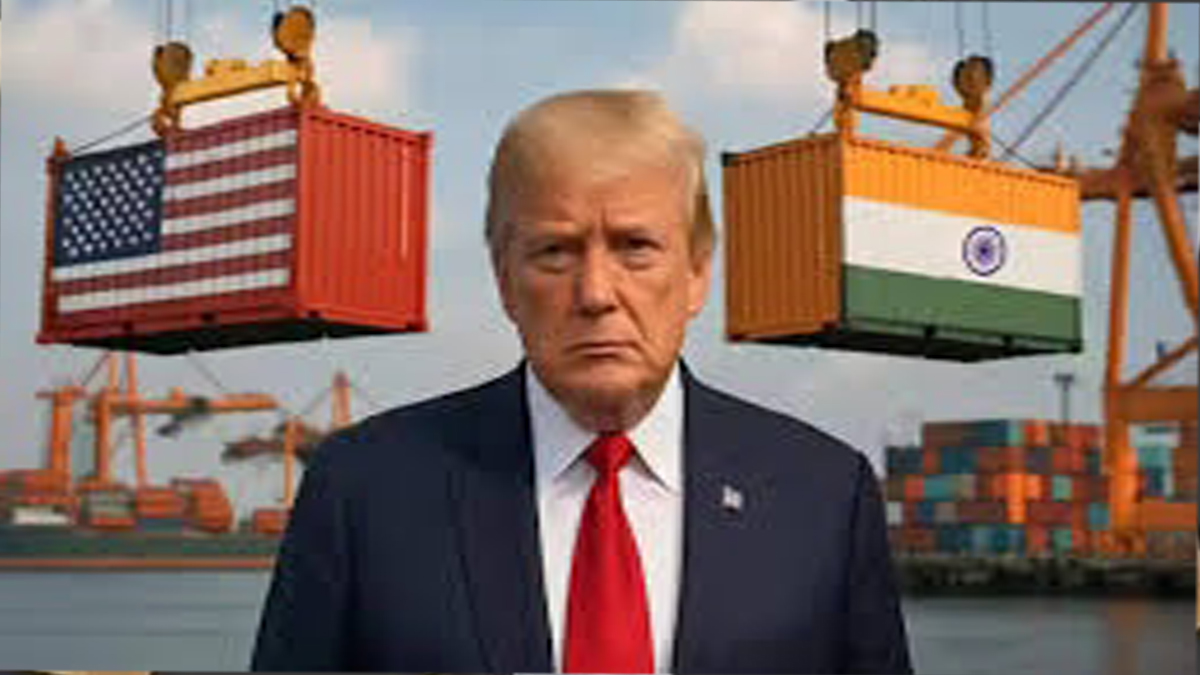
New Delhi, December 11, 2025: A prominent US lawmaker has issued a sharp warning that President Donald Trump’s aggressive use of tariffs and trade disputes risks severely damaging the vital US-India strategic partnership, raising the extraordinary question: Is the President who “lost India” already in office?
The escalating trade war, highlighted by combined tariffs of 50% on Indian goods—among the highest rates imposed on any US trading partner—has created what critics call a major diplomatic crisis. These duties, which include a penalty for India’s continued purchase of Russian oil, have led to the postponement of high-level meetings and stalled progress on a crucial bilateral trade agreement.
The Backlash: Tariffs Threaten a Critical Alliance
Congresswoman Sydney Kamlager-Dove, a ranking member on the Subcommittee on South and Central Asia, was blunt in her assessment, cautioning that the President’s actions are “causing real and lasting damage” to the trust between Washington and New Delhi.
“Trump risks becoming the president who lost India—or more accurately, chased India away,” she stated, emphasizing that this rift comes at a time when the partnership is central to America’s Indo-Pacific strategy, particularly as China watches closely.
Other senior lawmakers echo this sentiment. Rep. Gregory Meeks, a Democrat on the House Foreign Affairs Committee, has stressed that the arbitrary tariffs “threaten this vital relationship.” Critics argue the policy is an “economic self-own,” which hurts American consumers with higher prices and damages the global supply chains that US companies rely on.
A Double-Edged Sword of Tariffs
The core of the dispute lies in two areas:
- Existing High Tariffs: The 50% tariff rate is a combination of a 25% “reciprocal” tariff and an additional 25% penalty for India’s Russian oil imports. India has strongly defended its energy purchases as a matter of national interest to ensure affordable supplies for its 1.4 billion citizens.
- New Threats: Adding to the tension, President Trump recently threatened to impose new tariffs on Indian rice, accusing New Delhi of “dumping” the commodity and hurting American farmers. This threat surfaced even as trade delegations are meeting to try and stabilize the relationship.
Strategic Fallout: Pushing India Eastward
Beyond the economic fallout, the biggest concern for US lawmakers is the potential geopolitical damage. Strategic experts, including former US National Security Advisor John Bolton, have warned that the punitive tariffs could undermine decades of American diplomatic effort and strategically push New Delhi closer to Russia and China.
India has consistently maintained that it will not “bow down” to pressure, emphasizing its focus on attracting new markets and diversifying its trade. Meanwhile, US trade officials have acknowledged that India has offered its “best-ever” deal to resolve the disputes, even as the path to a final agreement remains challenging.
Despite the ongoing high-stakes discussions, the continuous threat of new tariffs introduces instability, lowering the prospects for a predictable and stable long-term trade partnership. The question remains whether the US administration will soften its approach to prevent the tariff policy from causing irrevocable harm to one of its most important strategic alliances.