

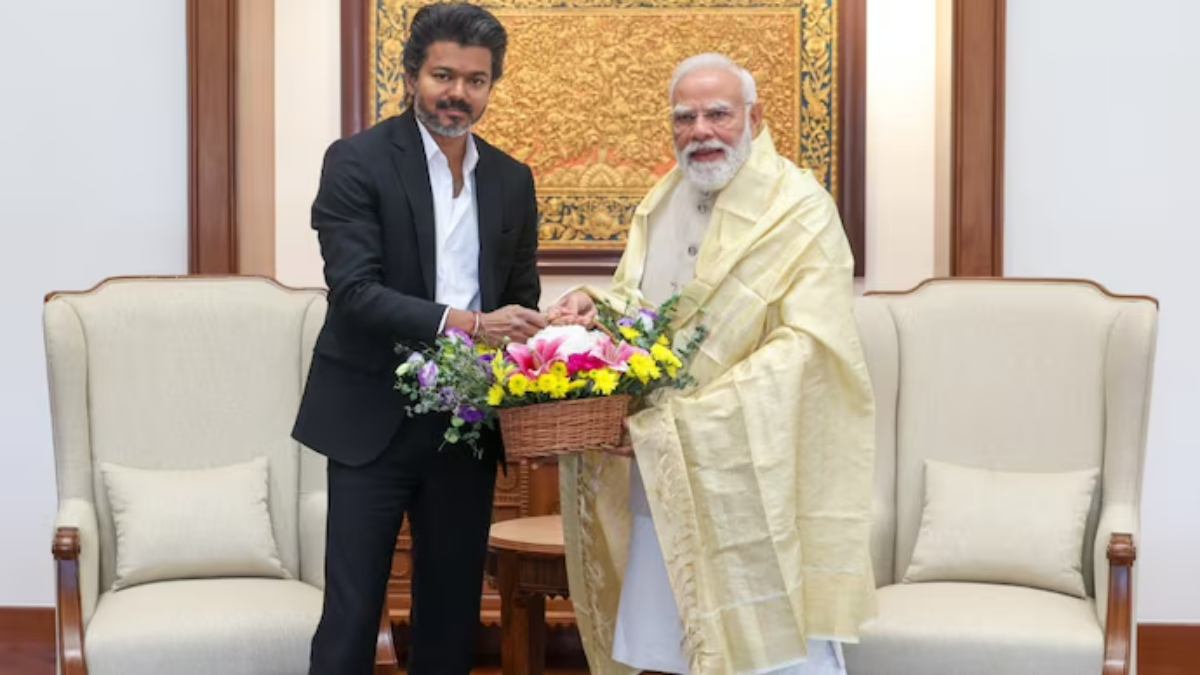
New Delhi, May 28, 2026 — In a highly anticipated political encounter, Tamil Nadu’s newly elected Chief Minister, C. Joseph Vijay, met with Prime Minister Narendra Modi in New Delhi on Wednesday. Coming less than three weeks after the superstar-turned-politician took the oath of office, the 10-minute meeting carried heavy symbolic weight. While framed as an official administrative visit, the dialogue front-centered the brewing “Vande Mataram” controversy, with Vijay strongly asserting that the state anthem, Tamil Thaai Vaazhthu, must maintain its customary priority at official events.
The meeting marks Vijay’s first official trip to the national capital since leading his party, the Tamilaga Vettri Kazhagam (TVK), to a historic victory as the single largest force in the state assembly. Amid shifting alliances and complex Centre-state relations, the discussion quickly moved beyond routine pleasantries to touch upon deep-seated regional anxieties, linguistic pride, and interstate disputes.
Navigating the Anthem Controversy
The core of the political friction stems from a major controversy during Vijay’s recent swearing-in ceremony in Chennai. Following new central government guidelines regarding the national song, the full six-stanza rendition of Vande Mataram was played before the national anthem, Jana Gana Mana. This departure from Tamil Nadu’s traditional practice—where state functions routinely open with the state anthem Tamil Thaai Vaazhthu—sparked immediate backlash. Allies and opposition leaders alike accused the event organizers of undercutting regional culture in a bid to align with central mandates.
During his meeting with Prime Minister Modi, Chief Minister Vijay addressed this friction directly. Submitting a formal petition, Vijay emphasized that Tamil Thaai Vaazhthu forms the bedrock of Tamil cultural identity. He sought explicit clarity from the Union government, pressing that the state anthem should be recited first at all central and state government-linked events within Tamil Nadu. By firmly advocating for this protocol, Vijay aimed to quell domestic political criticism and reassure voters that his administration remains fiercely protective of Tamil heritage, even while maintaining an institutional relationship with New Delhi.
Beyond Symbolism: Key State Demands
While the anthem dispute dominated the cultural narrative, the Chief Minister utilized his time with the Prime Minister to submit memorandums on critical economic and ecological challenges facing Tamil Nadu.
- The Mekedatu Dam Dispute: Vijay expressed grave concern over Karnataka’s proposed bhoomi pooja (groundbreaking ceremony) for the Mekedatu reservoir project along the Cauvery River. He informed PM Modi that the project directly violates the rulings of the Cauvery Water Disputes Tribunal and the Supreme Court. Highlighting the “serious concern” spreading among Tamil Nadu’s farming community, the Chief Minister urged the Centre to withhold all clearances unless downstream states like Tamil Nadu, Kerala, and Puducherry give their explicit consent.
- Fishermen Welfare and Geopolitics: Turning to coastal livelihoods, Vijay raised the pressing issue of Tamil Nadu fishermen repeatedly detained by the Sri Lankan Navy. He noted that 58 fishermen currently remain lodged in Sri Lankan prisons and hundreds of traditional fishing vessels have been confiscated. Vijay requested direct diplomatic intervention from the Prime Minister to secure their immediate release and establish permanent safeguards for local fishing communities.
- Developmental Logistics: On the administrative front, the Chief Minister lobbied for strategic central investments, including the formal establishment of a new air navigation center and defense-linked aviation infrastructure in the state. He also took a moment to personally thank PM Modi for the central government’s efforts in facilitating the return of historically priceless Chola-era copper plates, including the Anaimangalam plates, from the Netherlands.
A Complex Political Balancing Act
The meeting in New Delhi underscores the delicate tightrope Vijay must walk as a modern leader in southern India. Back home, his TVK government relies on a newly stitched post-election coalition supported by Congress, CPI, CPI(M), the VCK, and the IUML—parties that originally contested against him but united post-verdict to ensure legislative stability. The political landscape grew even more dramatic when 25 rebel AIADMK lawmakers backed his recent trust vote, allowing his government to secure power with 108 seats.
Because his coalition partners are traditionally vocal critics of the central government’s policies, Vijay’s trip to Delhi was intensely scrutinized. While his discussion with PM Modi projected a professional, cooperative federal framework, his itinerary included subsequent meetings with Union Home Minister Amit Shah and Finance Minister Nirmala Sitharaman, alongside appointments with top Congress leaders Sonia Gandhi, Rahul Gandhi, and Mallikarjun Kharge.
By leading his Delhi agenda with a staunch defense of Tamil Thaai Vaazhthu, Vijay has signaled to both his allies and his electorate that administrative cooperation with the Centre will not come at the expense of regional autonomy or cultural pride. Whether this diplomatic stance will successfully resolve the anthem debate or permanently soothe tensions surrounding the Mekedatu dam remains to be seen, but the superstar-turned-Chief-Minister has made it clear that Tamil Nadu’s voice will be heard loudly in the halls of New Delhi.