

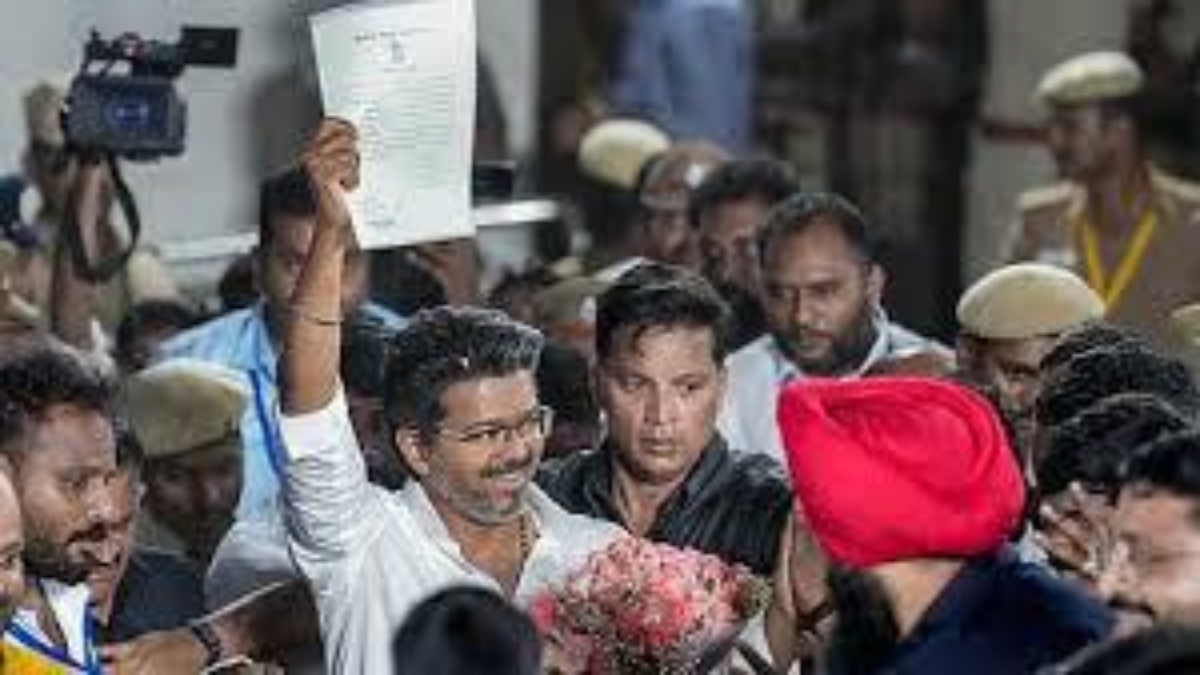
New Delhi, May 8, 2026 – As the dust settles on the most transformative election in Tamil Nadu’s modern history, the state finds itself in uncharted territory. For the first time in over five decades, the iron grip of the DMK-AIADMK duopoly has been shattered, leaving Governor Rajendra Vishwanath Arlekar at the center of a constitutional whirlpool.
With the 2026 Assembly election results delivering a hung house, the “MGR 2.0” phenomenon—embodied by actor-turned-politician C. Joseph Vijay and his Tamilaga Vettri Kazhagam (TVK)—has arrived. But while the victory is historic, the path to Fort St. George remains blocked by a simple, stubborn number: 118.
The Numbers Game: A Fractured Mandate
The Election Commission’s final tally presents a jigsaw puzzle that no party can solve alone. The TVK emerged as the single largest party with 108 seats, an unprecedented feat for a debutant. However, they remain 10 seats short of a simple majority in the 234-member house.
The incumbent DMK, led by M.K. Stalin—who suffered a shocking personal defeat in his Kolathur stronghold—has been relegated to the opposition with 59 seats. The AIADMK, once the state’s dominant force, finds itself in third place with 47 seats. Smaller players like the Congress (5 seats), PMK (4), and various Left parties hold the “kingmaker” chips in a game where everyone is hedging their bets.
The Options Before Governor Arlekar
Governor Rajendra Arlekar, who took additional charge of Tamil Nadu in March 2026, now holds the discretionary powers of the “umpire.” Under the Indian Constitution, his primary duty is to ensure the formation of a stable government. He has several precedents and constitutional paths to consider:
1. Inviting the Single Largest Party (The TVK)
Precedent suggests that the Governor usually invites the leader of the single largest party first. Vijay met Governor Arlekar on May 6 to stake his claim, reportedly backed by a surprise pivot from the Congress’s 5 MLAs. By aligning with the TVK, the Congress has effectively walked out of the DMK-led Secular Progressive Alliance, signaling a shift in national-regional dynamics.
However, even with Congress, Vijay sits at 113. The Governor has reportedly asked for formal letters of support to prove a clear path to 118 before administering the oath.
2. Recognizing a Post-Poll Coalition
If Vijay can secure the support of independent winners or smaller parties like the VCK or CPI(M), the Governor can recognize a formal coalition. The “Sarkaria Commission” guidelines emphasize that a pre-poll alliance has the first right, but in this election, the pre-poll alliances (SPA and NDA) failed to reach the mark. This gives the Governor significant leeway to judge which grouping can provide a “stable” administration.
3. The “Wait and See” Approach
The Governor could also wait for the DMK or AIADMK to attempt a “counter-coalition.” While the DMK has publicly stated it will sit in the opposition and “respect the people’s mandate,” the corridors of power are buzzing with rumors of “tactical abstentions” during a floor test, which would lower the majority threshold and allow the TVK to sail through.
Constitutional Precedents: Lessons from the Past
Governor Arlekar is likely looking at two landmark cases to guide his decision:
- The S.R. Bommai Case (1994): The Supreme Court ruled that the floor of the Assembly, not the Governor’s chambers, is the only place to test a majority. This means Arlekar is likely to invite Vijay, the single largest party leader, but set a very tight deadline (usually 7 to 14 days) for a floor test.
- The Rameshwar Prasad Case (2006): This warned Governors against “subjective satisfaction.” Arlekar cannot simply assume Vijay will fail; he must provide the opportunity if there is a “reasonable claim” of support.
The Political Fallout: A State in Flux
The atmosphere in Chennai is electric. TVK supporters have thronged the streets, celebrating the end of the “Dravidian Era,” while political analysts scramble to understand how a two-year-old party swept the youth and women’s vote across traditional party lines.
The AIADMK, led by Edappadi K. Palaniswami, initially offered “unconditional support” to TVK to keep the DMK out, but later withdrew the offer when Vijay reportedly refused to yield on cabinet positions. This “go-it-alone” spirit of the TVK chief is being tested; he wants a clean break from the past, but the math of the present demands compromise.
What Happens Next?
The current Assembly’s term ends on May 10, 2026. If no leader can demonstrate a viable majority by then, the state could technically face a brief period of Governor’s Rule—though all parties are desperate to avoid this.
As of Friday morning, the ball remains in the Governor’s court. Will he prioritize the “single largest party” principle, or will he demand a signed list of 118 names before the swearing-in ceremony?
For the people of Tamil Nadu, the wait is more than just about a leader. It is about whether the “New Politics” promised by Vijay can survive the old-school maneuvering of a hung assembly. One thing is certain: the sun has set on the old bipolar order, and a new, unpredictable chapter has begun.