Home Blog Page 123

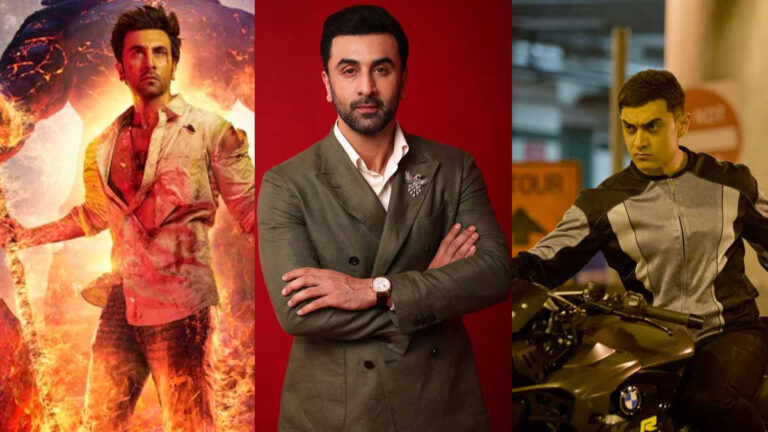
Brahmastra 2 or Dhoom 4: What’s Next for Ranbir?

New Delhi, April 22, 2026: The Indian film industry has arguably entered what many are calling the “Ranbir Era.” With a lineup that would make any actor envious, Ranbir Kapoor has solidified his position as one of the most versatile and commercially viable stars in modern cinema. Fresh off the massive success of previous hits and currently deeply immersed in two of the most anticipated projects of the decade—Nitesh Tiwari’s Ramayana and Sanjay Leela Bhansali’s Love & War—Kapoor is now at a career crossroads.

As he approaches the wrap-up of these massive productions, the burning question in trade circles and among his massive fan base is: What comes next? Reports suggest the actor is currently weighing his options between two absolute juggernauts: Ayan Mukerji’s Brahmastra Part Two: Dev and the legendary high-octane franchise, Dhoom 4.

Here is a look at the dilemma facing one of Bollywood’s most meticulous stars as he decides his path for 2026 and beyond.

The Current Landscape: A Packed Calendar

Before dissecting the choice, it is essential to understand the sheer volume of work on Ranbir’s plate.

  • Ramayana: Currently the actor’s top priority, this project is shaping up to be a visual spectacle, with his portrayal of Lord Ram already generating massive pre-release buzz. It is slated for a Diwali 2026 release.
  • Love & War: Reuniting with Sanjay Leela Bhansali, this film is expected to wrap by October 2026.
  • Animal Park: Looking further ahead, the sequel to the gritty Animal is tentatively set to begin production in late 2027.

This leaves a crucial window in Ranbir’s schedule. He has essentially been presented with two “big-ticket” scripts, and industry insiders confirm that he is waiting for the final, bound scripts of both Brahmastra 2 and Dhoom 4 before committing. The expected timeline for this decision is around June 2026.

The Case for Brahmastra Part Two: Dev

The Brahmastra franchise is not just another film series for Ranbir; it is a passion project he has been intimately involved with since its inception.

Why He Might Choose It:

  • Emotional Investment: Ranbir and director Ayan Mukerji share a close bond. The “Astraverse” was a dream they built together. Walking away from the sequel would be a departure from the collaborative spirit that defined the first film.
  • Narrative Continuity: The first part laid the groundwork for the character of Dev—a complex, dark, and powerful antagonist-turned-antihero. For an actor who thrives on playing layered characters (as seen in Animal and Rockstar), the role of Dev offers significant creative potential.
  • The Scale: As the first major attempt at a homegrown Indian cinematic universe, Brahmastra has a unique legacy. Completing the trilogy is a career milestone.

The Hurdles:

The primary challenge for Brahmastra 2 appears to be logistical. The project has faced recent setbacks, including casting adjustments. With key actors’ schedules fluctuating, maintaining the production momentum is a difficult task. Ranbir is likely assessing whether the project has the internal stability to hit its ambitious targets without further delays.

The Case for Dhoom 4

If Brahmastra is about building a legacy, Dhoom 4 is about joining a powerhouse franchise. The Dhoom series is legendary in Indian cinema for its style, massive production value, and the “supervillain” roles that have defined the careers of superstars like John Abraham, Hrithik Roshan, and Aamir Khan.

Why It’s Appealing:

  • The “YRF” Factor: Collaborating with Yash Raj Films on a Dhoom project is the ultimate stamp of commercial stardom. It offers a different kind of audience engagement compared to his recent dramatic or mythological roles.
  • A Fresh Transformation: Reports indicate that the character in Dhoom 4 would require a radical physical and stylistic transformation. For an actor who recently navigated the intense emotional and physical demands of Animal, a slick, high-energy action role might provide the perfect change of pace.
  • Franchise Power: Dhoom is a brand that transcends regional boundaries. Starring in it would guarantee massive visibility and a new demographic of fans.

The Hurdles:

Dhoom 4 is currently in a state of early development. While the hype is astronomical, the project is still searching for the perfect directorial vision. Unlike the relatively established world of the Astraverse, Dhoom 4 requires a team to build a new world from scratch, which comes with the inherent risk of a longer, more unpredictable pre-production phase.

Also Read: VP Radhakrishnan Addresses 3rd IIMT University Convocation

The Decision Factor: What Really Matters?

As of April 2026, Ranbir Kapoor is in the enviable position of being able to choose his next move based on two things: Script and Stability.

According to trade analysts, Ranbir is not rushing. He has requested final drafts for both films, which are expected to land in his hands by June 2026. His decision will likely hinge on:

  1. Readiness: Which film is closer to a “floor-ready” state? Ranbir is a professional who prefers to start a project only when the preparation is rock solid.
  2. Creative Resonance: Which character—the mythic, dark intensity of Dev or the stylish, high-octane antagonist of Dhoom—excites him more at this stage in his life?
  3. Timeline Alignment: With Animal Park looming for late 2027, the actor has a limited window. He cannot afford to get stuck in a project that suffers from long-term production delays.

Final Thoughts

Whether Ranbir Kapoor chooses the mythological grandiosity of Brahmastra 2 or the high-speed thriller world of Dhoom 4, one thing is certain: his fans are in for a treat.

If he picks Brahmastra, he continues his quest to build a new mythology for Indian cinema. If he picks Dhoom 4, he enters a storied franchise with the potential to redefine his action-star persona.

For now, the actor remains the “man with the golden schedule,” carefully balancing the weight of his current commitments while waiting for the right script to call to him. The industry is watching, the scripts are being polished, and by mid-2026, we will finally know which path the superstar will take.

VP Radhakrishnan Addresses 3rd IIMT University Convocation

0

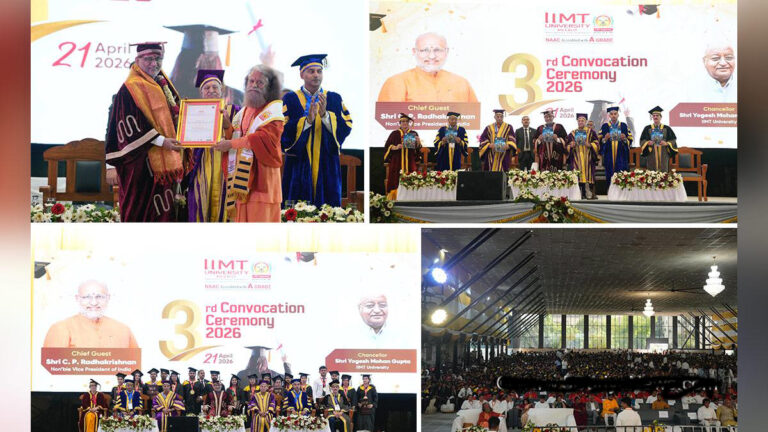
April 22, 2026: In a landmark event underscoring the role of higher education in the nation’s growth, Vice President of India, Shri C.P. Radhakrishnan, presided over the 3rd Convocation Ceremony of IIMT University in Meerut on Tuesday. Addressing a gathering of thousands, including graduating students, faculty, and distinguished guests, the Vice President delivered a rousing call to action for the youth, urging them to align their professional ambitions with the grand vision of ‘Viksit Bharat @ 2047.’

The convocation ceremony, held at the university campus in Ganganagar, was a celebration of academic achievement and institutional growth. Approximately 3,940 students from the 2024 and 2025 academic batches were conferred with their undergraduate and postgraduate degrees, marking a significant milestone in their educational journey.

A Defining Moment for the Nation

In his address, Vice President Radhakrishnan described the present era as a “defining phase” in India’s history. He emphasized that the degrees being received by the students were not merely the culmination of years of hard work within the classroom, but rather the beginning of a lifelong commitment to the cause of nation-building.

“We are at a defining moment in India’s history. Our country is one of the fastest-growing nations in the world,” the Vice President remarked, pointing to the rapid socio-economic shifts taking place across the country. He highlighted that the current ecosystem is brimming with unprecedented opportunities, driven by technological advancements, infrastructural growth, and a focus on self-reliance.

Drawing attention to local examples of developmental strides, Shri Radhakrishnan cited the Namo Bharat train and the Meerut Metro—projects inaugurated by Prime Minister Narendra Modi earlier this year. He described these as “shining examples” of modern, efficient, and sustainable connectivity that are bridging geographical gaps, bringing cities closer, and opening new avenues for growth for students and professionals alike.

Call to Become Job Creators

One of the most resonant themes of the Vice President’s address was the paradigm shift in employment. He strongly encouraged the graduates to look beyond the traditional path of seeking employment.

“I urge you to become job creators rather than job seekers,” the Vice President stated, challenging the graduating class to embrace the spirit of entrepreneurship. He emphasized that innovation, when coupled with a commitment to supporting local industries and promoting home-grown solutions, is the key to achieving the goal of an ‘Aatmanirbhar Bharat’ (Self-Reliant India).

He advised the students that personal success should be viewed through the lens of national progress. By aligning their individual talents with the developmental goals of the country, the youth could ensure that the fruits of growth reach the farthest corners of the nation, upholding the vision of inclusive development that reaches “the last village and the last person.”

Celebrating Academic Excellence and Inclusivity

The atmosphere at the ceremony was charged with pride as 203 meritorious students were awarded gold medals for their exceptional academic performance. Additionally, 29 scholars were conferred their PhD degrees, reflecting the university’s increasing focus on research and higher academic pursuits.

The Vice President particularly lauded the significant achievements of female students, who secured a large share of the academic honours and medals. He described this trend as a “reflection of a positive societal transformation,” driven by determination, discipline, and supportive ecosystems. He noted that the success of these women is setting new benchmarks and inspiring future generations towards a more inclusive and progressive India.

Honorary Recognition and Institutional Growth

The convocation also featured the conferment of honorary doctorate degrees upon three distinguished personalities in recognition of their contributions to society: Swami Kailashanand Giri, Swami Chidanand Saraswati, and Dr. Hari Singh Rawat.

The event was attended by several notable dignitaries, including the Minister of Animal Husbandry & Dairy Development, Government of Uttar Pradesh, Shri Dharmpal Singh, and Member of Parliament (Rajya Sabha), Shri Laxmikant Bajpai. The Chancellor of IIMT University, Shri Yogesh Mohan Gupta, highlighted the institution’s commitment to providing holistic education, including scholarships and support initiatives for students, such as the free education program for those affected by the COVID-19 pandemic.

Looking Ahead: Viksit Bharat @ 2047

As the Vice President concluded his address, he left the graduates with a powerful message: the vision of a developed India by 2047 is not a static destination but a dynamic national mission. It requires the energy, creativity, and steadfast commitment of India’s young minds.

By upholding the values of integrity, discipline, and service, and by remaining rooted in India’s rich cultural heritage while embracing modernity, the graduating students of IIMT University have been tasked with a pivotal role in the nation’s transformative journey. As the ceremony drew to a close with academic processions and cultural celebrations, the overarching sentiment was one of optimism—that with the right guidance and national resolve, the youth of today are well-equipped to lead the India of tomorrow.

Rs 22.9 Cr Digital Arrest Scam: 5 Banks Ordered to Pay Rs 1.3 Cr Compensation

0

New Delhi, April 22, 2026: In a significant development that could reshape how banks handle suspicious transactions and their liability in cybercrime, the Reserve Bank of India (RBI) Ombudsman has passed a landmark order directing five major banks to pay a combined Rs 1.31 crore to a victim of a devastating “digital arrest” scam.

This ruling follows the harrowing ordeal of 78-year-old Naresh Malhotra, a retired banker from South Delhi, who lost his life savings of Rs 22.92 crore to fraudsters over a period of just six weeks in late 2025. While the recovery of the total lost amount remains an ongoing legal battle, the Ombudsman’s decision establishes a critical precedent regarding the accountability of beneficiary banks in failing to curb money laundering through “mule” accounts.

The Anatomy of the ‘Digital Arrest’

The case of Naresh Malhotra, described as one of the largest individual cyber fraud incidents in India, highlights the chilling efficiency of organized digital crime syndicates.

Between August and September 2025, Malhotra was coerced into a “digital arrest”—a psychological tactic where scammers impersonate law enforcement officials (such as the CBI, ED, or Mumbai Police) over video calls. Under the constant threat of false criminal charges related to “terror funding” or money laundering, victims are kept isolated, monitored on camera, and forced to transfer their assets for “verification.”

In Malhotra’s case, the scammers exercised near-total control. He was forbidden from contacting his family and was only permitted to step out of his home to visit bank branches to liquidate his investments—mutual funds, SIPs, and savings—to transfer the funds into accounts dictated by the fraudsters.

The complexity of the scam was staggering: the Rs 22.92 crore was splintered through 4,236 layered transactions across 47 different banks, making the money trail incredibly difficult to track.

Why Were the Banks Held Liable?

The RBI Ombudsman’s order, issued on February 25, 2026, focused on the role of the “beneficiary” banks—the institutions where the stolen money eventually landed in mule accounts.

While the remitting banks (where Malhotra held his accounts) were not found to have direct service deficiencies, as the transactions were initiated by the victim himself, the situation for the beneficiary banks was different. The investigation revealed significant lapses in:

  • KYC/AML Compliance: The accounts receiving the stolen funds had inadequate compliance with Know Your Customer (KYC) and Anti-Money Laundering (AML) norms.
  • Transaction Monitoring: Given the massive volume and the rapid-fire speed of the transfers, the banks failed to flag or halt these highly suspicious patterns of activity.

The Ombudsman noted that while it might not be possible to stop all transfers instantly, the systemic failure to monitor these accounts allowed the fraud to perpetuate. Consequently, Axis Bank, City Union Bank, ICICI Bank, IndusInd Bank, and Yes Bank were ordered to pay a combined total of Rs 1.31 crore, representing between 5% and 7.5% of the sums deposited in those specific accounts.

The Road Ahead: Fighting for Full Restitution

While Naresh Malhotra has received the Rs 1.31 crore, he views this only as a partial victory. He has since filed an appeal with the RBI, demanding the restitution of the entire defrauded sum, along with interest and damages.

“The compliance of banks is supposed to be 100%,” Malhotra stated in recent interviews. He argues that any bank failing to adhere to strict regulatory norms and allowing mule accounts to flourish is directly responsible for enabling such massive frauds. His case is currently being probed by the Central Bureau of Investigation (CBI), which was tasked by the Supreme Court in late 2025 to take over the investigation into digital arrest scams across the country.

A Lesson for Every Digital User

The Naresh Malhotra case is a stark reminder that even the most financially literate individuals can be ensnared by sophisticated psychological manipulation. As cybercrime syndicates evolve, here are three essential rules to stay safe:

  1. The “Digital Arrest” Myth: No law enforcement agency—be it the CBI, ED, or local police—will ever “arrest” you over a video call, ask you to isolate yourself, or demand you transfer money to “verify” your accounts. If a caller claims this is happening, hang up immediately.
  2. Verify, Don’t Comply: If you receive a call from someone claiming to be an official, do not follow their instructions on a WhatsApp call. Verify their identity by visiting the official website of the department or going to the nearest police station in person.
  3. Report Immediately: If you realize you have been targeted, time is your most valuable asset. Report the incident immediately to the National Cyber Crime Helpline at 1930 or via www.cybercrime.gov.in. Freezing the money trail in the “golden hour” is the only way to prevent the funds from being moved across multiple layered accounts.

As the legal landscape shifts to hold institutions more accountable, this ruling may be the first of many aimed at forcing banks to become the first line of defense against the rising tide of digital financial crimes in India.

Today Market Digest: HCL Tech, Trent, and Suzlon Energy

0

New Delhi, April 22, 2026: The Indian stock market remains a landscape of dynamic shifts, with investors closely monitoring corporate performance, strategic partnerships, and quarterly earnings as we navigate through the final weeks of April 2026. As the Q4 FY26 earnings season picks up momentum, volatility has become a defining feature of the trading sessions. Today, April 22, 2026, has been particularly significant, marked by sharp reactions to earnings reports and anticipatory moves surrounding corporate announcements.

This article provides an in-depth analysis of five key stocks currently dominating market conversations: HCL Technologies, Trent Ltd., Tata Investment Corporation, SBI Life Insurance, and Suzlon Energy.

1. HCL Technologies: A Tough Day at the Bourses

The most significant market action today involves HCL Technologies. Shares of India’s third-largest IT firm witnessed a sharp decline of over 9%, falling to ₹1,301 on the National Stock Exchange (NSE). This dramatic sell-off follows the company’s release of its Q4 FY26 earnings.

The Earnings Context

While HCL Tech reported a 4.20% year-on-year (YoY) increase in consolidated profit, reaching ₹4,488 crore, the market reaction suggests that investors were looking for more robust numbers. On a quarter-on-quarter basis, the profit did rise by 10.11%, but the topline and margin performance failed to meet high market expectations. Revenue from operations grew 12.35% YoY to ₹33,981 crore, yet it remained largely stagnant on a sequential basis compared to the previous quarter.

Crucially, the company’s EBIT margin (excluding restructuring costs) came in at 17.7%, a decline from the 18% reported a year ago and 19.4% in the previous quarter. In a sector where margin resilience is paramount, this compression has rattled investor confidence.

Options Market Divergence

Interestingly, the price crash contrasts sharply with activity in the derivatives market. Data shows massive call option volumes at strike prices ranging from ₹1,330 to ₹1,500, with the ₹1,500 strike seeing over 7,000 contracts exchanged. This divergence often indicates that while the cash market is reacting with immediate panic, some institutional or speculative players are positioning for a potential recovery or hedging against further downside. Investors should watch closely to see if the stock finds a support floor near its 52-week low.

2. Trent Ltd: Riding the Wave of Anticipation

In stark contrast to the volatility seen in the IT sector, Trent Ltd. continues to be a favorite among investors, maintaining its upward trajectory. The company has been in the headlines recently, driven by market excitement ahead of its crucial board meeting scheduled for today, April 22, 2026.

Growth and Optimism

Trent, a powerhouse in the retail sector, has been on a sustained bull run. Over the past month, the stock has rallied significantly, buoyed by strong business performance, including a reported 20% growth in standalone revenue for the March quarter.

Also Read: “India Will Not Bow”: PM Modi Vow on Pahalgam Anniversary

Why Investors are Watching

The board meeting is highly anticipated for several reasons:

  • Bonus Shares: Market sentiment is currently electrified by expectations of a maiden bonus share announcement.
  • Dividends: Shareholders are looking for a favorable dividend recommendation for the financial year ended March 31, 2026.
  • Capital Allocation: Discussions regarding an Employee Stock Option Plan (ESOP) and potential fund-raising strategies to fuel further retail expansion are also on the agenda.

For Trent, the focus remains on its ability to sustain rapid store expansion—particularly through its Zudio format—while maintaining profitability. Investors are treating this as a “wait-and-see” event, with the high price indicating high expectations for the company’s future growth roadmap.

3. Tata Investment Corporation: Steady Performance

Tata Investment Corporation has emerged as a resilient performer, providing a sense of stability amidst the broader market churn. The company recently declared its Q4 results, revealing a robust financial health profile that has been well-received by the market.

Strong Financials

The company reported a massive 69.2% jump in consolidated net profit to ₹638.3 million for the quarter, compared to ₹377.2 million in the same period last year. Revenue figures were even more impressive, more than doubling year-on-year. This performance, coupled with the recommendation of a ₹3.40 final dividend, reinforces the company’s status as a reliable compounder within the Tata Group ecosystem.

Leadership Continuity

Complementing the financial performance, the board has approved the re-appointment of Mr. Jamshed Patel as the Chief Compliance Officer for a three-year term starting August 2026. In the current regulatory environment, such stability in key compliance leadership is viewed positively by long-term investors, signaling a focus on governance and operational continuity.

4. SBI Life Insurance: Navigating Consolidation

SBI Life Insurance, a leader in the life insurance space, has seen mixed signals in its recent trading sessions. Despite a large-cap status and robust market position, the stock has experienced short-term price pressure.

Market Dynamics

On April 21, 2026, the stock saw high-value trading volumes, though it underperformed relative to the broader indices and its own sector. Technical indicators suggest that the stock is currently undergoing a consolidation phase, trading below its 50-day and 200-day moving averages.

Fundamental Outlook

While price action has been subdued, delivery volumes—the portion of trades resulting in actual share transfers—have remained elevated. This often suggests that long-term investors are using price dips to accumulate shares. The company remains a cornerstone of the insurance sector, and while the “Buy” rating was downgraded to “Hold” earlier this year, it continues to be a significant constituent in institutional portfolios. Market participants are likely awaiting the official release of its comprehensive Q4 results to gauge the next leg of growth.

5. Suzlon Energy: Mid-Cap Momentum

Suzlon Energy has been a focal point for traders, witnessing exceptional volume surges. As a player in the “Heavy Electrical Equipment” and renewable energy space, the company’s recent activities have caught the market’s attention.

Strategic Moves

The stock gained momentum following the announcement of a Memorandum of Understanding (MoU) with South Korean firm GS E&C. This partnership aims to optimize renewable energy solutions in India, signaling potential technological and operational synergies. For a company focused on energy transition, such collaborations are vital for long-term scalability.

Technical Snapshot

Technically, Suzlon presents a mixed picture. While it is trading above its short-term moving averages, signaling bullish sentiment in the near term, it remains below its 200-day moving average. This suggests that while there is strong speculative interest and trading activity, the stock is still working to break out of a longer-term structural trend. Investors are advised to balance the excitement of high volumes with a cautious approach to the company’s valuation metrics.

Conclusion: A Market of Divergent Paths

The current market environment is a classic example of how earnings season can create divergent paths for different sectors. While IT giants like HCL Tech are facing margin headwinds, retail powerhouses like Trent are generating excitement through growth and potential capital distribution. Meanwhile, financial and industrial entities like Tata Investment and Suzlon Energy are navigating their own unique growth narratives.

For investors, the key lies in looking past the daily volatility. Whether it is the dividend yield of Tata Investment, the growth story of Trent, or the strategic pivots at Suzlon, each company offers a different risk-reward profile. As we move further into the earnings season, staying informed on quarterly results and management commentary will be the best strategy for navigating this complex market landscape.

Disclaimer: This article is for informational purposes only and does not constitute financial advice. The stock market involves risks, and investors should conduct their own research or consult with a qualified financial advisor before making any investment decisions.

“India Will Not Bow”: PM Modi Vow on Pahalgam Anniversary

0

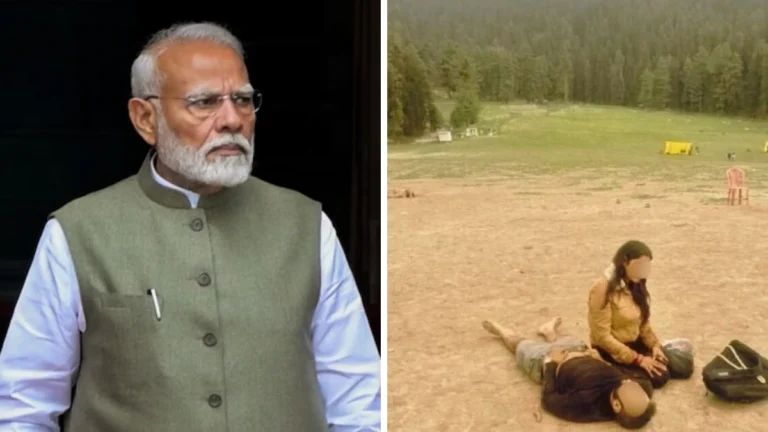
New Delhi, April 22, 2026: On the first anniversary of the horrific Pahalgam terror attack, Prime Minister Narendra Modi reiterated India’s unwavering resolve to combat terrorism, declaring that the nation will never bow to any form of terror. His statement came as the country observed a day of remembrance for the 26 innocent lives lost in the Baisaran Valley tragedy on April 22, 2025.

In a poignant message shared on social media, the Prime Minister honored the victims, ensuring that their memory remains etched in the national consciousness.

“Remembering the innocent lives lost in the gruesome Pahalgam terror attack on this day last year. They will never be forgotten. My thoughts are also with the bereaved families as they cope with this loss. As a nation, we stand united in grief and resolve. India will never bow to any form of terror. The heinous designs of terrorists will never succeed,” PM Modi wrote.

A Year of Reflection and Resolve

The attack, which occurred in the scenic Baisaran meadows of Jammu and Kashmir, sent shockwaves through the country. It was one of the most brutal incidents in recent years, where 26 civilians—predominantly tourists—were targeted in a senseless act of violence.

The first anniversary has served as a moment for the nation to pause, pay homage to those lost, and reaffirm the collective strength of the country. Across the nation, citizens and leaders have expressed solidarity with the families who continue to grapple with the aftermath of the tragedy.

Also Read: Mukesh Ambani 69th Birthday: A Celebration of Tradition and Service

Security Forces’ Unyielding Commitment

Following the 2025 attack, the Indian security establishment launched a massive, multi-pronged response. Operations such as Operation Mahadev were initiated to hunt down the perpetrators, leading to the successful neutralization of the terror module responsible for the massacre.

The security landscape in Jammu and Kashmir has seen significant strategic shifts over the past year. Authorities have moved from road-centric security to a “hold-the-ridge” approach, establishing dozens of Temporary Operating Bases (TOBs) across the high-altitude reaches of the Pir Panjal range. This tactical evolution is designed to deny militant groups the advantage of terrain and ensure that tourist zones and civilian areas are robustly protected.

National Security as a Top Priority

The Prime Minister’s strong words on this anniversary serve as a clear message to both domestic and international observers: India’s stance against terrorism is non-negotiable. Whether through intelligence-led operations or robust border management, the government has emphasized that there will be no tolerance for those who seek to destabilize the nation through violence.

As the country marks this solemn anniversary, the message from the leadership is unequivocal: while the nation mourns the loss of its citizens, it remains steadfast, vigilant, and fully committed to dismantling the networks of terror that threaten its peace and sovereignty. The “heinous designs” mentioned by the Prime Minister are being countered with a resolve that continues to strengthen with every passing day.

Mukesh Ambani 69th Birthday: A Celebration of Tradition and Service

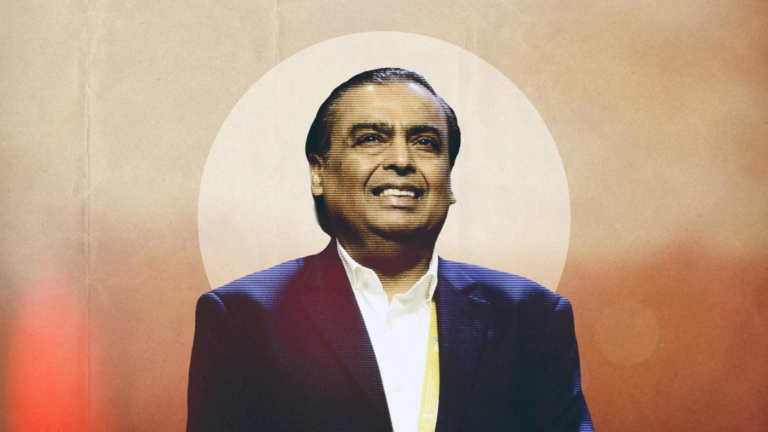
New Delhi, April 22, 2026: In an era often defined by high-profile, glitzy celebrations, the 69th birthday of Reliance Industries Chairman Mukesh Ambani on April 19, 2026, served as a poignant reminder of the enduring power of tradition, spirituality, and family bonds. While the Ambani family is frequently in the global spotlight for large-scale events, this year’s milestone was marked by a refreshingly intimate and devotional atmosphere that resonated deeply with observers across the country.

At the heart of the day’s observances was a beautiful display of culture and charity, led by Nita Ambani, who meticulously ensured that the occasion was grounded in age-old Indian customs.

A Devotional Beginning

The day began not with the clamor of a grand party, but with the quiet solemnity of traditional puja rituals. Visuals shared by the family offered a rare glimpse into the private life of India’s foremost industrialist, showing Mukesh Ambani and his family participating in sacred prayers. Clad in simple, elegant attire—Mukesh Ambani in a comfortable kurta-pyjama set paired with a classic brown Nehru coat—the scene was one of deep reverence and gratitude.

Nita Ambani, known for her impeccable grace, looked radiant in a red jamdani saree. The choice of attire, coupled with the family’s collective participation, underscored a conscious decision to focus on the spiritual significance of the day rather than the trappings of material success.

The Significance of the Brahman Bhoj

The most significant aspect of the celebrations was the Brahman Bhoj organized by the family. This traditional act of service involves hosting and serving a meal to Brahmins or students of a Ved Pathshala (a traditional school for Vedic studies).

In Hindu tradition, the Brahman Bhoj is considered an act of great merit and a way to seek blessings from the scholarly and spiritual community. By personally overseeing the serving of this meal to the students of a Ved Pathshala, the Ambani family honored the students’ dedication to preserving ancient Vedic knowledge. It was a gesture that moved beyond simple philanthropy; it was a respectful acknowledgment of India’s cultural and spiritual heritage.

This act of selfless service highlighted the family’s underlying belief in giving back to society—a core value that Reliance Foundation continues to champion through its various nationwide initiatives.

A Family United

The birthday was a testament to the close-knit nature of the Ambani clan. Mukesh Ambani was surrounded by the three generations of his family, creating a warm, multi-generational environment. Present at the celebrations were his wife, Nita Ambani, his sons Akash and Anant Ambani, daughters-in-law Shloka Mehta and Radhika Merchant, and their grandchildren.

The presence of the entire family, particularly the younger generation, highlighted the importance of continuity and the passing down of values. Seeing the family together during the rituals offered a relatable human element to a family that is often viewed through the lens of business and corporate leadership.

A Day of Sacred Blessings

Following the rituals at home, the family made a sacred visit to the iconic Siddhivinayak Temple in Mumbai. The temple, dedicated to Lord Ganesha, is a cornerstone of faith for many Mumbaikars and a place frequently visited by the Ambani family on significant personal and professional milestones.

Their visit to the temple, accompanied by their closest family members, was a humble expression of faith. It served as a moment for the family to offer thanks for the year gone by and to seek blessings for the year ahead. Such visits are deeply ingrained in the routine of the Ambani household, reflecting a balanced life where corporate success is tempered by humility and spiritual grounding.

Contrasting Styles: A Balanced Approach

It is worth noting the contrast between this birthday and other recent family events. Earlier this year, the family made headlines with grand, star-studded celebrations for Anant Ambani in Jamnagar, which saw the presence of global icons and A-list Bollywood celebrities. That event, defined by its scale and spectacle, showcased the family’s ability to host and entertain on an international stage.

However, Mukesh Ambani’s 69th birthday provided a necessary counterpoint. By choosing a path of simplicity and tradition for his own milestone, the industrialist demonstrated the importance of knowing when to celebrate with grandeur and when to embrace the quiet beauty of a family-centric, spiritual life. It highlighted a maturity and a firm grasp of the values that form the bedrock of the Ambani family’s identity.

A Message of Purpose

The birthday wishes shared on the official social media handles of Reliance Foundation perfectly encapsulated the sentiment of the day. The message read: “Wishing Reliance Chairman & Managing Director, Shri Mukesh Ambani, a very Happy Birthday. We express our gratitude for your continued commitment to creating lasting value for society and inspiring progress with purpose.”

This sentiment echoes the duality of Mukesh Ambani’s life—a man who drives immense economic progress for India while remaining deeply committed to the cultural and social fabric of the nation. The Brahman Bhoj, the temple visit, and the private family rituals were not just birthday traditions; they were a reflection of a life lived with purpose, balance, and profound respect for the roots that ground him.

As the industrialist steps into his 70th year, the celebrations of April 19th serve as a gentle reminder to us all: regardless of one’s success or status in the world, the true essence of life often lies in the simple, humble, and devotional moments shared with those we hold most dear.

Priyanka Mohan and Shashi Tharoor’s Unexpected Encounter at Rashtrapati Bhavan

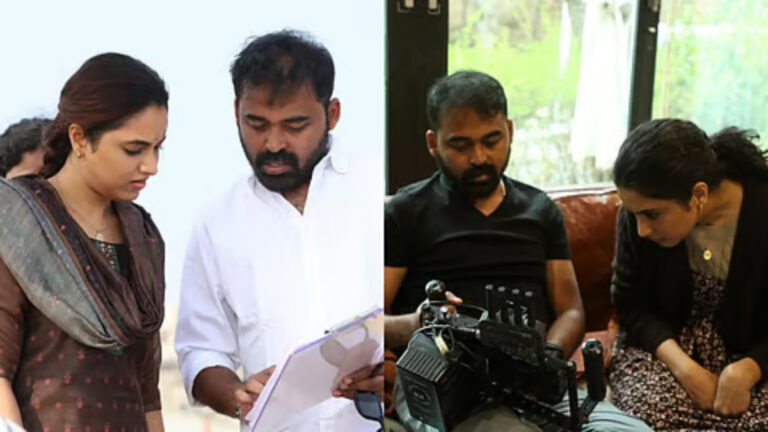
New Delhi, April 21, 2026 — In a serendipitous moment where diplomacy met the silver screen, actor Priyanka Mohan and veteran politician Shashi Tharoor shared a warm, unexpected interaction at the Rashtrapati Bhavan. The two were among the distinguished guests at a grand banquet hosted in honor of the visiting South Korean President, Lee Jae-myung.

The event, which celebrated the strengthening ties between India and South Korea, became the backdrop for a lighthearted and memorable exchange between the Made in Korea star and the Congress Member of Parliament.

An Unexpected Encounter

The banquet, known for bringing together the brightest minds in politics, diplomacy, and culture, took an interesting turn as guests began to depart. Shashi Tharoor, a frequent attendee at such high-profile events, took to social media to share the details of his evening.

Writing on his official X (formerly Twitter) handle, Tharoor revealed that the night had been filled with significant conversations, including discussions with External Affairs Minister Dr. S. Jaishankar and Chief Justice of India SuryaKant. However, it was his “unexpected encounters” on his way out that seemed to have captured his attention—and that of the public.

“Given the Korean connection, it was a delight to meet Priyanka Mohan, star of Made in Korea, and to run into K-pop star Aoora, who now makes his home in India!” Tharoor wrote, highlighting the cultural bridge the evening represented.

Shashi Tharoor: The Accidental Photographer

The highlight of the interaction, which has since gone viral, was Tharoor stepping into the role of an impromptu photographer. The MP, known for his eloquence and wit, proved he was just as capable behind the lens, capturing a photograph of the actor.

Priyanka Mohan, clearly touched by the gesture, shared her excitement on her social media. She posted a sweet acknowledgement of the encounter, thanking the MP for his kindness.

“Sir!! It was an absolute pleasure meeting you; had a splendid evening. I truly enjoyed our conversation, and I really appreciate you capturing that lovely photo of me. A memorable encounter indeed,” she wrote, accompanied by a folded-hands emoji.

A Shared Connection to Korea

The meeting felt particularly fitting given the context of the event. Priyanka Mohan was present at the banquet as a representative of her latest film, Made in Korea. The film, which was shot extensively in South Korea, has been garnering attention for its unique narrative and the actor’s performance.

The film explores the journey of a woman from a small village in Tamil Nadu who travels to South Korea, dealing with themes of self-discovery, cultural adaptation, and newfound friendships. By inviting the star of such a film to a state banquet honoring the South Korean President, the event beautifully underscored the growing influence of cultural diplomacy between the two nations.

A Night of Diplomacy and K-Pop

The banquet was not only a venue for political discourse but also a vibrant space for cross-cultural connection. In addition to his interaction with Priyanka Mohan, Shashi Tharoor also met with K-pop star Aoora, who has become a beloved figure in India since his appearance on the reality show Bigg Boss 17.

Aoora, who has made India his home, expressed that the evening made him realize how music and culture can transcend borders and languages. He, too, shared pictures of the event, cementing the evening as a unique fusion of traditional diplomacy and modern pop culture.

Tharoor, ever the connoisseur of good food and conversation, didn’t miss the chance to praise the hospitality. He remarked that the “historic event of diplomacy and friendship” was further enhanced by a “delicious Rajasthani vegetarian fare,” ensuring the evening was a delight for all the senses.

As the photos of the encounter continue to circulate on social media, the incident serves as a gentle reminder of the human connections that persist even in the most formal settings. For fans of both the actor and the politician, this unexpected “cross-over” remains the talk of the town, marking a charming chapter in the ongoing narrative of India-Korea relations.

No ‘Zombie Drug’ Involved: Police Debunk Viral Thane Video Claims

0

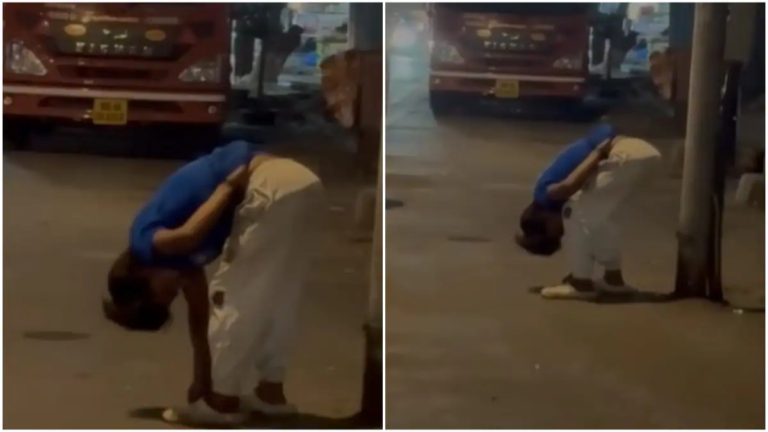
New Delhi, April 21, 2026: A recent viral video that sparked widespread alarm on social media, claiming a man in Thane was under the influence of a “zombie drug,” has been officially debunked by authorities. Following a swift investigation, the Mira Bhayander-Vasai Virar police have confirmed that the incident was not related to any mysterious narcotic, but rather a severe case of medication misuse.

What Happened?

The video, which began circulating online around April 15, showed a man standing in a dazed, motionless state on a road in the Bhayander area of Thane, Maharashtra. The footage quickly went viral, with many users speculating—without evidence—that the individual was suffering the effects of an illicit substance frequently referred to online as a “zombie drug.”

The Official Police Investigation

Taking cognizance of the alarming footage and the panic it was causing, the local crime detection branch launched a probe to trace the individual and verify the claims. On April 17, authorities successfully located the man in Bhayander.

During the investigation, police identified the individual as 22-year-old Sameer Rajendra Rawal, a laborer from the Achham district of Nepal, currently residing near Borivali Railway Station in Mumbai.

The findings of the police report are as follows:

  • Cause of Condition: The man was not under the influence of any so-called “zombie drug.” Instead, he had consumed an excessive dose of Pregabalin, a prescription medicine used to treat nerve pain, epilepsy, and anxiety.
  • The Incident: Rawal, who revealed he had been addicted to the medication for the past two years, purchased a strip of 10 tablets for ₹100 from a local medical shop in Navghar without a prescription. On April 13, he consumed five tablets at once, which led to the dizziness and inability to move that was captured in the viral video.
  • Legal Action: The police, in coordination with the Food and Drug Administration (FDA), inspected the medical shop where the drugs were procured. It was discovered that the shopkeeper had fled the area after the video went viral. A formal report has been submitted to the FDA for strict action against the establishment for the illegal sale of Schedule-H drugs.

A Lesson in Misinformation

This incident serves as a stark reminder of the speed at which unverified information can spread online. Similar to a recent incident in Bengaluru, where a man standing motionless also triggered baseless “zombie drug” rumors, these social media trends often overlook the reality of substance abuse issues in favor of sensationalism.

The police have once again urged the public to exercise caution when consuming and sharing such content. Spreading unverified claims not only causes unnecessary public panic but also distracts from addressing the real, underlying issues of drug abuse and the illegal sale of prescription medications that require community attention and regulatory enforcement.

Chess, Culture, and the World Stage: How Tunde Onakoya is Redefining the Game

0

New Delhi, April 21, 2026: In the world of professional chess, matches are typically confined to quiet rooms, intense clubs, or digital screens. But for Nigerian chess master Tunde Onakoya, the chessboard is a gateway to the world—and he is currently turning iconic global landmarks into his personal stage.

This week, social media erupted as footage of Onakoya playing chess at the Louvre Museum in Paris went viral. Clad in an elegant agbada—a traditional, flowing Nigerian garment—Onakoya sat near the museum’s famous glass Pyramid, calmly moving pieces across the board. The image was more than just a game; it was a powerful statement of culture, confidence, and global ambition.

“First Nigerian to play chess at the Louvre,” Onakoya captioned his post. “The world’s most prestigious museum. They should probably hang this Agbada in the Louvre as well.”

The video is just the latest in a series of high-profile “chess-at-landmark” clips that have captured the imagination of thousands online. From the hallowed halls of Harvard University to bustling markets in Dubai and the Hurtwood Park Polo Club in the UK, Onakoya is methodically weaving a narrative that connects his Nigerian roots with the global community.

A Mission Beyond the Board

While the videos are visually stunning, Onakoya’s motivation runs much deeper than social media clout. He is the founder of Chess in Slums Africa, an initiative that uses the game of chess as a tool for social change. For Onakoya, who grew up in the slums of Ikorodu, Lagos, chess was not just a hobby—it was his ticket to a new perspective on life.

“Finding chess gave me something,” he has often explained. “It gave me an identity, an intellectual one, and it made me believe that I could also be a thinker.”

Through his non-profit, he has dedicated his life to bringing that same opportunity to children in underserved communities. By teaching them chess, he helps them develop critical thinking, patience, and the belief that they, too, can conquer the world’s most complex challenges.

A History of Record-Breaking Impact

Onakoya’s viral moments at global landmarks are built on a foundation of intense dedication. He is a Guinness World Record holder, famously completing a 64-hour chess marathon in New York City’s Times Square alongside American chess master Shawn Martinez.

That record-breaking event was a physical and mental feat, designed to raise awareness and funding for his educational charity. It set a precedent for his current global tour: that he is willing to go to extreme lengths—whether it’s playing for 64 hours straight or traveling across continents—to put his cause on the map.

Why It Resonates

The reaction to his travels has been overwhelmingly positive. Nigerians and international observers alike have praised his approach, noting that he isn’t just playing a game; he is “exporting” Nigerian identity.

By wearing his traditional attire in the heart of European culture, Onakoya is challenging the idea of what a “global chess master” looks like. He is proving that culture and intellectual pursuit go hand-in-hand.

As one supporter put it on social media, “You’re putting us on the map.” Whether he is playing at the foot of an Egyptian statue or on the lawn of an Ivy League university, Onakoya is doing something that transcends the game itself. He is showing that brilliance can come from anywhere, and that with a chessboard and a dream, anyone can make a move that resonates across the globe.

The Next Move

As Tunde Onakoya continues his journey, his followers are left wondering where he will appear next. But regardless of the location, the message remains consistent: chess is a universal language. It is a tool for connection, a platform for storytelling, and a reminder that even from the most humble beginnings, one can move pieces on the world’s biggest boards.

For now, the world is watching, waiting to see where the next move—and the next agbada—will land.

‘It’ Not Just About Money’: The Complex Reality Behind Why NRIs Choose Not to Return

0

New Delhi, April 21, 2026: In the interconnected world of 2026, the question of “home” has become increasingly complicated for the Indian diaspora. A recently surfaced viral video has reignited a heated, perennial debate: Why do so many Non-Resident Indians (NRIs), particularly those settled in the United States, choose to stay abroad even when they have achieved their initial financial goals?

The video, which has been making waves across social media platforms, features an Indian woman candidly addressing the common assumption that an NRI’s decision to stay or return is purely a financial calculation. Her central argument is simple yet profound: “It’s not just about money.”

This viral moment has tapped into a collective consciousness, sparking a flurry of reactions and discussions. It highlights the growing tension between the emotional pull of one’s homeland and the practical, systemic comforts of life in a developed nation. As the discourse continues, it is worth looking beneath the surface at the factors that truly shape these life-altering decisions.

Beyond the Paycheck: The Core Factors

For years, the “brain drain” narrative was framed largely around salary figures and economic opportunity. However, the current dialogue suggests a significant shift. Today, the conversation is less about earning a specific amount and more about the “quality of life”—a subjective but deeply felt metric.

1. Infrastructure and Daily Convenience

A recurring theme in the discussion is the role of infrastructure in reducing daily stress. The viral video emphasizes the ease of living that many Indians experience abroad—predictable public transport, clean air, accessible healthcare, and organized public services.

When someone grows accustomed to a life where infrastructure “just works,” the prospect of returning to the chaotic urban planning and civic challenges in many Indian cities can feel daunting. It is not necessarily a lack of patriotism, but rather a desire for a friction-free daily existence.

2. The Weight of Social Judgment

Perhaps one of the most poignant points raised in recent discourse is the difference in social environments. Several commentators have noted that life in the US often affords an anonymity that can be liberating.

  • Individual Freedom: In many parts of the West, there is a perceived “live and let live” culture. Individuals feel less pressure regarding their lifestyle choices, career paths, or personal habits.
  • Reduced Scrutiny: Many NRIs report that the social pressure to conform—whether to family expectations, societal norms, or peer status—is significantly lower abroad. For those who value privacy and personal autonomy, this absence of judgment is a compelling reason to stay.

3. Work-Life Balance and Professional Culture

While the US is often associated with a competitive “hustle culture,” many professionals find that the work-life balance there is structured differently compared to the demanding environments they might face in India. Clearer boundaries between professional and personal time, along with systematic labor regulations, often make the work environment feel more sustainable for those raising families.

4. Safety and Security

Safety, particularly for women and children, remains a critical pillar of this decision. The sense of security—being able to walk alone, send children to school without excessive worry, and rely on well-functioning emergency services—is a major factor that prevents many families from making the move back to India, regardless of their professional success.

The “Grass is Greener” Paradox

While the points raised in the video are valid, they are not universally accepted. The internet remains divided. For every person who cites infrastructure as a reason to stay, another points out the profound “loneliness of the immigrant.”

Critics of the “stay abroad” sentiment argue that no amount of material comfort can replicate the warmth of an extended family, the richness of cultural festivals, and the sense of belonging that comes from living in one’s own country. There is also the emotional toll of missing life events—weddings, births, and the aging of parents back home—which creates a unique, lingering grief.

Furthermore, the “American Dream” is not without its costs. The recent surge in visa uncertainty, such as the widely discussed stresses of the H-1B system, serves as a reminder that the stability enjoyed by NRIs is often precarious. Many who plan to stay eventually find themselves navigating complex legal and immigration landscapes that can turn their “perfect life” into a stressful one.

A New Era of Migration

The reality of 2026 is that migration is no longer a one-way street. We are seeing a distinct trend of the “boomerang migrant”—individuals who spend their formative working years abroad, accumulating wealth, experience, and global perspectives, only to return to India later in life with the financial cushion and skill sets to navigate the local ecosystem more effectively.

The viral debate is, at its heart, a reflection of India’s rapid evolution. As India continues to develop, the gap in “quality of life” metrics is narrowing. The factors that cause people to leave—infrastructure, job opportunities, and societal openness—are being actively addressed by the country’s growth.

Summary of the Debate

FeatureThe Argument for Staying AbroadThe Argument for Returning Home
InfrastructurePredictable and reliable systems.Improving rapidly; home is where you build the future.
Social LifeFreedom from judgment; privacy.Deep-rooted connections; community; family.
Work CultureStructured, often better work-life balance.High growth potential; entrepreneurial opportunities.
LifestyleConvenience and consumer freedom.Rich cultural heritage; emotional fulfillment.

Looking Forward

The viral video serves as a mirror. It forces us to ask: What do we value most in our lives? Is it the convenience of a well-paved road and the privacy of a quiet neighborhood, or is it the intangible comfort of shared language, history, and family?

There is no “right” answer. For many, the decision is a fluid one, changing with life stages. A young professional might prioritize career growth abroad, while a parent might later prioritize their child’s upbringing in a familiar culture.

Ultimately, the woman in the viral video has sparked a conversation that is long overdue. By stripping away the assumption that this is “just about money,” she has invited us to have a more honest, nuanced discussion about what it means to build a life in the 21st century. It is a reminder that whether we stay or go, we are all seeking the same things: comfort, freedom, security, and a place to call home.