Home Blog Page 194

Chennai Fuel Crisis? Massive Queues Seen as Shortage Rumours Go Viral

0

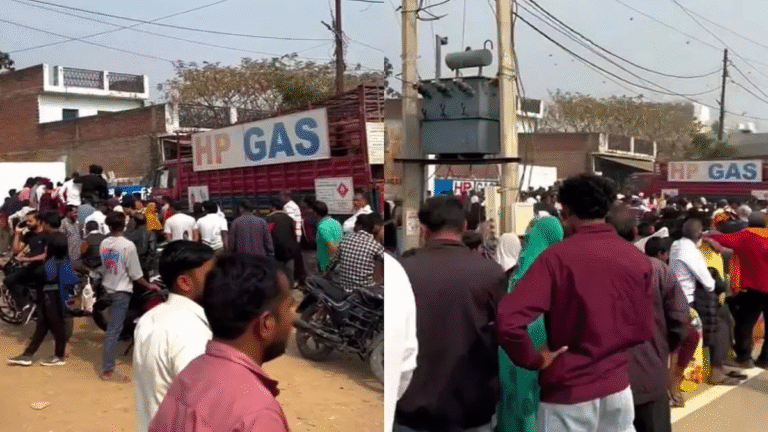
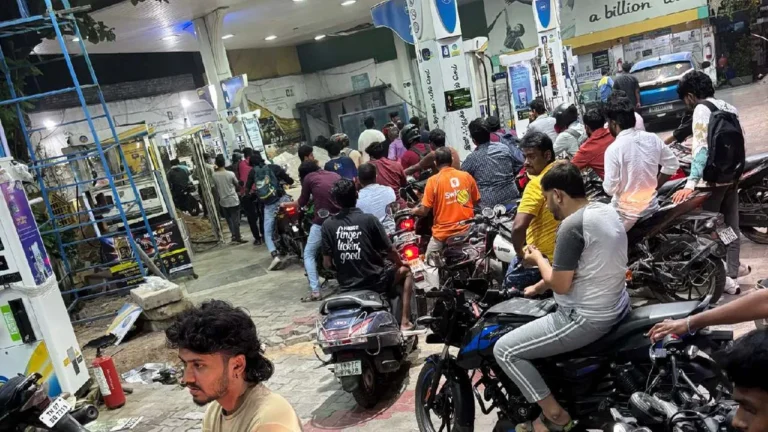
New Delhi, March 12, 2026 – Serpentine queues and chaotic scenes returned to the streets of Chennai on Wednesday night and Thursday morning as thousands of motorists swarmed fuel stations. The sudden surge was triggered by viral social media videos and intensifying rumours of an impending petrol and diesel shortage, linked to the ongoing West Asia geopolitical crisis.

The panic, which began as a trickle in the late evening, turned into a full-scale rush by Thursday, March 12, 2026, leaving many outlets struggling to manage the influx of vehicles.

Viral Videos Trigger City-Wide Alarm

The frenzy was largely fueled by clips circulating on WhatsApp and X (formerly Twitter), showing “tank-full” rushes at various bunks in areas like Velachery, Anna Salai, and Saidapet. These videos, often accompanied by unverified claims that stocks would run out by the weekend, prompted even casual commuters to join the queues.

At a Bharat Petroleum outlet in Velachery, sales figures told a startling story. A station manager reported that petrol sales nearly doubled, jumping from a daily average of 15,000 litres to over 26,000 litres in a single 24-hour cycle.

“I usually spend two minutes at the pump. Today, I’ve been waiting for twenty,” said K. Mahesh, a local IT professional. “I saw a video saying prices would hit ₹150 or the pumps would close, so I didn’t want to take any chances.”

The LPG Link: Why People Are Scared

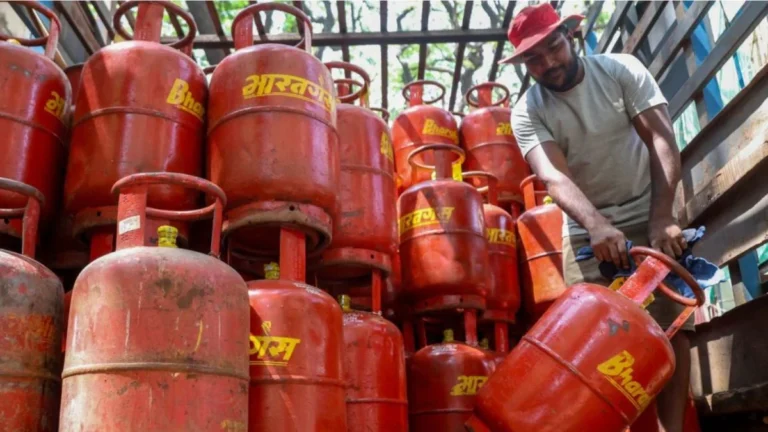
The anxiety isn’t entirely baseless, though it may be misplaced regarding petrol. The rush follows a genuine, well-documented shortage of commercial and domestic LPG cylinders across India.

Due to disruptions in the Strait of Hormuz caused by the Israel-Iran conflict, the Union Government recently invoked the Essential Commodities Act to prioritize gas for households. This has already hit Chennai’s hospitality and transport sectors:

  • Auto-Rickshaws: Nearly 25% of the city’s LPG-run autos have been off the road due to dry pumps.
  • Restaurants: Many small eateries have limited their menus or switched to firewood and induction cooktops as commercial cylinder supplies dwindled.

Motorists fear that if gas is being rationed, petrol and diesel might be next.

Government and Oil Companies Issue Clarifications

Authorities have moved quickly to dispel the “dry pump” narrative. Union Minister Piyush Goyal and state officials have issued statements confirming that while the global situation is being monitored, India’s petrol and diesel stocks are stable.

Fuel TypeStatus in ChennaiOfficial Stance
PetrolAvailableNo supply disruption; stocks are adequate.
DieselAvailableRegular deliveries continue; no price hike planned.
LPGRationedPrioritized for domestic use; commercial supply limited.

Oil Marketing Companies (OMCs) have also sent out SMS alerts to consumers, urging them not to indulge in panic buying, which creates “artificial scarcity” by depleting local pump stocks faster than tankers can refill them.

The Ground Reality

While the government maintains that supply lines are open, the logistical strain is visible. Some private outlets have temporarily closed simply because they ran out of their daily quota in a few hours due to the “tank-full” trend.

Experts suggest that the current rush is a classic case of misinformation-driven demand. India has significantly diversified its oil sourcing, with a 45% increase in Russian crude imports this month to offset West Asian disruptions, ensuring that the wheels of the city keep turning.


Legal Complaint Filed Against Hardik Pandya Over T20 Word Cup Victory Celebrations

0

New Delhi, March 12, 2026 – Indian star all-rounder Hardik Pandya has found himself at the center of a legal controversy following India’s historic 2026 T20 World Cup victory. A formal complaint has been filed against the cricketer, alleging that he disrespected the Indian National Flag during his post-match celebrations with girlfriend Mahieka Sharma at the Narendra Modi Stadium.

The complaint was lodged by Pune-based advocate Wajid Khan at the Shivaji Nagar Police Station. The legal move follows the viral spread of videos showing Pandya’s exuberant celebrations after India defeated New Zealand to clinch their third T20 World Cup title.

Details of the Allegations

According to the complainant, Pandya’s conduct during the victory lap and subsequent celebrations on the podium violated the sanctity of the national tricolor. The primary points of the complaint include:

  • Misuse of the Flag: The advocate alleged that Pandya had the national flag tied to his back and draped over his shoulders while dancing and running across the field.
  • Inappropriate Conduct: The complaint highlights a specific moment where Pandya and Mahieka Sharma were seen lying on the victory stage while the cricketer was still wearing the national flag.
  • Violation of the Flag Code: Advocate Wajid Khan argued that these actions constitute an offense under Section 2 of the Prevention of Insults to National Honour Act, 1971, which prohibits the use of the flag as a costume or its handling in a way that lowers its dignity.

“Hardik Pandya was so lost in the celebration of his victory that he was lying with his girlfriend while wearing the national flag. I believe it is an insult to the national flag,” Khan told reporters after filing the application.

Legal Implications

Under the Prevention of Insults to National Honour Act, any individual found guilty of disrespecting or “bringing into contempt” the Indian National Flag in a public place can face:

  1. Imprisonment for a term which may extend to three years.
  2. A fine, or both.

While the police have accepted the complaint, they have noted that the incident occurred in Ahmedabad. However, the complainant argued that because the national flag represents the entire country, the jurisdiction for such a case should not be limited to the site of the incident.

Social Media Divide

The incident has sparked a heated debate online. While many fans have defended the all-rounder, calling the act a “harmless, emotional celebration” after an intense tournament, others have expressed disappointment.

The controversy is further fueled by the public appearance of Mahieka Sharma, whom Pandya recently confirmed he is dating. The couple’s PDA (Public Display of Affection) on the field has drawn criticism from some sections of social media users who suggested that “decorum should have been maintained” during a national moment of pride.

India’s Historic Win

Despite the legal shadow, the 2026 T20 World Cup remains a landmark for Indian cricket. By defeating New Zealand by 96 runs in the final, India became the:

  • First team to win the T20 World Cup three times.
  • First host nation to win the trophy on home soil.
  • First team to successfully defend the title (following their 2024 win).

Hardik Pandya was a vital architect of this win, contributing significantly with both bat and ball throughout the tournament.

Virosh Viral: Vijay & Rashmika’s Candid Dance Goes Viral

The internet is currently buzzing over a heartwarming glimpse into the personal lives of Tollywood’s most beloved couple, Vijay Deverakonda and Rashmika Mandanna. A new viral video, shared by Vijay’s brother, actor Anand Deverakonda, captures the newlyweds in a rare, candid moment of pure joy, dancing alongside friends and family.

Here is a breakdown of the viral celebration that has captured the hearts of fans across the country.

A “Chaotic” Celebration of Love

The video, which surfaced on social media on March 11, 2026, shows Vijay and Rashmika letting their guard down on a picturesque green lawn. Far from a choreographed film set, the clip features the couple and their close-knit circle of friends in what Anand described as a “chaotic but happy” moment.

  • The Vibe: Vijay was seen in a relaxed yet stylish colorful shirt paired with white trousers, while Rashmika opted for a simple, breezy look in a shirt and shorts.
  • The Energy: The group is seen dancing with abandon, laughing and moving to the rhythm of the music in a way that feels incredibly relatable to fans.

Grooving to ‘Sancharame’

The soundtrack to this viral moment is none other than “Sancharame,” the first single from Anand Deverakonda’s upcoming film, Epic: First Semester.

Sharing the clip, Anand penned an emotional caption:

From Reel to Real: The “Virosh” Journey

The video comes on the heels of the couple’s highly publicized wedding. After years of keeping fans guessing, Vijay and Rashmika—affectionately dubbed “Virosh” by their massive fanbase—tied the knot on February 26, 2026, in an intimate ceremony in Udaipur.

Recent Wedding Highlights

  • Intimate Traditions: The wedding incorporated both Andhra and Kodava traditions, honoring both families’ roots.
  • Grand Reception: Following the private nuptials, the couple hosted a star-studded reception in Hyderabad, attended by industry titans like Allu Arjun, Ram Charan, and Karan Johar.
  • Nationwide Celebration: To celebrate their union with the public, the couple organized Annadanam (food donation) at 16 temples and sent food trucks filled with sweets to major cities like Mumbai, Delhi, and Bengaluru.

What’s Next for the Couple?

While they are clearly enjoying their “newlywed glow,” the duo is not slowing down professionally. Fans have much to look forward to as the couple is set to share the screen once again in the upcoming project Ranabaali. This will mark their first film together since their iconic collaborations in Geetha Govindam and Dear Comrade.

UP Gas Shortage: Viral Videos Spark Political Face-off

0

New Delhi, March 12, 2026: In a sharp political offensive, the Indian National Congress has intensified its criticism of the Bharatiya Janata Party (BJP) over an emerging cooking gas crisis in Uttar Pradesh. The opposition’s attack comes as viral videos flood social media, showing distraught citizens—including elderly women and daily wage earners—standing in serpentine queues outside LPG godowns for hours, and in some cases, since midnight.

A Crisis in the Kitchen: Congress Slams “Governance Failure”

The Uttar Pradesh Congress unit, led by President Ajay Rai, has accused the state and central governments of abandoning the public. Highlighting reports from districts like Shravasti, Prayagraj, and Sant Kabir Nagar, Rai pointed to heart-wrenching footage of a woman fainting while waiting in line as a “slap in the face” of the government’s claims.

“The images of our mothers and sisters jostling in long lines, hungry and thirsty for a single cylinder, reveal a complete breakdown of the distribution system,” Rai stated. He further compared the current situation to the “mismanagement” seen during the COVID-19 pandemic, alleging that the government remains “asleep” while the public fends for itself.

Supply Chain Strains and Global Tensions

The shortage, which has hit both domestic and commercial consumers, is being attributed to a combination of geopolitical factors and local panic.

  • West Asia Conflict: Escalating tensions between Iran, Israel, and the U.S. have disrupted maritime lifelines like the Strait of Hormuz, through which a significant portion of India’s LPG imports pass.
  • Policy Shifts: To prevent hoarding, the government recently implemented a 25-day inter-booking period for domestic refills. However, this has inadvertently triggered a wave of “panic booking,” with consumers rushing to secure cylinders ahead of potential price hikes or further shortages.
  • Commercial Crunch: While the Centre has invoked the Essential Commodities Act to prioritize domestic supply, commercial gas delivery has faced an unofficial halt. This has left the hospitality sector in UP—particularly small eateries and dhabas—struggling to keep their kitchens open.

The War of Words

The Congress party has rejected the government’s explanation that the crisis is purely “rumor-driven.” Senior leaders, including KC Venugopal and Mahila Congress President Alka Lamba, alleged that the government is “lying” about the extent of the shortage. They claimed that the administration’s dependency on shifting global alliances and a lack of energy security planning have left the common man vulnerable.

In response, the BJP-led administration and district officials in cities like Lucknow and Meerut have urged calm. They maintain that the state has sufficient stock for the next 25 days and that the “artificial crisis” is the result of server delays caused by thousands of simultaneous booking attempts.

Current Status in Uttar Pradesh (as of March 12, 2026):

| Feature | Status |

| :— | :— |

| Domestic Booking | Restricted to a 25-day gap between refills. |

| Delivery Time | Extended from 48 hours to over 7–10 days in some districts. |

| Black Market | Reports of domestic cylinders selling for $Rs 1,500$–$Rs 3,000$. |

| Government Action | Strict monitoring of social media to curb “rumors.” |

The political heat is expected to rise as the opposition plans a series of protests across the state, demanding an immediate restoration of the supply chain and an end to the “waiting period” for essential cooking fuel.

Priyanka Chopra: Why I Left Bollywood Behind

New Delhi, March 12, 2026: In a career spanning over two decades and nearly 70 films, Priyanka Chopra Jonas has evolved from a Miss World winner to a global powerhouse. However, the path from the glitz of Mumbai to the competitive landscape of Los Angeles was more than just a career move—it was a necessary “pivot” born out of a sense of stagnation.

In a recent candid conversation on the Not Skinny But Not Fat podcast, the 43-year-old actress reflected on her transition, admitting that even at the height of her Bollywood stardom, she “started feeling a little limited.”

Breaking the “Glass Ceiling” in Bollywood

While Priyanka remains one of the most celebrated names in Indian cinema, she revealed that the decision to move West wasn’t entirely a choice made in a vacuum. She spoke about the “politics and camps” within the industry, sharing that she felt “pushed into a corner” and began to see a lack of longevity in the path she was on.

“I felt limited for many reasons when I was working in Hindi films,” she shared. “I wanted to expand… I don’t like staying in the sh*t because then you get used to the smell.”

Her “pivoting mantra” has defined her survival in show business. Rather than remaining stagnant in a comfortable but restrictive environment, she chose to risk it all and start from scratch in a territory where her Indian superstar status held little weight.

Starting Over: From Superstar to “Entry-Level”

The transition was far from glamorous. Her manager, Anjula Acharia, recently recalled how Priyanka had to introduce herself in rooms where people had no idea who she was. Despite having a filmography of over 50 Hindi films at the time, she was meeting with “assistants of assistants” in cafeterias, checking her ego at the door to build a foundation.

Her Hollywood breakthrough eventually came with the ABC series Quantico (2015), making her the first South Asian actor to lead a primetime American network drama. Since then, she has navigated a complex landscape, moving from supporting roles in Baywatch and The Matrix Resurrections to headlining global franchises like Citadel.

The Representation Gap

A major driving force for Priyanka’s move was the glaring lack of South Asian representation in American pop culture. At the time, she noted that only a few names like Aishwarya Rai Bachchan and Mindy Kaling had made a dent in the Western consciousness.

“I wanted to understand why we didn’t have that kind of representation,” she said, highlighting her competitive nature and her desire to prove that an Indian actor could stand “toe-to-toe” with anyone in the world.

The Road Ahead: The Bluff and Varanasi

Today, Priyanka is no longer just “the girl from Bollywood.” She is a producer, an entrepreneur, and a leading lady in global cinema. Her upcoming projects showcase this dual identity:

  • The Bluff: A high-octane pirate adventure for Amazon Prime Video where she plays a lead role.
  • Varanasi: A highly anticipated return to Indian cinema directed by S.S. Rajamouli, co-starring Mahesh Babu.

Reflecting on her journey of nearly 70 films, Priyanka emphasizes that she no longer feels the need to choose between two worlds. By embracing the “movement” she once feared, she has managed to build a career that is no longer limited by borders, but defined by her own terms.

Stock Market Live: Dalal Street Bleeds as Sensex Plunges 1,000 Points; Nifty Slips Below 23,600

0

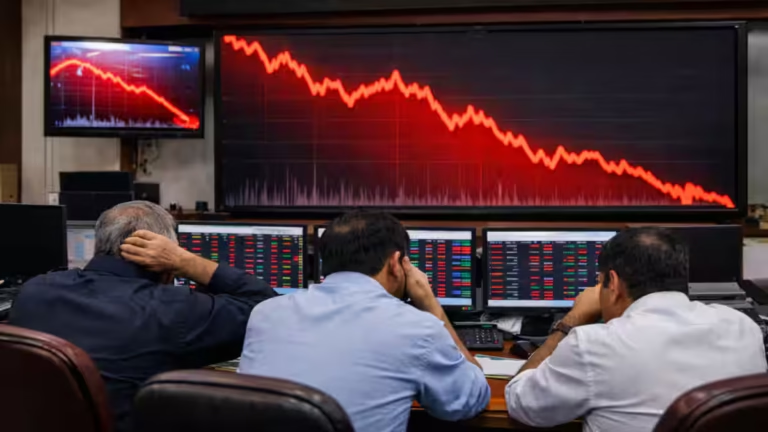
March 12, 2026: It is a sea of red across the Indian equity markets today as the benchmark indices, the BSE Sensex and NSE Nifty 50, suffered a massive blow in early trade. Extending their downward spiral for a second consecutive session, the Sensex plummeted nearly 1,000 points, while the Nifty 50 breached the crucial psychological support level of 23,700 to trade near the 23,550 mark.

The intensified selling pressure has wiped out approximately ₹5.5 trillion of investor wealth within the first hour of trading, as global headwinds and geopolitical instability continue to rattle domestic sentiment.

Key Market Numbers at a Glance

IndexCurrent Level (Approx.)Change (Points)% Decline
BSE Sensex75,890-972.991.27%
NSE Nifty 5023,567-299.451.22%
Nifty Bank55,232-502.100.90%

Why is the Market Crashing Today?

Market analysts point toward a “perfect storm” of negative triggers that have forced investors into a risk-off mode:

  1. Surging Crude Oil Prices: Brent crude has once again jumped above the $100 per barrel mark. The escalation of the US-Israel-Iran conflict has raised severe concerns over supply disruptions in the Middle East, particularly through the Strait of Hormuz.
  2. Persistent FII Outflows: Foreign Institutional Investors (FIIs) remain in a relentless selling mode. On Wednesday alone, FIIs net sold shares worth ₹6,267 crore, taking their total monthly sell-off to nearly ₹40,000 crore.
  3. Weak Global Cues: Overnight losses on Wall Street and a sharp decline in Asian peers—with Japan’s Nikkei falling 2%—have weighed heavily on Indian sentiment.
  4. Currency Pressure: The Indian Rupee hit a fresh low, slipping past the 92.30 mark against the US dollar. A weak rupee increases the cost of imports, further stoking inflationary fears.

Sectoral Performance: All in the Red

The sell-off today is broad-based, with all major sectoral indices on the NSE trading in negative territory.

  • Nifty Auto: The worst performer, dropping over 2.6% as rising input costs and fuel price concerns hit sentiment.
  • Nifty Consumer Durables: Down by 2.1%, led by a fall in heavyweights like Titan.
  • Nifty Bank & Financials: Continued pressure from high bond yields and inflation fears led to a 1.5% drop in these segments.

Top Losers and Gainers

Among the Nifty 50 constituents, Eternal (Zomato-parent) was the top laggard, shedding over 4% following reports of operational hurdles due to fuel supply issues. Other major losers include Mahindra & Mahindra, IndiGo, Tata Motors, and Larsen & Toubro, all falling between 2% and 4%.

Defensive buying was witnessed in select IT and energy stocks, with Tech Mahindra, Reliance Industries, and ONGC managing to trade with marginal gains amidst the carnage.

Analyst View: What Should Investors Do?

Experts suggest that the volatility is likely to persist as long as the geopolitical situation in West Asia remains fluid. Support for the Nifty is currently seen at 23,500, and a breach below this could open doors for a further slide toward 23,200.

Kritika Kamra & Gaurav Kapur’s Intimate Bandra Wedding

New Delhi, March 12, 2026: In a world of lavish destination weddings and week-long spectacles, actress Kritika Kamra and sports presenter Gaurav Kapur chose a path of “quiet luxury” for their union. On Wednesday, March 11, 2026, the couple officially tied the knot at their Bandra residence in Mumbai, transitioning from a simple registry ceremony to an elegant rooftop celebration.

The wedding, which perfectly mirrored the couple’s understated and authentic personas, was a masterclass in how to keep a celebrity affair personal and meaningful.

The Ceremony: A Minimalist Bandra Registry

Moving away from grand palace backdrops, Kritika and Gaurav opted for a civil marriage ceremony followed by a small, traditional pooja at home. The setting was intimate, attended only by immediate family and their inner circle.

The couple’s shared statement reflected their philosophy:

“We’ve always believed that the most meaningful moments are the ones shared with the people you love. Beginning this chapter at home, in Mumbai, just felt right.”

The Bridal Look: Red Chanderi & Heritage

Kritika Kamra, known for her impeccable style, shunned the heavy, viral designer lehengas for something with a soul. She stunned in a sindoor-red Chanderi saree woven from premium tussar silk.

  • The Outfit: The saree was a gift from her mother and was crafted by Cinnabar, Kritika’s own initiative that supports women artisans and preserves traditional Chanderi dyeing arts.
  • The Jewelry: She paired the minimalist drape with heavy Victorian-style Polki jewelry, including a grand choker layered with emerald-green drops and statement chandbalis.
  • The Groom: Gaurav Kapur looked dapper in a custom ivory and gold Raghavendra Rathore bandhgala, maintaining a look that was sophisticated yet relaxed enough for a home celebration.

A Star-Studded Rooftop Sundowner

As the sun began to set over the Mumbai skyline, the vibe shifted from the legalities of the registry to a festive sundowner party on the terrace. The decor, curated by renowned designer Devika Narain, focused on “sunset-inspired” golden hues that complemented the “golden hour” timing of the ceremony.

The Guest List: Where Bollywood Meets Cricket

The celebration saw a seamless blend of Gaurav’s sports world and Kritika’s acting fraternity. Notable attendees included:

  • Bollywood: Farhan Akhtar (in a custom white kurta), Malaika Arora, Neha Dhupia and Angad Bedi, Soha Ali Khan, Masaba Gupta, and Rhea Chakraborty.
  • Cricket: Yuvraj Singh and Hazel Keech (with their children), Virender Sehwag, Zaheer Khan and Sagarika Ghatge, and Ashish Nehra.

The atmosphere was described as more of a “house party” than a high-society gala, with guests seen sharing warm moments away from the usual red-carpet stiffness.

What’s Next: The “Jazz Night” Bash

While the March 11 ceremony was for the “inner sanctum,” the celebrations didn’t end there. The couple is set to host a larger, themed gathering on Thursday, March 12. Described as a “Jazz Night meets Speakeasy Bar” party, this event is expected to welcome a wider circle of friends and colleagues from the industry.

Bahrain Issues ‘Stay-At-Home’ Order After Iranian Strike on Fuel Tanks

0

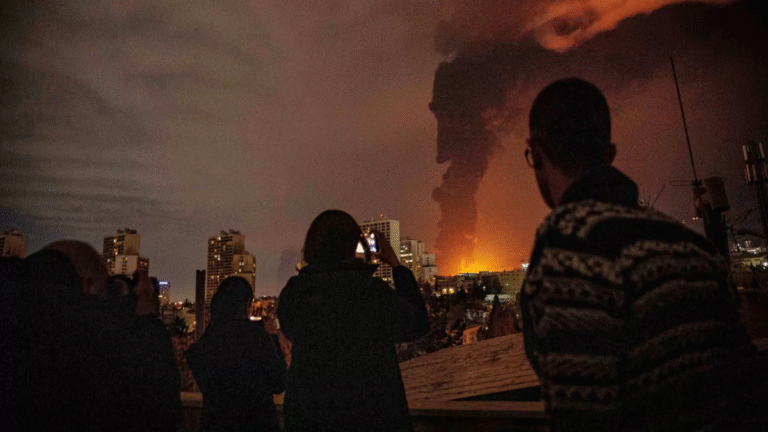
New Delhi, March 12, 2026 – The Middle East conflict reached a critical flashpoint on Thursday as Bahraini authorities issued an urgent directive for residents to remain indoors following a targeted attack on energy infrastructure. The assault, attributed to Iranian forces, ignited a massive blaze at a fuel storage facility in the Muharraq Governorate, sending thick plumes of smoke over the island nation and heightening fears of a full-scale regional war involving the United States and Israel.

Residents Asked to Shelter in Place

Early on Thursday morning, Bahrain’s Ministry of Interior released a public safety advisory via social media, instructing citizens and residents in the districts of Hidd, Arad, Qalali, and Samaheej to “remain in their homes.” The government emphasized the need to close all windows and ventilation systems as a “precaution against the potential effects of smoke” emanating from the inferno at the Muharraq facility.

The site of the attack is of strategic importance, located near the Bahrain International Airport and vital oil infrastructure. Emergency services were deployed immediately to contain the fire, which reportedly illuminated the pre-dawn sky with orange flashes.

Regional Retaliation and Energy Sabotage

The strike on Bahrain is part of a broader wave of attacks targeting Gulf nations. According to regional reports, Iran has significantly ramped up its campaign against energy terminals, tankers, and infrastructure in response to ongoing U.S.-Israeli military operations.

In addition to the Bahrain incident, the following developments were reported on Thursday:

  • Kuwait and Saudi Arabia: Air defense systems in both nations were active at dawn, intercepting several “hostile drones” launched from Iranian territory. In Kuwait, a residential building was reportedly damaged, resulting in at least two injuries.
  • Maritime Conflict: In Iraqi waters, a U.S.-owned oil tanker, the Safesea Vishnu, was targeted by an Iranian “suicide” boat. Reports confirm the death of an Indian national in the attack, while the remaining 27 crew members were rescued.
  • The UAE and Oman: A container ship off the coast of Dubai was struck by an unknown projectile, causing a minor fire. Meanwhile, in Oman, civil defense teams worked through the night to battle fires at the Salalah port after drones hit fuel storage tanks.

Global Impact: Oil Prices Surge

The systemic targeting of energy hubs around the Strait of Hormuz—a waterway responsible for a fifth of the world’s oil supply—has sent shockwaves through global markets. Brent crude prices surged past the $100-per-barrel mark early Thursday, as traders reacted to the “almost complete halt” of commercial shipping in the Gulf.

In a bid to stabilize the volatile market, the U.S. Department of Energy announced the release of 172 million barrels of oil from the Strategic Petroleum Reserve. This move is part of a 32-nation coordinated effort by the International Energy Agency (IEA) to release 400 million barrels to mitigate supply shocks.

Diplomatic Tensions and Trump’s Stance

U.S. President Donald Trump, while stating that the conflict could be a “short excursion,” warned that Washington would drastically ramp up military responses if Tehran continued to obstruct international trade routes. Conversely, Iranian state media warned of a “prolonged war” that would devastate the world economy.

In a show of regional solidarity, India has co-sponsored a UN resolution condemning the “egregious” attacks against Gulf Cooperation Council (GCC) nations and Jordan. The resolution calls for an immediate halt to the targeting of civilian infrastructure and commercial vessels.

As the smoke continues to rise from Muharraq, the international community remains on high alert. With Israel vowing to continue strikes on Iranian and Hezbollah targets in Lebanon and Tehran, the window for a diplomatic de-escalation appears to be closing rapidly.

LPG Price Hike: 14.2-kg Cylinder Rates Surge Amid Fuel Crisis

0

As of March 12, 2026, households across India are feeling the pinch as domestic LPG cylinder prices have surged amid an escalating fuel crisis in West Asia. Earlier this month, state-run oil marketing companies (OMCs) announced a steep hike of ₹60 for the 14.2-kg non-subsidized domestic cylinder, citing significant supply chain disruptions.

LPG Prices in Metro Cities Today

The cost of a domestic LPG cylinder varies across the country due to differences in local taxes (VAT) and transportation logistics. Here are the current rates for a 14.2-kg cylinder in major Indian metros:

CityDomestic LPG Price (14.2 kg)Increase from Feb 2026
New Delhi₹913.00+₹60.00
Mumbai₹912.50+₹60.00
Kolkata₹939.00+₹60.00
Chennai₹928.50+₹60.00
Bengaluru₹915.50+₹60.00
Hyderabad₹965.00+₹60.00

Note: For Pradhan Mantri Ujjwala Yojana (PMUY) beneficiaries, the effective price remains lower due to the ongoing ₹300 per cylinder subsidy provided by the Central Government.

Why Are Prices Rising? The West Asia Fuel Crisis

The sudden spike in prices is primarily driven by geopolitical tensions in West Asia, specifically the widening conflict involving Iran. This has led to a “fuel crisis” for India due to the following factors:

  • Strait of Hormuz Disruption: Nearly 85–90% of India’s LPG imports pass through this critical waterway. With the passage effectively blocked or heavily restricted, cargo movement has tightened.
  • Import Dependency: India imports roughly 62–67% of its total LPG requirement. Any volatility in international benchmarks—like the Saudi Contract Price (CP)—directly impacts domestic rates.
  • Supply Shortages: Major exporters like Iraq and Kuwait have reportedly cut output, leading to panic booking and a surge in demand for electrical alternatives like induction cooktops.

Commercial LPG Feeling the Heat

While domestic consumers are facing a ₹60 hike, the commercial sector has been hit even harder. The 19-kg commercial cylinder, used by hotels and restaurants, saw a massive increase of ₹114.50 to ₹144.00 this month. In Delhi, a commercial cylinder now costs ₹1,884.50, forcing many eateries to hike menu prices or switch to alternative cooking methods.

Government Response and Essential Measures

In response to reports of hoarding and supply panic, the Indian government has invoked the Essential Commodities Act, 1955. This allows authorities to regulate distribution and prevent black-marketing. Furthermore, the Ministry of Petroleum has urged citizens not to engage in “panic booking,” assuring that priority is being given to essential sectors like hospitals and schools.

As the global energy market remains volatile, consumers are advised to check official OMC websites (IOCL, BPCL, and HPCL) for daily updates, as prices are subject to frequent revisions based on the evolving international situation.

Iran Mocks Trump with “Nobel over Dead Children” Poster

0

New Delhi, March 11, 2026: In a striking escalation of rhetorical and visual warfare, Iranian state-aligned media and propaganda outlets have released a series of provocative posters targeting U.S. President Donald Trump. The most controversial of these images depicts the President wearing a Nobel Peace Prize medal while standing over a backdrop of dead children, a sharp critique of his foreign policy and recent military actions in the Middle East.

The imagery, which has circulated widely on social media platforms and Iranian state news agencies, serves as a visceral response to the President’s recent nominations for the Nobel Peace Prize and the ongoing geopolitical tensions between Washington and Tehran.

The “Inverted World” of Diplomacy

The core of the Iranian campaign focuses on what officials in Tehran call a “value inversion.” Following the 2025 nomination of Donald Trump for the Nobel Peace Prize—a move initiated by Israeli Prime Minister Benjamin Netanyahu and later, briefly, by Pakistani officials—Iran’s Ministry of Foreign Affairs launched a scathing critique.

Spokesman Esmaeil Baqaei characterized the nomination as “Poor Nobel and poor peace,” arguing that the prize has been reduced to a political tool. The posters take this rhetoric a step further, using graphic and haunting visuals to contrast the “prestige” of the award with the human cost of conflict in Gaza, Lebanon, and Iran.

Key Visual Elements of the Campaign:

  • The Nobel Medal: Shown prominently around the President’s neck, often stylized to look blood-stained or heavy, as if weighing down the wearer.
  • Collateral Damage: The background of the posters frequently features rubble and the bodies of children, intended to represent victims of U.S.-backed or U.S.-led military strikes.
  • The Sloganry: Phrases like “The Art of the Kill” (a play on Trump’s book The Art of the Deal) and “If you sow the wind, you will reap the whirlwind” are commonly used to warn of Iranian retaliation.

Context: Operation “Midnight Hammer” and Escalating Strikes

The timing of these posters is not accidental. Since early 2026, the region has been on a knife-edge following a series of U.S. and Israeli joint operations targeting Iranian nuclear and ballistic missile facilities.

In late February 2026, the U.S. launched Operation Midnight Hammer, a massive aerial campaign intended to degrade the Islamic Revolutionary Guard Corps (IRGC) capabilities. While Washington maintains these strikes are “preventative” and aimed at ensuring global security, Tehran has utilized the resulting civilian and military casualties to fuel a domestic and international propaganda blitz.