Home Blog Page 219

The Code on Social Security 2020: A Structural Reset of India’ Welfare Framework

0

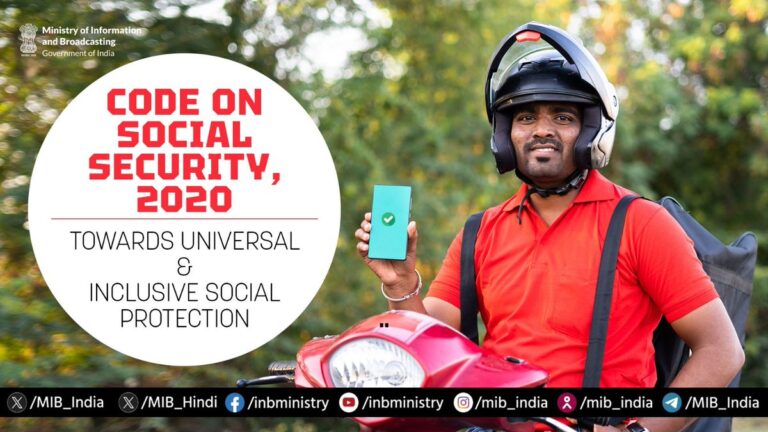
New Delhi, February 27, 2026: The landscape of Indian labor law is undergoing its most significant transformation since independence. At the heart of this shift is The Code on Social Security (SS Code) 2020, a landmark legislation that recently moved from the statute books to active implementation on November 21, 2025. By subsuming nine fragmented central labor laws into a single, cohesive framework, the Code is designed to act as a structural reset, transitioning India from a system of selective protection to one of universal social security.

From Fragmentation to Integration

For decades, India’s social security net was a patchwork of colonial-era laws. Workers in the “organized” sector enjoyed benefits under the EPF Act (1952) or the ESI Act (1948), while nearly 90% of India’s workforce—the “unorganized” sector—remained largely invisible to the law.

The 2020 Code eliminates this dichotomy by merging the following key acts:

  • The Employees’ Provident Fund Act, 1952
  • The Employees’ State Insurance Act, 1948
  • The Maternity Benefit Act, 1961
  • The Payment of Gratuity Act, 1972
  • The Unorganised Workers’ Social Security Act, 2008 (and four others).

By creating a single definition for “wages” and a unified registration system, the Code reduces the compliance nightmare for businesses while ensuring that benefits are not lost in administrative silos.

The Digital Frontier: Recognizing the Gig Economy

Perhaps the most revolutionary aspect of the SS Code is the formal legal recognition of Gig Workers and Platform Workers. In the age of Blinkit, Zomato, and Uber, millions of Indians earn their livelihood outside the traditional “master-servant” relationship.

  • Legal Standing: For the first time, the law defines “aggregators” and mandates their participation in social security.
  • Funding the Safety Net: The Code proposes a Social Security Fund financed through a contribution from aggregators (1%–2% of their annual turnover, capped at 5% of the amount paid to workers).
  • Universal Portability: Through the e-Shram portal and Aadhaar-linked Universal Account Numbers (UAN), a delivery partner in Delhi can carry their accumulated benefits even if they move to a different platform or city.

Empowering the Fixed-Term Workforce

The Code introduces a major win for the modern “contractual” workforce through Fixed-Term Employment (FTE). Previously, an employee had to complete five years of continuous service to be eligible for gratuity. The new Code slashes this requirement for FTEs:

  • Pro-rata Gratuity: Workers on fixed-term contracts are now eligible for gratuity after just one year of service.
  • Parity in Benefits: FTEs are entitled to the same hours of work, wages, and social security benefits as permanent employees, discouraging the practice of “perpetual contracting” to save costs.

Enhancing Ease of Doing Business

While the Code expands worker rights, it also streamlines the regulatory burden for employers:

  • Inspector-cum-Facilitator: The traditional “Inspector Raj” is replaced by a web-based, randomized inspection system where officials act as facilitators, providing advice on compliance before resorting to punitive measures.
  • Limitation Periods: A new five-year limitation period has been introduced for initiating inquiries into provident fund dues, providing “temporal certainty” to businesses and preventing harassment over decades-old records.
  • Decriminalization: Many minor procedural lapses have been de-clogged from the criminal justice system. The Code allows for “compounding” of offenses, where fines can be paid instead of facing imprisonment for technical violations.

The Road Ahead: Challenges in 2026

As of early 2026, the structural reset is in its “calibration phase.” While the Central Government has notified the primary provisions, the full impact depends on the State Rules, which are currently being finalized.

The success of the Code hinges on two pillars: registration and funding. With over 30 crore workers already on the e-Shram portal, the challenge now lies in converting that digital visibility into tangible benefits—health insurance, maternity support, and old-age pensions—for the man and woman at the last mile of the Indian economy.

Namma Metro: 8th Train Joins Yellow Line to Cut Wait Times

0

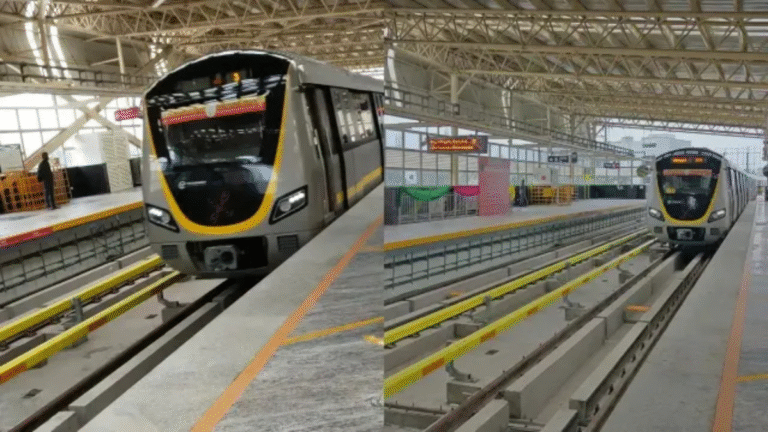
New Delhi, February 27, 2026: In a major move to enhance urban mobility and address the growing demand on the newly operational Yellow Line, the Bangalore Metro Rail Corporation Limited (BMRCL) has officially inducted its eighth trainset into commercial service. Starting February 27, 2026, commuters traveling between RV Road and Bommasandra will experience significantly reduced wait times and improved frequency during both peak and off-peak hours.

The Yellow Line, a 19.15-km elevated corridor that connects the heart of South Bengaluru to the massive tech and industrial hub of Electronics City, has seen a steady surge in ridership since its inauguration in August 2025. The addition of the eighth rake is a strategic step by BMRCL to optimize the corridor’s capacity.

New Timings and Frequency Adjustments

The induction of the additional train brings a much-needed revision to the daily timetable. According to official BMRCL sources, the new schedule from Monday to Saturday will be as follows:

  • Peak Hours: Train frequency has been improved from the previous 10-minute interval to 9 minutes.
  • Non-Peak Hours: The wait time has seen a more dramatic reduction, dropping from 18 minutes to 14 minutes.
  • Sundays: The existing timetable for Sundays remains unchanged for the time being.
  • First and Last Trains: There is no change to the operational hours; the first and last trains from the terminal stations at RV Road and Bommasandra will continue to depart as per the current schedule.

Easing the “Standby” Concern

The eighth trainset, manufactured by Titagarh Rail Systems in collaboration with CRRC, arrived at the Hebbagodi depot in January. While it was technically inducted into the fleet shortly after arrival, it was initially kept as a “maintenance spare” or standby rake to handle emergency requirements.

However, following feedback from daily commuters and public figures—including former Infosys CFO TV Mohandas Pai, who urged the government to prioritize frequency over standby reserves—the BMRCL decided to deploy the rake into active revenue service to provide immediate relief to thousands of IT professionals and industrial workers.

The Road to a 4-Minute Headway

While the one-minute improvement during peak hours may seem modest, it represents a significant milestone in BMRCL’s long-term plan. The Yellow Line is designed for high-frequency “driverless” operations (though currently operated with loco pilots for monitoring).

The corporation eventually aims to run trains every 4 to 6 minutes on this corridor once the full fleet of 15 trains is operational. Currently, the Yellow Line caters to an average daily ridership of approximately one lakh passengers, a number expected to grow as more rakes are added through 2026.

Impact on City Traffic

The Yellow Line has already been credited with reducing traffic congestion along the notorious Hosur Road by nearly 37%. By providing a reliable 35-minute transit from the southern suburbs to Electronics City, the metro has become the preferred lifeline for the city’s workforce.

With the Pink Line (Kalena Agrahara to Nagawara) and Blue Line (Airport Link) also making rapid progress, the enhancement of the Yellow Line reinforces Bengaluru’s transition toward a more integrated and efficient public transport system.

Passengers are encouraged to check the updated schedules on the official Namma Metro app or via the WhatsApp chatbot to plan their commutes more effectively starting Friday.

Parineeti Chopra Offers a Rare Glimpse Into Son Neer’s Serene Nursery

0

New Delhi, February 27, 2026: Bollywood actress Parineeti Chopra has touched the hearts of fans by sharing a rare and intimate look at her son Neer’s nursery. Describing the space as a “little sanctuary,” the actress provided a glimpse into the tranquil environment she and her husband, Raghav Chadha, have curated for their firstborn.

Since the arrival of Neer, Parineeti has been relatively private about her journey into motherhood, making this latest update a delightful surprise for her followers. The aesthetic of the room reflects a shift toward minimalist, conscious parenting, focusing on calm tones and organic textures.

A Design Rooted in Serenity

The nursery, as showcased in her recent social media updates, moves away from the traditional “baby blue” or “bright primary colors” often seen in celebrity nurseries. Instead, the couple has opted for a neutral palette consisting of:

  • Warm Earth Tones: Shades of beige, cream, and soft terracotta dominate the space.
  • Natural Materials: The room features light wood furniture, woven rattan accents, and plush, organic cotton fabrics.
  • Minimalist Decor: Every piece seems intentional, avoiding clutter to maintain a sense of peace and “zen.”

In her caption, Parineeti emphasized that the room was designed to be a place of rest not just for Neer, but for the parents as well. “Our little sanctuary,” she wrote, “where time slows down and nothing else matters.”

The “Sanctuary” Philosophy

The choice of the word “sanctuary” highlights a growing trend among modern parents who view the nursery as a sensory-friendly zone. By using soft lighting and a clutter-free layout, Parineeti and Raghav have created an environment intended to promote better sleep hygiene and emotional regulation for the infant.

Fans and interior design enthusiasts alike have praised the actress for the room’s sophisticated yet cozy vibe. The space features large windows that allow for plenty of natural light, filtered through sheer linen curtains, further enhancing the ethereal feel of the room.

Balancing Fame and Privacy

While Parineeti has shared the decor of the room, she continues to be mindful of her son’s privacy. The glimpses shared focused on the vibe and aesthetic of the home rather than showing the infant’s face, a practice increasingly adopted by Indian celebrities to protect their children from the intense glare of the paparazzi.

The actress, who was last seen in the critically acclaimed Amar Singh Chamkila, seems to be relishing this new chapter of her life. Her “sanctuary” post serves as a gentle reminder of the joy found in the quiet, domestic moments away from the cameras.

President Murmu Makes History in ‘Prachand’ Helicopter

0

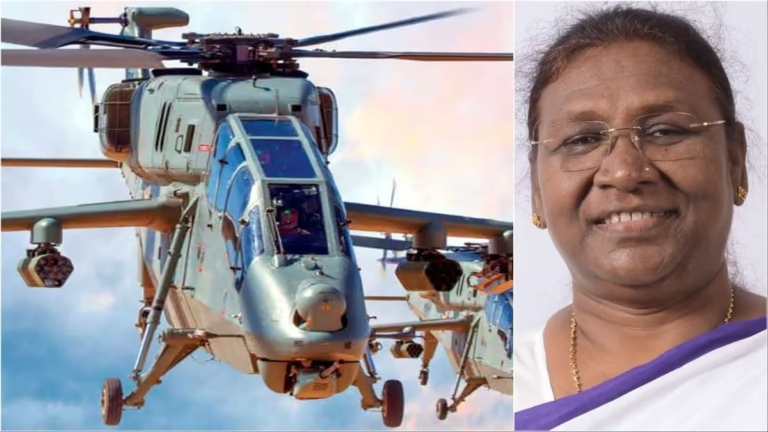
New Delhi, February 27, 2026: In a historic display of India’s growing “Aatmanirbharta” (self-reliance) in defense, President Droupadi Murmu scripted a new chapter in aviation history on February 27, 2026. As the Supreme Commander of the Indian Armed Forces, she became the first Indian President to fly in the indigenous Light Combat Helicopter (LCH) ‘Prachand.’

The sortie, conducted at the Jaisalmer Air Force Station in Rajasthan, serves as a powerful endorsement of India’s homegrown military technology.

A Flight into History: Key Details of the Sortie

President Murmu arrived at the Jaisalmer Air Force Station on Thursday evening and took to the skies on Friday morning. Dressed in flight gear and a helmet, she occupied the co-pilot’s seat in the tandem cockpit of the Prachand.

  • Duration: The sortie lasted approximately 25 minutes, during which the President reviewed the aerial prowess of the aircraft.
  • The Mission: The flight was part of a two-aircraft formation. The President was accompanied by Group Captain Nayan Shantilal Bahua, while the second LCH was piloted by the Chief of the Air Staff, Air Chief Marshal A.P. Singh.
  • Aerial Survey: During the flight, the President carried out an aerial survey of the Jaisalmer region, including the iconic Jaisalmer Fort and the Pokhran field firing range.
  • A National Message: In a rare and inspiring move, the President addressed the nation via a live radio broadcast from the cockpit. She described the Prachand as a “powerful symbol of self-reliance” and expressed her gratitude to the brave soldiers guarding the nation’s borders.

Why LCH Prachand is a Game-Changer

The LCH Prachand, developed by Hindustan Aeronautics Limited (HAL), is the only attack helicopter in the world capable of landing and taking off at altitudes of 5,000 meters (16,400 feet). This makes it an indispensable asset for high-altitude warfare in regions like the Siachen Glacier and Eastern Ladakh.

Technical Highlights

FeatureDescription
Altitude CapabilityCan operate at service ceilings up to 6,500 meters.
ArmamentEquipped with a 20mm cannon, 70mm rockets, and air-to-air missiles.
StealthFeatures a narrow fuselage and low radar/infrared signatures.
IndigenizationBuilt with over 250 private Indian vendors, embodying the ‘Make in India’ spirit.

Strengthening the ‘Supreme Commander’ Legacy

This is not the first time President Murmu has taken to the skies in a show of military solidarity. By flying the Prachand, she has completed a “trifecta” of sorts, having previously flown in the Sukhoi-30 MKI (at Tezpur in 2023) and the Rafale fighter jet (at Ambala in 2025).

Following her sortie, the President witnessed Exercise Vayu Shakti-2026, a massive firepower demonstration by the Indian Air Force at the Pokhran range. The exercise showcased the coordinated strike capabilities of various frontline aircraft, further highlighting India’s readiness for multi-front operations.

BPSC APO Recruitment 2026: Registration for 300 Posts Begins

0

New Delhi, February 27, 2026: The Bihar Public Service Commission (BPSC) has officially commenced the online registration process for the recruitment of Assistant Prosecution Officers (APO). Under Advertisement No. 13/2026, the commission aims to fill 300 vacancies in the Prosecution Directorate under the Home Department, Government of Bihar.

Eligible law graduates can now submit their applications through the official BPSC portal. The application window opened on February 27, 2026, and will remain active until March 20, 2026.

Key Highlights of BPSC APO Recruitment 2026

Interested candidates should keep the following schedule and details in mind to ensure a smooth application process.

EventDate
Notification Release DateFebruary 25, 2026
Application Start DateFebruary 27, 2026
Last Date to Apply OnlineMarch 20, 2026
Last Date for Fee PaymentMarch 20, 2026
Preliminary Exam (Tentative)July 15, 2026

Vacancy Breakdown

Out of the 300 total posts, a significant portion is reserved for various categories as per Bihar government regulations. Notably, 35% of the seats (99 posts) are reserved horizontally for women candidates.

  • Unreserved (UR): 129
  • Economically Weaker Section (EWS): 29
  • Scheduled Caste (SC): 42
  • Scheduled Tribe (ST): 07
  • Extremely Backward Class (EBC): 64
  • Backward Class (BC): 25
  • BC Women: 04

Eligibility Criteria

To apply for the post of Assistant Prosecution Officer, candidates must meet the following requirements:

1. Educational Qualification

Applicants must hold a Bachelor of Laws (LLB) degree from a university recognized by the Bar Council of India. Both 3-year and 5-year integrated law courses are eligible. Candidates must also be eligible to register as an advocate.

2. Age Limit (as of August 1, 2026)

  • Minimum Age: 21 years
  • Maximum Age (UR Male): 37 years
  • Maximum Age (UR Female/BC/EBC): 40 years
  • Maximum Age (SC/ST): 42 years

Selection Process

The BPSC APO recruitment involves a rigorous three-stage selection procedure:

  1. Preliminary Examination: An objective-type test consisting of two papers (General Studies and Law). This stage is qualifying in nature.
  2. Mains Examination: A descriptive written exam comprising multiple papers, including General Hindi, General English, and various legal codes.
  3. Interview: Shortlisted candidates will be invited for a personality test/viva-voce worth 100 marks.

Application Fee

Candidates are required to pay an application fee of Rs 100.

Important Note: Applicants who do not provide their Aadhaar Number in the application form will be required to pay an additional Biometric Fee of Rs 200.

How to Apply for BPSC APO 2026

Follow these steps to complete your registration:

  1. Visit the official BPSC website: bpsc.bihar.gov.in.
  2. Navigate to the Apply Online” tab on the homepage.
  3. Complete the One-Time Registration (OTR) by providing your basic details, mobile number, and email.
  4. Log in using your system-generated credentials.
  5. Fill out the application form, upload the required documents (photo, signature, and law degree), and pay the fee.
  6. Submit the form and download the confirmation page for future reference.

Indian Star Rinku Singh Mourns Father’ Demise Mid-World Cup

0

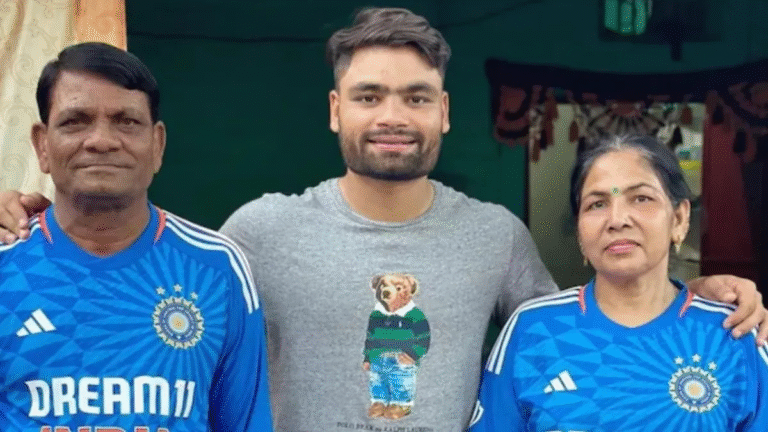
New Delhi, February 27, 2026: In a heartbreaking turn of events, India’s star middle-order batter Rinku Singh is mourning the loss of his father, Khanchand Singh, who passed away early Friday morning, February 27, 2026.The tragic news comes at a time when the 28-year-old cricketer is representing the nation in the ongoing ICC Men’s T20 World Cup 2026, co-hosted by India and Sri Lanka.

A Brave Battle Against Illness

Khanchand Singh had been battling stage-four liver cancer for over a year. His condition deteriorated significantly in recent days, leading to his admission to the Yatharth Hospital in Greater Noida on February 21. According to hospital officials, he was on ventilator support and receiving renal replacement therapy before breathing his last early Friday morning.

Rinku, known for his resilience on the field, had been balancing his national duties with the emotional weight of his father’s health. He had briefly left the Indian camp in Chennai earlier this week to visit his father in Noida. Despite the personal turmoil, Rinku showed immense character by rejoining the squad ahead of India’s Super 8 clash against Zimbabwe on Thursday.

While he was not part of the playing XI for that match, Rinku was seen on the field as a substitute fielder, embodying the professional commitment he is known for.

From LPG Cylinders to World Cup Dreams

The story of Rinku Singh is often cited as one of the most inspiring “rags-to-riches” tales in modern Indian cricket. Central to that journey was his father, Khanchand Singh.

  • The Struggle: For decades, Khanchand worked as an LPG cylinder delivery man in Aligarh, Uttar Pradesh.
  • The Support: Despite earning a modest salary and facing immense financial hardships, he ensured Rinku had the resources to pursue his cricketing dreams.
  • The Bond: Rinku often shared how his father’s hard work kept the family afloat. In a touching gesture last year, Rinku gifted his father a high-end sports bike, a moment that went viral and highlighted the deep bond between the two.

Tributes from the Cricket Fraternity

As news of the demise spread, the cricketing world united in grief. Former Indian spinner Harbhajan Singh was among the first to offer his condolences on social media:

“Pained to learn about the demise of Shri Khanchand Singh Ji, father of Rinku Singh. This must be an especially difficult time for Rinku and his family, even as he remains committed to his responsibilities during the T20 World Cup. My heartfelt thoughts and prayers are with him.”

Legendary cricketer Yuvraj Singh also expressed his solidarity, stating that “no words feel enough” during such a difficult time.

Uncertain Future in the Tournament

Rinku has now flown back to his hometown in Aligarh to perform the last rites. His availability for India’s crucial final Super 8 encounter against the West Indies in Kolkata remains uncertain. The team management has reportedly granted him an indefinite break to be with his family, though some reports suggest he may rejoin the squad before the semi-finals should India progress.

The Indian team, currently vying for a spot in the final four, will undoubtedly feel the absence of their “finisher” as they rally around their teammate during this period of immense personal loss.

Kolkata Shaken: 5.5 Magnitude Earthquake Hits Bangladesh Border

0

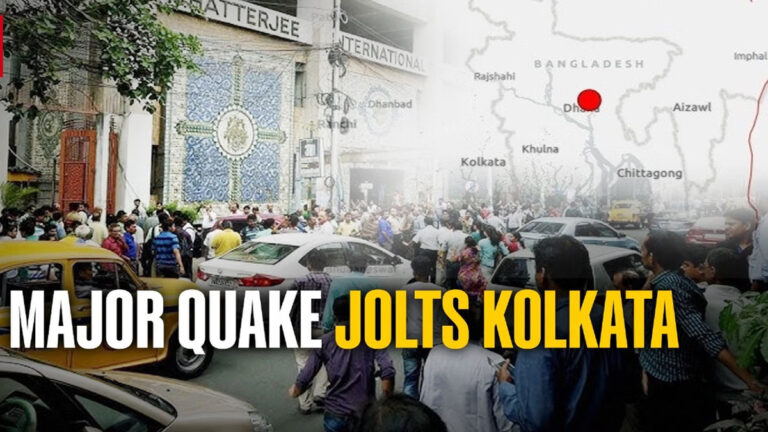
New Delhi, February 27, 2026: On Friday afternoon, February 27, 2026, a strong earthquake jolted Kolkata and several parts of South Bengal, triggering widespread panic and leading to the evacuation of high-rise buildings and offices.

The tremor, which occurred at approximately 1:22 PM IST, lasted for several seconds and was felt distinctly across the metropolitan area, including Dalhousie, Salt Lake, and New Town.

Earthquake Details: Magnitude and Epicentre

According to the National Centre for Seismology (NCS) and the U.S. Geological Survey (USGS), the seismic event originated across the border in neighboring Bangladesh.

  • Magnitude: Preliminary reports varied slightly between agencies, with the NCS recording it at 5.5 on the Richter Scale, while the USGS estimated the magnitude at 5.3.
  • Epicentre: The epicentre was located in southwestern Bangladesh, specifically near the town of Satkhira in the Khulna Division. The USGS pinpointed the location approximately 26 km southeast of Taki, a town in West Bengal on the India-Bangladesh border.
  • Depth: The quake struck at a relatively shallow depth of approximately 10 km, which contributed to the intensity of the tremors felt on the surface.

Impact on Kolkata and West Bengal

As the waves reached the Gangetic delta, the soft alluvial soil of the region amplified the shaking. Residents in high-rise apartments reported swaying ceiling fans, rattling windows, and furniture moving on its own.

Immediate Reactions

  • Mass Evacuations: Thousands of office workers and residents rushed out of buildings into open spaces. In the city’s central business district, crowds gathered on the streets as automatic earthquake alerts flashed on mobile phones.
  • Panic in Congregations: Union Minister of State Sukanta Majumdar was addressing a public gathering when the tremors struck. Footage from the event showed cameras and the stage shaking, forcing a brief pause in the proceedings.
  • No Immediate Casualties: While the jolts were powerful enough to cause significant alarm—especially in North Kolkata’s older, congested neighborhoods—there have been no immediate reports of major structural damage or casualties within West Bengal.

Regional Context

This is the second time in a month that Kolkata has felt seismic activity. On February 3, 2026, the city experienced milder tremors from a 6.1 magnitude earthquake centered in Myanmar. Seismologists note that while Kolkata is not on a major fault line itself, its proximity to the active Himalayan and Indo-Burman plate boundaries makes it susceptible to tremors from neighboring regions.

Local authorities remain on high alert, and disaster management teams are monitoring the situation for any aftershocks.

MP High Court Demands Answers After 17 Children Die at Ujjain Ashram

0

New Delhi, February 27, 2026 — In a development that has sent shockwaves through the state of Madhya Pradesh, the Indore Bench of the High Court has taken suo motu cognisance of the deaths of 17 specially-abled children at the Sevadham Ashram in Ujjain. The court’s intervention follows a grim investigation into hospital and cremation records, revealing a pattern of fatalities that went largely unreported to the public for over a year.

The High Court has directed the state government and ashram authorities to submit a detailed report within two weeks, questioning the quality of care and the circumstances surrounding these deaths.

A Fatal Transfer: From Indore to Ujjain

The origins of this tragedy trace back to June 2024, when an outbreak of cholera at the Yugpurush Ashram in Indore claimed the lives of 10 children. Following that disaster, the state government shut down the Indore facility and shifted 86 children—deemed “specially-abled” and requiring high-level care—to the Sevadham Ashram in Ujjain.

The move was intended to ensure the children’s safety. Instead, records now show that between January 2025 and February 2026, 17 of those 86 children died.

The Investigation: Hidden in the Records

The deaths might have remained unnoticed if not for a meticulous cross-referencing of records from the Ujjain District Hospital and the local electric crematorium.

  • Uniform Cause of Death: Shockingly, the ashram attributed almost all the deaths to “respiratory distress” or “difficulty breathing.”
  • The Timeline: The fatalities began just one month after the transfer, starting in late January 2025, and continued at a rate of more than one death per month.
  • Victim Profile: The deceased were aged between 5 and 23 years, all belonging to the group of vulnerable children transferred from Indore.

The High Court’s Stand

The High Court Bench expressed severe concern over the lack of monitoring by the Women and Child Development Department. The court is now treating the matter as a Public Interest Litigation (PIL), seeking to understand:

  1. Why the sudden spike in deaths occurred after the children were moved.
  2. Whether the ashram had adequate medical staff and emergency equipment.
  3. Why the district administration failed to flag the recurring “respiratory distress” as a potential sign of negligence or poor living conditions.

A Growing Outcry

Child rights activists are demanding a high-level judicial inquiry. “Moving children from one negligent facility to another is not a solution; it’s a death sentence,” stated one local advocate. Critics argue that the state’s oversight of private shelters for the disabled is dangerously thin, allowing tragedies to be buried in paperwork until they reach a breaking point.

As the two-week deadline for the state’s response approaches, the Sevadham Ashram remains under intense scrutiny. The remaining children at the facility are currently being monitored by a special medical team, but for 17 families and the community at large, the focus remains on accountability for the lives already lost.

Chaos at Kerala Temple: Elephant Flings 26-Year-Old Into the Air

0

New Delhi, February 27, 2026 — A moment of spiritual celebration turned into a scene of pure terror on Thursday morning at the Annamanada Mahadeva Temple. During the annual Valiya Vilakku festival, a captive tusker suddenly turned violent, grabbing a 26-year-old man and flinging him several feet into the air.

The horrifying incident, captured on a mobile phone and now viral across social media, has once again reignited the fierce national debate over the use of elephants in temple rituals.

The Incident: A Sudden Turn of Events

The victim, identified as Vivek, a resident of Mambra and an assistant to the mahout, was performing a routine task just before the attack. Around 9:00 AM, as preparations were being made for the Sheeveli procession, Vivek was holding a decorative idol (kolam) to be placed atop the elephant.

Witnesses say the tusker, named Akkikkavu Karthikeyan, appeared calm until the moment Vivek approached. Without warning, the animal lunged forward, wrapped its trunk around Vivek’s legs, and hoisted him off the ground before forcefully throwing him aside.

“It happened in the blink of an eye. One moment we were waiting for the percussion performance to start, and the next, there was a man flying through the air,” said one devotee who witnessed the chaos.

Medical Status and Immediate Response

Following the attack, the festival was temporarily suspended. Vivek was immediately rushed to Apollo Adlux Hospital in Angamaly. Doctors report that he sustained serious injuries to his face and a fractured arm. While his condition was initially critical, latest updates from family members suggest he is stable and scheduled for surgery.

Temple authorities and the local “elephant squad” acted quickly to confine the tusker within the temple premises, preventing a full-scale stampede among the hundreds of devotees gathered.

Renewed Safety Concerns

This incident is the latest in a string of elephant-related accidents in Kerala, a state where the animals are deeply woven into the cultural and religious fabric. Experts and animal rights activists are pointing to several factors that may have triggered the animal’s aggression:

  • Physical Stress: Reports from the Heritage Animal Task Force (HATF) suggest the elephant may have been overworked or deprived of adequate sleep during the festival season.
  • Crowd Noise: High-decibel percussion (Panchari Melam) and large, cheering crowds are known stressors for captive pachyderms.
  • Safety Violations: Activists claim that the mandatory six-meter gap between the animal and the public is frequently ignored during these ceremonies.

A Growing Debate

While many traditionalists argue that elephants are an inseparable part of Kerala’s heritage, animal welfare organizations are calling for stricter regulations—or a total transition to robotic elephants, several of which have already been introduced in other temples across the state.

Local police and the Forest Department have launched an investigation into whether the festival organizers followed the established safety protocols for parading captive elephants.

Yogi Govt Gifts UP Employees Early Salary & 3-Day Holi Break

0

New Delhi, February 27, 2026: In a significant festive gesture, the Uttar Pradesh government, led by Chief Minister Yogi Adityanath, has announced a three-day holiday for the upcoming Holi festival. To further enhance the celebrations for the state’s workforce, the administration has also ordered the early disbursement of salaries and pensions, ensuring that employees have ample liquidity for the festivities.

UP Government Announces Extended Holi Break

The state government has officially declared a public holiday spanning from March 2 to March 4, 2026. This decision ensures that government offices, schools, and colleges across Uttar Pradesh remain closed, allowing citizens and state employees to celebrate the “Festival of Colors” with their families.

The holiday schedule is structured as follows:

  • March 2 (Monday): Public holiday on account of Holika Dahan.
  • March 3 (Tuesday): Public holiday for Holi.
  • March 4 (Wednesday): Extended holiday for continued celebrations and local festivities.

Combined with March 1 (Sunday), most employees will enjoy a four-day long weekend, providing a much-needed reprieve and a chance for those working away from home to travel back to their native towns.

Advance Salary: A Festive Gift for 2.7 Million People

Recognizing that festivals bring additional expenses, CM Yogi Adityanath has directed the Finance Department to release the salaries for February 2026 ahead of schedule.

Typically, salaries are credited on the first of the month. However, since March 1 falls on a Sunday and is followed by the Holika Dahan holiday on March 2, the government has moved the payout date to February 28, 2026.

Who Will Benefit?

The order applies to a broad spectrum of the state’s workforce and retirees:

  • 1.5 Million State Employees: Includes all regular government staff.
  • 1.2 Million Pensioners: Includes those receiving family pensions.
  • Academic Staff: Employees of aided educational and technical institutions.
  • Local Bodies: Workers in urban local bodies and municipal corporations.
  • Contractual Staff: The directive also urges the timely payment of honorariums for outsourced and daily-wage workers.

Administrative Directives for Smooth Implementation

To ensure that no technical glitches delay the payments, the state Finance Department has issued strict instructions to all District Magistrates (DMs) and Treasury Officers.

“The government aims to ensure that no employee or pensioner faces financial constraints during one of the state’s most significant cultural celebrations. Prompt compliance with the disbursement order is mandatory across all districts,” the official notification stated.

Additionally, the Director General of School Education has separately instructed that all teaching and non-teaching staff, including those on contract or out-sourced, receive their dues before the holiday begins.

Strengthening the Festive Spirit

This move is consistent with the Yogi government’s “pro-worker” approach during major festivals like Diwali and Holi. By aligning the administrative calendar with cultural needs, the state intends to boost local markets and ensure that the spirit of the festival remains unburdened by financial or logistical hurdles.

With the advance salary hitting bank accounts by February 28, the streets of Lucknow, Varanasi, Prayagraj, and Mathura are expected to see a surge in festive shopping and preparations over the coming weekend.