Home Blog Page 222

The Rise of the “Punch Monkey”: Why High-Octane Simplicity is Winning Digital Media

0

New Delhi, February 26, 2026: In an era of overly complex narratives and high-barrier-to-entry simulations, a new trend is swinging back toward the basics. Enter the “Punch Monkey”—a concept that started in the fringes of game design and has since become a metaphor for a specific type of relentless, dopamine-driven engagement.

What is a “Punch Monkey”?

At its core, the term refers to a character, playstyle, or even a content creator archetype defined by unceasing kinetic energy. It is the embodiment of the “forward-only” mentality. In gaming, a Punch Monkey build prioritizes raw speed and physical impact over strategy or defense. In broader media, it describes content that hits fast, hits hard, and never slows down for exposition.

The Psychology of Chaos

Why are audiences gravitating toward this “primal” style of interaction? Psychologists suggest that in a world of decision fatigue, there is a profound relief in singular focus. * Tactile Satisfaction: Whether it’s the “crunchy” sound design of a pixel-art primate landing a blow or the rapid-fire editing of a viral video, the sensory feedback is immediate.

  • Low Friction, High Reward: The Punch Monkey philosophy removes the “middleman” of complex mechanics. It is the shortest distance between a user’s action and a visible result.

From Indie Games to Viral Trends

The “Punch Monkey” spirit is most visible in the current landscape of independent game development. We are seeing a surge in titles that favor “juice”—a developer term for the physical feel of an interface—over expansive open worlds. These games often feature protagonists who solve every problem with a flurry of motion, stripping away the bloat of modern AAA titles.

Beyond the screen, the term has been adopted by the “hustle” and fitness subcultures. To “Punch Monkey” a task is to attack it with a brute-force, high-volume approach, prioritizing the completion of work through sheer repetition and intensity rather than over-analysis.

The Impact on Modern Content Consumption

Digital news and entertainment are shifting to accommodate this shorter attention span. We see this in:

  1. “Staccato” Editing: Videos that utilize jump cuts and high-volume audio to maintain a constant “impact” on the viewer.
  2. The Death of the Intro: Content that skips the context and dives straight into the action—much like a Punch Monkey jumping into a fray.

The Verdict: While the name might sound whimsical, the “Punch Monkey” trend is a serious indicator of where our digital tastes are headed. We are moving toward an era of hyper-physicality and direct engagement. In a digital landscape crowded with noise, sometimes the only way to be heard is to keep swinging.
Holi 2026: Rare ‘Blood Moon’ Total Lunar Eclipse to Light Up Indian Skies

0

New Delhi, February 26, 2026: On the evening of March 3, 2026, the sky will host one of the most mesmerizing celestial displays as the first total lunar eclipse of the year transforms the Full Moon into a hauntingly beautiful “Blood Moon.” For exactly 58 minutes, our natural satellite will be bathed in a deep, coppery red hue, offering a rare spectacle for skygazers across the globe.

What makes this event particularly significant for observers in India is its rare coincidence with the festival of Holi, marking a dramatic convergence of astronomical wonder and cultural tradition.

Why Does the Moon Turn Red?

During a total lunar eclipse, the Earth aligns perfectly between the Sun and the Moon, casting its darkest shadow (the umbra) over the lunar surface. While the Sun’s direct light is blocked, the Moon doesn’t go completely dark.

Instead, it turns red due to a phenomenon called Rayleigh scattering—the same reason why sunrises and sunsets are colorful. Earth’s atmosphere filters out shorter blue wavelengths and bends the longer red wavelengths toward the Moon, creating the “Blood Moon” effect.

Key Stats for the March 3 Eclipse:

  • Event Type: Total Lunar Eclipse (Blood Moon)
  • Total Duration of Totality: 58 minutes and 19 seconds
  • Entire Event Duration: Approximately 5 hours and 39 minutes
  • Next Occurrence: This is the last total lunar eclipse until December 31, 2028.

Can You Watch it From India?

The short answer is yes, but the experience will vary significantly depending on where you are located.

Because the eclipse begins while the Moon is still below the horizon for most of South Asia, India will witness a “Moonrise Eclipse.” This means the Moon will already be eclipsed by the time it climbs into the sky.

1. The Northeast Advantage

Inhabitants of Northeastern states like Assam, Arunachal Pradesh, Nagaland, and Manipur are the luckiest. These regions will witness the totality phase (the full Blood Moon) shortly after moonrise.

  • Dibrugarh & Itanagar: Expect 100% obscuration with a clear view of the red Moon for a brief window before totality ends around 5:32 PM IST.

2. Rest of India (Delhi, Mumbai, Bengaluru)

For most other parts of the country, including North, West, and South India, the Moon will rise after the total phase has already ended or as it is just finishing.

  • Visibility: Observers will primarily see the partial phase as the Moon slowly moves out of Earth’s shadow.
  • Timing: In cities like Delhi and Mumbai, look toward the eastern horizon between 6:20 PM and 6:47 PM IST. The Moon will appear slightly “chipped” or dimmed as it exits the umbra.

City-Wise Moonrise Timings (March 3, 2026)

CityMoonrise Time (Approx.)Visibility Type
Itanagar5:05 PM ISTTotal Eclipse (Blood Moon)
Kolkata5:32 PM ISTEnd of Totality/Partial
Lucknow6:02 PM ISTPartial Eclipse
Chennai6:21 PM ISTPartial Eclipse
New Delhi6:22 PM ISTPartial Eclipse
Mumbai6:40 PM ISTPartial/Penumbral

The Holi Connection and “Sutak Kaal”

Since the eclipse occurs on Purnima (Full Moon), which is also the day of Holi (Choti Holi/Holika Dahan), it holds immense astrological significance in India.

  • Sutak Kaal: In Indian tradition, the Sutak (inauspicious period) typically begins 9 hours before a lunar eclipse. For March 3, the Sutak is expected to start in the early morning around 6:23 AM IST.
  • Rituals: Many temples may remain closed during the day, and families might choose to perform Holika Dahan rituals only after the eclipse concludes at 6:47 PM IST to ensure an auspicious start to the festival.

How to Watch Safely

Unlike a solar eclipse, a lunar eclipse is completely safe to view with the naked eye. You do not need special filters or glasses.

  1. Find an Unobstructed View: Since the eclipse happens low on the horizon for India, find a spot with a clear view of the Eastern sky.
  2. Equipment: While not necessary, a pair of binoculars or a basic telescope will reveal stunning details of the Earth’s shadow moving across lunar craters.
  3. Check the Weather: Late February/Early March usually offers clear skies in India, but it’s always wise to check for local smog or cloud cover updates.

Would you like me to find the specific Sutak end times for your specific city?

Speeding Thar Mows Down Two Madrasa Teachers in Chandigarh; Accused Is Cop Son

0

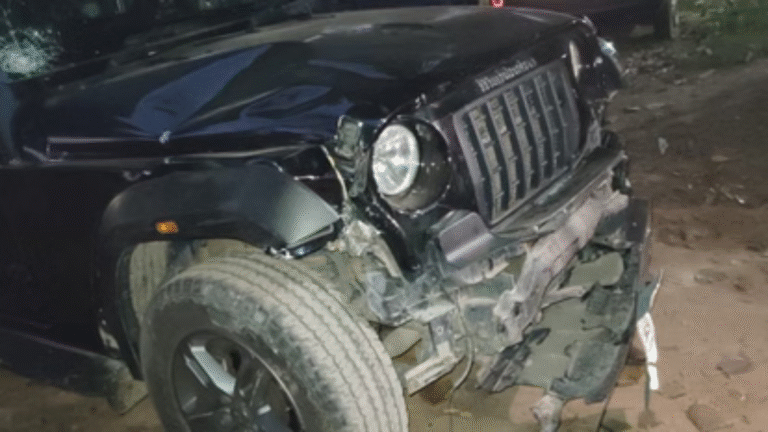
New Delhi, February 26, 2026: In a tragic hit-and-run incident that has sparked outrage across the tri-city, two brothers who served as teachers at a madrasa in Uttar Pradesh were killed after a speeding Mahindra Thar rammed into their motorcycle. The incident occurred late Tuesday night at the Kalagram light point in Manimajra.

The accused, identified as Armaan (19), a resident of Sector 22, is the son of a Chandigarh Police head constable currently posted at the police headquarters. While the suspect was arrested shortly after the accident, his subsequent release on bail has led to allegations from the victims’ families that the police are attempting to shield their own.

The Fatal Collision

The victims, Gulsher Ali (46) and Abdul Subhaan (44), were residents of Saharanpur, Uttar Pradesh. They had arrived in Chandigarh on February 21 to collect donations for an upcoming Ramadan project and were staying with relatives in Manimajra.

According to eyewitness accounts and police reports, the tragedy unfolded around 11:00 PM on Tuesday. The brothers were traveling on their motorcycle and had slowed down at the Kalagram traffic signal, which was showing red with only a few seconds remaining.

“They were just waiting for the light to turn green when a high-speed Thar SUV crashed into them from behind with immense force,” a passerby told local authorities.

The impact was so severe that Gulsher Ali died on the spot. His brother, Abdul Subhaan, was rushed to the Post Graduate Institute of Medical Education and Research (PGIMER) in critical condition but succumbed to his injuries during treatment.

Investigation and Arrest

Following the collision, the driver of the Thar allegedly sped away from the scene, abandoning the vehicle near the Sector 25 cremation ground. However, alert bystanders managed to note down the registration number, which allowed the Manimajra police to track down the owner.

The investigation revealed that:

  • The driver, Armaan, did not possess a driving license at the time of the incident.
  • The vehicle belonged to his family.
  • While a “smell test” conducted by officers initially ruled out alcohol, the final medical report is still awaited.

Despite the gravity of the incident—resulting in two deaths—the accused was granted bail shortly after his arrest, a move that has drawn sharp criticism from the bereaved families.

Families Left in Despair

The deaths have left two families in Saharanpur devastated. Gulsher Ali is survived by his wife and five children, while Abdul Subhaan leaves behind a wife and four children. Both brothers were well-respected educators at local madrasas in Saharanpur.

“They came here for a noble cause, to support their students and community,” said a grieving relative. “Now, nine children have lost their fathers because of someone’s reckless driving and the arrogance of power.”

Mounting Pressure on Authorities

This incident marks yet another high-profile case involving a Mahindra Thar in Chandigarh, a vehicle that has frequently been linked to over-speeding and stunt-driving cases in the city over the past year.

Local activists and the victims’ families have called for a transparent investigation, demanding that the status of the accused’s father should not influence the legal proceedings. The Chandigarh Police have maintained that a case has been registered under relevant sections of the Bharatiya Nyaya Sanhita (BNS) and that the law will take its course.

POCSO Court Orders FIR Against Swami Avimukteshwaranand

0

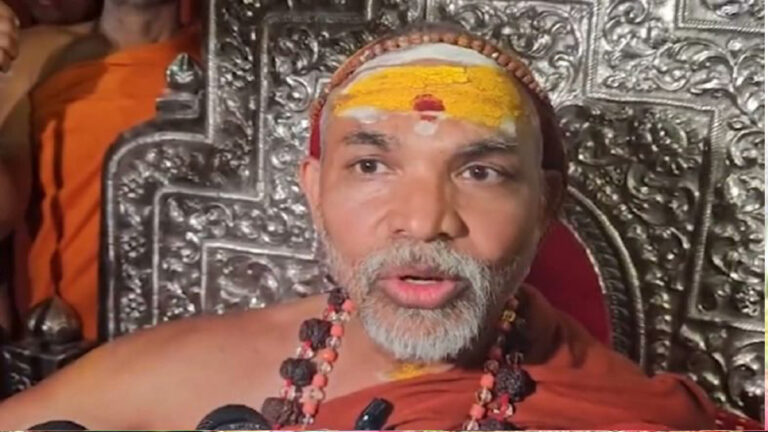
New Delhi, February 26, 2026: A special Protection of Children from Sexual Offences (POCSO) court in Prayagraj has directed the Uttar Pradesh police to register a First Information Report (FIR) against Swami Avimukteshwaranand Saraswati and his aide, Mukundanand Giri. The order, issued by Additional Sessions Judge Vinod Kumar Chaurasia, follows a petition filed by Shakumbhari Peethadhishwar Ashutosh Brahmachari Maharaj.

The court’s decision was prompted by allegations that the religious leader sexually exploited two minor boys, aged 14 and 17, under the guise of “Guru Seva” (service to the teacher).

The Investigation and Evidence

The case gained momentum after the court examined an inquiry report submitted by the Additional Commissioner of Police, Prayagraj. Key highlights of the evidence include:

  • Victim Statements: The two minors recorded their statements via videography, categorically narrating incidents of penetrative sexual assault.
  • Medical Confirmation: Preliminary reports and the police inquiry have reportedly corroborated the nature of the physical abuse, providing the legal basis for the court to order the FIR.
  • Digital Evidence: The complainant allegedly submitted a CD containing evidence to the court, and police are currently conducting forensic examinations of mobile locations and electronic data related to the dates of the alleged incidents (January 18, 2026).
  • Locus of Incidents: The abuse is alleged to have occurred at the seer’s ashram and during the Magh Mela in Prayagraj.

Legal Charges and Looming Arrest

Following the court order, the Jhunsi Police Station has formally booked Swami Avimukteshwaranand under several stringent sections of the Bharatiya Nyaya Sanhita (BNS) and the POCSO Act:

  • BNS Sections: 69, 74, 75, 76, 79, and 109 (dealing with sexual assault and harassment).
  • POCSO Sections: 3, 5, 9, and 17 (pertaining to penetrative sexual assault and abetment).

The “Sword of Arrest”: With the FIR registered, Uttar Pradesh police teams have intensified their investigation. Reports indicate that a police team recently arrived at the seer’s residence in Varanasi. While no immediate arrest was made at that moment, the police have indicated that custodial interrogation may be necessary as the probe progresses.

Response from Swami Avimukteshwaranand

The religious leader has vehemently denied all charges, labeling them a “fabricated conspiracy” by the state government and certain individuals to malign the institution of the Shankaracharya.

“The truth will come out after the investigation. The boys mentioned in the complaint never entered our Gurukul; they have no connection to us. This is a tactic to divert attention from our demand to ban cow slaughter.” — Swami Avimukteshwaranand Saraswati

He further argued that the complainant, Ashutosh Brahmachari, is a “history-sheeter” with a record of filing false cases. Despite his defiance, the Swami has moved the Allahabad High Court seeking anticipatory bail to prevent his arrest.

Context: A String of Controversies

This legal battle unfolds against a backdrop of existing tension between Swami Avimukteshwaranand and the Uttar Pradesh administration.

  1. Magh Mela Confrontation: In January 2026, the Swami held an 11-day sit-in protest after being allegedly prevented from taking a ritual dip at the Sangam.
  2. Title Dispute: The seer’s claim to the title of Shankaracharya of Jyotish Peeth remains legally contested, with a Supreme Court stay on his formal coronation still in effect.

Conclusion

As the Allahabad High Court prepares to hear the anticipatory bail plea, the eyes of the nation remain on Prayagraj. The confirmation of abuse in the medical and inquiry reports has placed the seer in a precarious legal position, making this one of the most high-profile POCSO cases involving a religious figure in recent years.

From Child Groom to Medical Professional: The Extraordinary Journey of Ramlal Bhoi

0

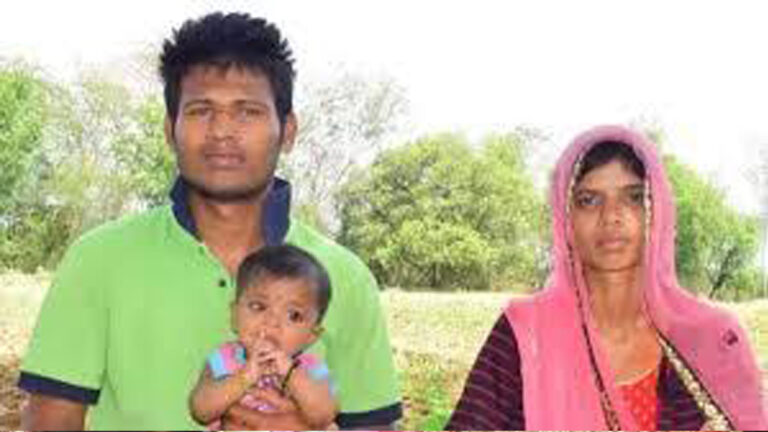
New Delhi, February 26, 2026: In a world where many allow circumstances to dictate their destiny, Ramlal Bhoi stands as a testament to the power of unyielding grit. His story is not just a personal victory; it is a powerful narrative of breaking free from the shackles of deep-seated social traditions to achieve a dream that once seemed impossible.

After a decade-long battle against social pressure, financial instability, and the responsibilities of early fatherhood, Ramlal has finally secured his place in medical school by clearing the National Eligibility cum Entrance Test (NEET).

A Childhood Interrupted

Ramlal’s journey began in a manner that remains a stark reality in parts of rural India. Born into a modest family in Rajasthan, his childhood was cut short when he was married at the age of 11 while still in the sixth grade.

In many communities, child marriage is a cycle that often ends a student’s education. For Ramlal, the weight of the world fell on his shoulders early. By the time he was 20 years old, he was already a father. Most in his position would have resigned themselves to a life of manual labor or local farming to support their family. However, Ramlal held onto a singular, burning ambition: he wanted to become a doctor.

The Struggle for Education

Pursuing a medical degree is grueling for any student, let alone one balancing the roles of a husband and a father. Ramlal’s path was paved with obstacles:

  • Social Expectations: He had to navigate the traditional expectations of his village, where academic pursuits are often sidelined for immediate earnings.
  • Financial Constraints: Supporting a wife and child while paying for coaching and study materials required immense sacrifice.
  • Time Management: Between family responsibilities and the intense NEET syllabus, his “study hours” were often stolen from sleep.

Despite these hurdles, Ramlal moved to Kota—India’s famous coaching hub—to give his dreams a real shot. He lived a frugal life, keeping his eyes fixed on the goal even when the pressure to return home and “act like a provider” was at its peak.

The Turning Point: Success at 21

The year 2023 marked the end of his ten-year struggle. At the age of 21, while his peers were perhaps just beginning to think about their careers, Ramlal was celebrating a hard-won victory. He cleared the NEET exam with a score that guaranteed him a seat in a government medical college.

His success sent waves through his community and beyond. It proved that while a child marriage may have defined his past, it did not have the power to dictate his future.

“I never let my circumstances define my potential. Every time I looked at my child, I knew I had to work harder to ensure they grew up in a world where dreams aren’t limited by age or tradition.” — Ramlal Bhoi

Why His Story Matters

Ramlal Bhoi’s journey is more than an academic achievement. It serves as a vital case study for:

  1. Challenging Social Norms: He is a living example that the cycle of child marriage can be broken through education.
  2. The Power of Resilience: His ten-year timeline shows that success doesn’t always have to be “on schedule”—it just has to be pursued relentlessly.
  3. Inspiration for Rural India: His story provides hope to millions of students in rural areas who face similar systemic barriers.

Today, Ramlal is no longer just a “child groom” or a young father struggling to make ends meet; he is a future doctor. His stethoscope will represent not just a career, but a decade of defiance against the odds.

Strengthening the Indo-Japan Pivot: CM Yogi Adityanath and Yamanashi Governor Forge Strategic Ties

0

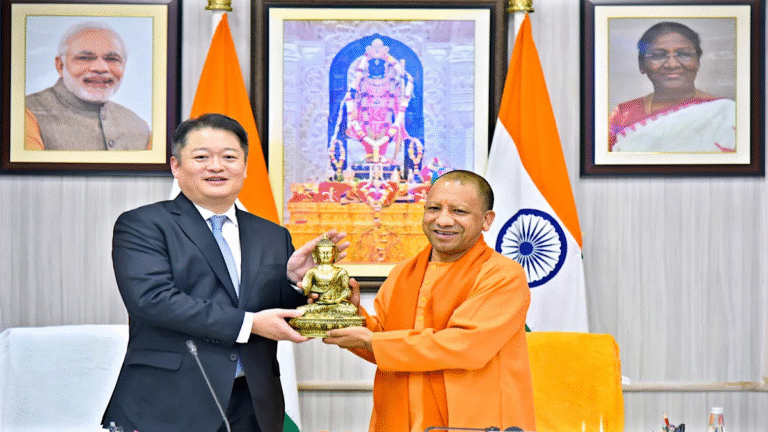
New Delhi, February 26, 2026: In a landmark move to accelerate Uttar Pradesh’s journey toward becoming a $1 trillion economy, Chief Minister Yogi Adityanath engaged in high-level strategic talks with Governor Kotaro Nagasaki of Yamanashi Prefecture. The meeting, held on February 26, 2026, marks a pivotal moment in the “Next Generation State-Prefecture Partnership,” focusing on green energy, industrial innovation, and cultural exchange.

The visit is part of the Chief Minister’s maiden official tour of Japan, aimed at positioning Uttar Pradesh (UP) as India’s premier destination for global investment.

Green Hydrogen: The Cornerstone of Collaboration

A central theme of the discussions was the transition to sustainable energy. CM Yogi visited the Komekurayama Hydrogen Facility, a world-class site utilizing advanced Power-to-Gas (P2G) technology.

  • Technology Exchange: The Chief Minister lauded Yamanashi’s model of using solar power to produce emission-free hydrogen.
  • Centre of Excellence: Following a proposal from Governor Nagasaki, UP has launched a major initiative to develop IIT Kanpur as a Centre of Excellence for Green Hydrogen.
  • Industrial Scale-up: Plans are underway to establish a pilot green hydrogen project in the Bundelkhand region (Jhansi) to mirror Yamanashi’s success.

Investment Boom: MoUs Worth ₹11,000 Crore Signed

The strategic talks were backed by concrete economic commitments. Several Japanese giants formalized their interest in Uttar Pradesh, signing Memorandums of Understanding (MoUs) totaling approximately ₹11,000 crore.

CompanySectorFocus Area
Kubota CorporationAgricultureAdvanced farm mechanization & machinery
Minda CorporationAutomotiveNext-gen auto components
Seiko AdvanceElectronicsIndustrial printing inks & coating
Nagase & Co.ManufacturingHigh-technology mobility solutions

To facilitate these investments, the UP government is moving forward with the creation of “Japan City“—a dedicated 500-acre industrial township in Greater Noida (Sector 5A) designed to provide a “home-away-from-home” ecosystem for Japanese firms.

Cultural and Educational Synergy

Beyond industrial ties, the delegation focused on deep-rooted civilizational links. The Chief Minister highlighted the importance of the Buddhist Circuit in UP, which serves as a spiritual bridge between the two nations.

  • Education: CM Yogi visited the Yamanashi Public School, interacting with students and exploring vocational training collaborations.
  • 200-CEO Delegation: In a significant development, Governor Nagasaki accepted an invitation to lead a delegation of 200 Japanese CEOs to Uttar Pradesh in August 2026 to further accelerate investment momentum.

The Road Ahead

As Uttar Pradesh continues to leverage its status as India’s largest consumer market (250 million people), this partnership with Yamanashi is expected to serve as a blueprint for sub-national diplomacy. By aligning with Japan’s technological prowess, the Yogi administration is not just seeking capital, but a long-term transfer of innovation that ensures environmental responsibility alongside industrial growth.

UP DElEd Result 2026: 2.42 Lakh Candidates Pass Sem 1 & 3

0

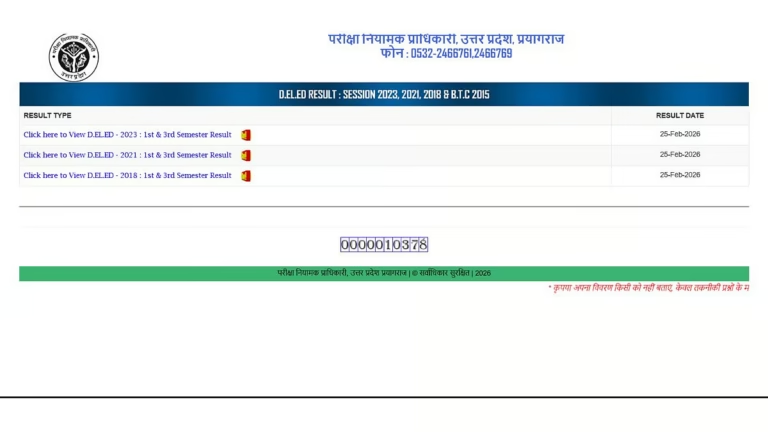
New Delhi, February 26, 2026: The Examination Regulatory Authority, Prayagraj, has officially declared the UP DElEd Result 2026 for the 1st and 3rd semesters. This announcement brings a major update for thousands of aspiring teachers across Uttar Pradesh who appeared for the examinations in late 2025.

According to the official data, more than 2.42 lakh candidates have successfully qualified for the next stage of their teacher training program.

UP DElEd Result 2026: Key Highlights

The results cover multiple batches, including the 2023 3rd semester and the 2024 1st semester, along with various back-paper candidates from previous sessions.

MetricDetails
Total Registered Candidates4,19,095
Total Passed Candidates2,42,306
Total Failed Candidates1,76,789
1st Semester Pass Percentage~43%
3rd Semester Pass Percentage~77%
Official Websitebtcresult.in

Semester-Wise Performance Breakdown

The performance varied significantly between the two semesters:

  • 1st Semester (2024 Batch): Out of 1,84,576 registered candidates, only 78,125 (43%) passed, while over 1 lakh candidates failed to qualify.
  • 3rd Semester (2023 Batch): This semester saw a much stronger performance, with 1,10,264 (77%) candidates qualifying out of the 1,42,973 who appeared.

Important Dates to Remember

The exams were held in the last quarter of 2025, and the evaluation was conducted under strict supervision to ensure transparency.

  • 1st Semester Exams: October 27 – October 29, 2025
  • 3rd Semester Exams: October 30 – November 1, 2025
  • Result Declaration Date: February 26, 2026

How to Check UP DElEd Result 2026 Online

Candidates can follow these simple steps to download their marksheet from the official portal:

  1. Visit the Official Site: Go to btcresult.in or updeled.gov.in.
  2. Select the Link: Click on the link for “UP DElEd 1st Semester Result 2026” or “UP DElEd 3rd Semester Result 2026”.
  3. Enter Credentials: Input your Roll Number and Date of Birth (or Enrollment Number as required).
  4. Security Check: Enter the captcha code shown on the screen.
  5. View & Download: Click “Search” or “Submit” to view your result. It is recommended to download the PDF and take a printout for future reference.

Note: If the website is slow due to high traffic, please wait and try again after some time. Ensure all details on your digital marksheet (Name, Father’s Name, Marks) are correct.

What’s Next for Candidates?

  • Qualified Candidates: Students who have passed will now proceed to the subsequent semester. Those completing their final semesters will become eligible to apply for teacher eligibility tests like UPTET and CTET.
  • Failed/Back-Paper Candidates: Those who did not qualify in one or two subjects can apply for Scrutiny (re-evaluation) within one month of the result date. Alternatively, they can appear for the back-paper exams in the next examination cycle.

The release of these results is a critical step for the education sector in Uttar Pradesh, as these candidates represent the future workforce of the state’s elementary schooling system.

Shocking Scene in Bihar: Bride Shot on Wedding Stage in Buxar

0

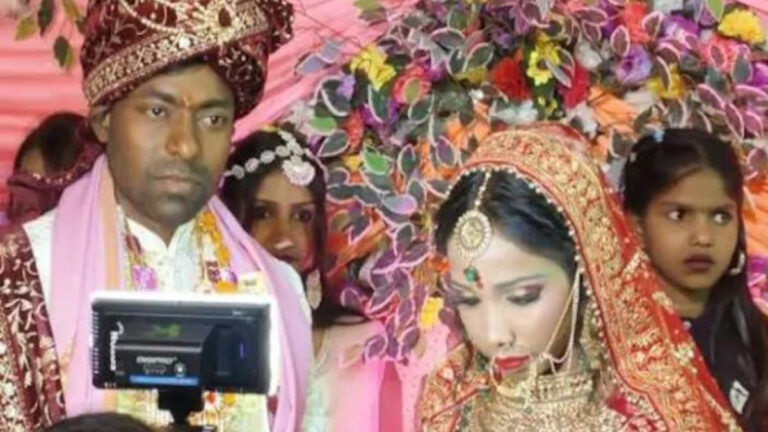
New Delhi, February 26, 2026: A celebratory wedding ceremony turned into a scene of chaos and terror on Wednesday night in Bihar’s Buxar district. In a shocking incident that has gripped the local community, a bride was shot at by her alleged former lover while she was standing on the varmala (garland exchange) stage.

The incident occurred in a village under the jurisdiction of the Buxar police station, where families had gathered to celebrate the union of the couple.

A Celebration Interrupted

According to eyewitnesses, the wedding rituals were proceeding normally and the atmosphere was festive. The bride and groom had just ascended the stage for the traditional exchange of garlands—a focal point of Indian weddings—when a young man suddenly emerged from the crowd.

Before guests could react, the assailant drew a firearm and fired at the bride. The sudden sound of gunfire sent the hundreds of attendees into a frantic scramble for safety.

Current Status and Medical Response

The bride sustained a gunshot wound and collapsed on the stage. She was immediately rushed by family members to a nearby hospital, where she received emergency medical intervention. While her condition was initially reported as critical, hospital sources suggest she is currently undergoing treatment and is being closely monitored by a team of doctors.

Investigation and Motive

Local police arrived at the scene shortly after the shooting to secure the area and begin their investigation. Preliminary reports suggest that the perpetrator was a man known to the bride, allegedly a former lover who was disgruntled by her marriage to another man.

“We have identified the primary suspect based on statements from the family and witnesses,” stated a senior police official. “Initial findings point toward a case of a one-sided obsession or a failed past relationship. Multiple teams have been deployed to apprehend the suspect, who fled the scene in the ensuing panic.”

Safety Concerns at Social Even

Key details of the case:

  • Location: Buxar District, Bihar.
  • Context: Shooting occurred during the varmala ceremony.
  • Suspect: Alleged former associate/lover of the bride.
  • Police Action: Investigation ongoing; raids being conducted to locate the shooter.

The police have urged the public to remain calm and have requested anyone with video footage of the ceremony to come forward to assist in the identification and capture of the assailant.

Modi in Israel: Netanyahu Surprises in Traditional Indian Attire

0

New Delhi, February 26, 2026: The historic visit of Prime Minister Narendra Modi to Israel in February 2026 has been marked by more than just high-level strategic pacts; it has become a masterclass in “sartorial diplomacy.” Beyond the formal discussions on defense and technology, the personal camaraderie between the leaders was showcased through a series of viral fashion moments involving Israeli PM Benjamin Netanyahu and his wife, Sara Netanyahu.

The “Saffron Sync” at Ben-Gurion Airport

The visit began with a lighthearted moment on the airport tarmac that immediately set a warm tone for the two-day state visit. As PM Modi stepped off the plane, he was greeted by the Netanyahus with their signature “Modi hug.”

Observers and the leaders themselves quickly noticed a striking visual coincidence:

  • The Match: PM Modi’s saffron pocket square—paired with his cream-colored kurta and grey patterned jacket—perfectly matched the saffron pantsuit worn by Sara Netanyahu.
  • The Exchange: PM Netanyahu playfully gestured toward his wife’s attire and then to Modi’s pocket square, asking, “You see what she wore?”
  • The Reaction: PM Modi laughed and responded, “Yes, saffron!”

Sara Netanyahu further charmed the Indian delegation by describing India as a “wonderful country,” while the Israeli PM reinforced the bond by calling Modi a “wonderful leader” and a “brother.”

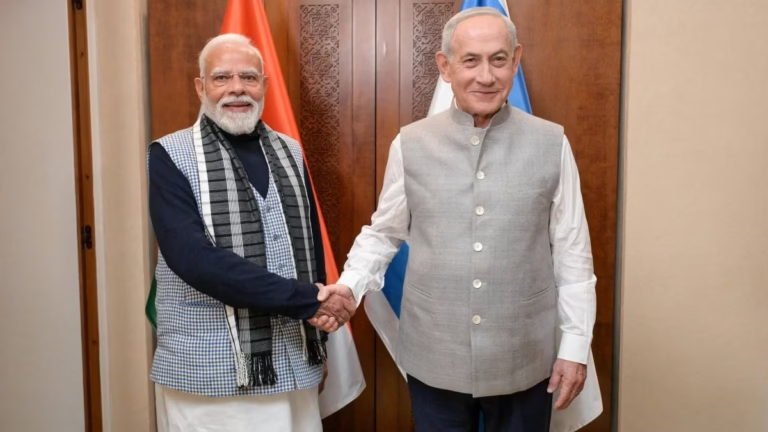
Netanyahu’s Surprise Indian Attire

The cultural tribute reached a new height later that evening in Jerusalem. Before their joint dinner, PM Benjamin Netanyahu surprised his Indian counterpart by appearing in traditional Indian clothing.

FeatureDescription
The OuterwearA stone-colored Nehru jacket (popularly known as a “Modi jacket”) with a tailored fit and band collar.
The ShirtA white, long-sleeved kurta-style shirt featuring a simple collar.
The ReactionPM Modi called the gesture “Truly splendid!” on social media, noting that it reflected deep respect for India’s traditions.

Netanyahu shared a video of the reveal on X (formerly Twitter) with a Hindi caption, stating he wanted to surprise his “friend” before their meal. The gesture was seen as a powerful symbol of the “Benjaminarendra” spirit—a term often used to describe the personal chemistry between the two leaders.

Significance of the Symbols

These moments are not merely about fashion; they serve a specific diplomatic purpose:

  1. Personal Rapport: They humanize complex geopolitical relations, showing a level of comfort and friendship rarely seen between heads of state.
  2. Cultural Respect: By donning Indian attire, Netanyahu signaled an appreciation for India’s civilizational identity, which resonates deeply with the Indian public.
  3. Visual Diplomacy: The “saffron sync” provided iconic imagery that trended across social media, reinforcing the narrative of a “Natural Partnership” between the two democracies.

This visit, which also saw PM Modi become the first Indian Prime Minister to address the Knesset (the Israeli Parliament), will likely be remembered as much for these warm, colorful exchanges as for its strategic outcomes.

Chaos at Chennai Airport: 200 IndiGo Passengers Stranded on Tarmac for 5 Hours

0

CHENNAI – A routine international journey turned into a grueling five-hour ordeal for nearly 200 passengers aboard an IndiGo flight bound for Singapore on Tuesday. The incident, which took place at Chennai International Airport, gained widespread attention after distressing videos of the cabin conditions went viral on social media.

Technical Snag and “Suffocating” Conditions

Flight 6E 1025 was scheduled to depart for Singapore at 7:30 AM. According to passenger reports, boarding commenced at 6:30 AM, but the aircraft remained stationary on the tarmac for hours.

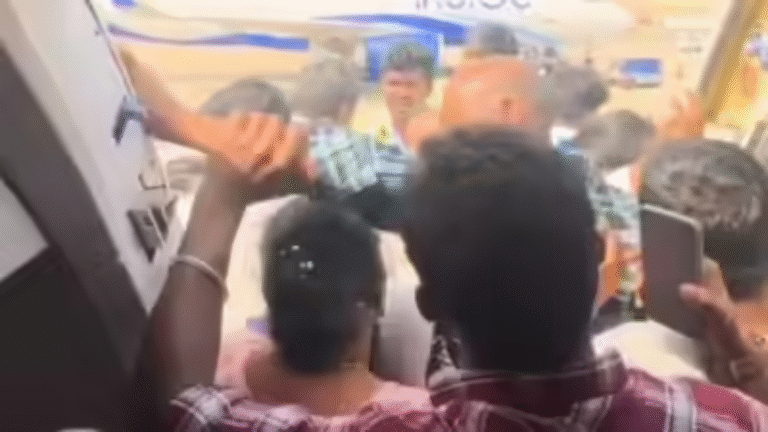
The viral footage captured a chaotic scene inside the cabin, showing frustrated travelers—including elderly citizens and infants—confronting the airline staff. Passengers alleged that the air conditioning system was fluctuating, leading to poor ventilation and a “suffocating” environment. Several flyers claimed they were denied permission to deboard despite the mounting discomfort and lack of clear communication from the crew.

The “Perfect Storm” of Delays

The airline later clarified that the delay was caused by a combination of technical issues and strict regulatory requirements:

  1. Cabin Temperature Alert: The pilot initially noticed that the cabin temperature was above normal levels. Engineering teams were called in to address the cooling issue.
  2. FDTL Expiry: By the time the technical snag was resolved, the cockpit crew had exceeded their Flight Duty Time Limitations (FDTL). These safety regulations prevent pilots from flying beyond a specific number of hours to mitigate fatigue.
  3. Crew Replacement & Visa Issues: IndiGo had to arrange a replacement crew. However, since it was an international flight, additional time was consumed completing visa formalities and documentation for the new pilots.
  4. Immigration Logistics: Deboarding the passengers was reportedly not a viable option because they had already cleared immigration and received exit stamps. Re-entering the terminal would have required the Bureau of Immigration to cancel those stamps and re-process every passenger, a move the airline avoided to prevent further delays.

Official Response

In an official statement, IndiGo expressed regret for the inconvenience caused. The airline maintained that passengers were provided with refreshments and were updated periodically.

“We had to arrange an alternate crew, which took time. The safety of our passengers and crew is our top priority, and we regret the delay caused by these unforeseen technical and operational factors.” — IndiGo Spokesperson

The flight eventually took off at approximately 12:00 PM, nearly five hours after its scheduled departure.

Growing Concerns Over Passenger Rights

The incident has reignited a debate regarding passenger treatment during tarmac delays and the lack of “sterile” holding lounges at Indian airports for international travelers. Aviation experts note that while safety regulations like FDTL are crucial, the lack of a contingency plan for deboarding passengers during extended ground delays remains a significant pain point for the industry.