Home Blog Page 63

Amazon Fire TV Stick HD Launched in India at ₹4,999 with Wi-Fi 6

New Delhi, May 20, 2026: In a major push to dominate India’s booming home entertainment market, Amazon has officially introduced its all-new Fire TV Stick HD in the country. Priced at ₹4,999, the e-commerce giant is marketing the device as its thinnest and fastest High-Definition (HD) streaming stick to date.

Designed specifically as a “lifeline” to breathe new life into older televisions or secondary bedroom screens that lack modern smart capabilities, the latest Fire TV Stick HD features massive hardware upgrades, a cleaner interface, and enhanced connectivity features. In a first for an Amazon HD streaming device in India, it also brings the power of console-free video gaming right to the living room.

Here is an in-depth breakdown of the pricing, availability, design upgrades, technical specifications, and key features of Amazon’s newest streaming hardware.

Price and Instant Availability: Adapting to Quick Commerce

The new Amazon Fire TV Stick HD makes its Indian debut at a competitive price point of ₹4,999. Reflecting the evolving retail landscape in India, Amazon has moved beyond its own marketplace for day-one availability.

Consumers can purchase the streaming device immediately on Amazon.in, Flipkart, Blinkit, Swiggy Instamart, and Zepto. By partnering with instant-delivery platforms, Amazon ensures that users can order the streaming stick and have it plugged into their TVs within minutes. The company has also confirmed that the device will be hitting traditional offline retail stores across India shortly.

Design: Ultra-Slim and Clutter-Free “Direct Power”

The physical evolution of the Fire TV Stick HD is one of its most compelling upgrades. Amazon has re-engineered the form factor to make it 30% slimmer than any other model in the current Fire TV lineup. Its ultra-compact, pocket-sized design means it can plug discreetly into an HDMI port behind wall-mounted televisions without awkwardly blocking adjacent ports, making it highly portable for travel.

More importantly, the new model introduces Direct Power capabilities. Thanks to a highly efficient internal architecture, the Fire TV Stick HD can draw all its required operating power directly from a television’s built-in USB port. This eliminates the necessity of running a long cable to a separate wall adapter, significantly reducing cable clutter around entertainment centers and solving the problem of limited wall sockets.

Hardware and Performance: A 30% Speed Boost

While the device is capped at a maximum resolution of 1080p Full HD at 60fps—leaving 4K capabilities exclusive to Amazon’s premium 4K sticks—it brings massive internal hardware improvements.

Powered by a 1.7GHz quad-core processor paired with 8GB of onboard storage, Amazon claims that the new Fire TV Stick HD delivers over 30% faster performance on average compared to its previous-generation HD predecessor. This results in visibly quicker boot-up times, snappy menu navigation, and rapid application loading.

For visual performance, the stick includes advanced support for high-dynamic-range formats, including HDR10, HDR10+, and HLG, alongside modern video codecs like AV1 and H.265. This ensures that even though the resolution is 1080p, colors look richer, contrast is sharper, and overall picture quality is vastly superior on compatible displays.

Connectivity: Embracing Wi-Fi 6 and Bluetooth 5.3

Buffering is the ultimate enemy of a seamless streaming experience, especially in modern Indian households where multiple smartphones, laptops, and smart appliances crowd the home network. To tackle this, Amazon has equipped the Fire TV Stick HD with dual-band Wi-Fi 6 (802.11ax). When paired with a Wi-Fi 6 compatible router, this provides a much more stable, high-bandwidth connection, resulting in smooth, lag-free streaming even over slower or heavily congested internet networks.

Additionally, the stick integrates Bluetooth 5.3. This allows users to seamlessly connect wireless accessories such as soundbars, external speakers, or Bluetooth headphones for late-night private viewing.

The Big Surprise: Xbox Cloud Gaming Arrives

Perhaps the most notable feature of this launch is the integration of Xbox Cloud Gaming. This marks the very first time Amazon has extended cloud gaming support to a budget-friendly HD tier device in India.

By downloading the official Xbox app onto the Fire TV Stick HD, users can stream and play hundreds of high-profile, console-quality video games directly on their TVs. It completely eliminates the need for an expensive gaming console like an Xbox Series X/S. To utilize this feature, users simply need a stable Wi-Fi 6 internet connection, an active Xbox Game Pass Ultimate subscription, and a compatible Bluetooth gaming controller paired directly to the stick.

Software: The Redesigned Fire TV Interface

On the software front, the streaming stick debuts Amazon’s redesigned Fire TV user interface. Moving away from cluttered grids, the updated interface features a highly organized, tile-based layout with a horizontal-scrolling mechanic.

Content is now intelligently categorized into dedicated hubs for Movies, TV Shows, Free Content, and Live Programming. This ecosystem-driven approach is designed to help users spend less time endlessly scrolling through menus and more time actually watching content.

The device supports all major global and regional Over-The-Top (OTT) platforms popular in India, including Prime Video, Netflix, YouTube, JioHotstar, and Zee5. It also provides aggregated access to thousands of free, ad-supported live channels covering news and sports. Furthermore, it syncs flawlessly with the updated Fire TV companion mobile app, allowing users to browse titles, manage watchlists, and remotely cast content directly from their smartphones.

Smart Home Integration and Alexa Voice Remote

Bundled in the box is the trusted Alexa Voice Remote. Featuring standard hotkeys for instant access to preferred streaming platforms, the remote relies heavily on voice integration.

Beyond searching for movies or controlling media playback, the Fire TV Stick HD acts as a central hub for home automation. By using simple voice commands through the remote, users can easily manage Alexa-compatible smart appliances around the house. From dimming smart lights and adjusting the temperature of a connected AC to checking security camera feeds, everything can be controlled directly from the TV screen.

The Verdict

Sayantani Choudhuri, Head of Fire TV at Amazon India, summarized the vision behind the product during the launch: “Customers expect their TV streaming experience to be fast and responsive. Our latest Fire TV Stick HD delivers exactly that. It’s over 30% faster, remarkably slim, and introduces a clutter-free setup. We’ve built this device to offer a streaming experience that is fast, smooth, and highly convenient.”

While the ₹4,999 Fire TV Stick HD might be redundant for those who already own a high-end, modern 4K smart TV, it stands out as an incredibly valuable upgrade for secondary displays, monitors, or older television units. With its combination of Wi-Fi 6 stability, a refreshed UI, direct USB power, and the unexpected addition of Xbox cloud gaming, Amazon has delivered a highly versatile and futuristic entertainment hub that fits in the palm of your hand.


Motorola Disrupts the Budget Market: Launches Moto G37 Power, Moto G37, and Moto Buds 2

New Delhi, May 19, 2026 – In a major sweep of the budget and mid-range technology segments, Motorola has officially expanded its ecosystem in India with the simultaneous launch of three highly anticipated products: the Moto G37 Power 5G, the Moto G37 5G, and the Moto Buds 2 wireless earbuds.

Promising a potent mix of robust build quality, next-generation 5G performance, and ultra-premium audio engineering, Motorola’s latest lineup aims to redefine consumer expectations in the budget tier. All three products are scheduled to go on sale starting May 25, 2026, across Flipkart, Motorola.in, and major offline retail stores.

Moto G37 Power 5G: A Massive 7000mAh Battery King

Leading the launch is the Moto G37 Power 5G, a device heavily engineered for maximum endurance. Priced at an effective launch price of INR 15,999, its marquee feature is an industry-leading 7,000mAh battery. Motorola claims this massive cell can comfortably deliver up to three days of battery life (or 62 hours of non-stop usage) on a single charge. It also features advanced Battery Care technology designed to sustain 80% battery health even after 1,200 charge cycles, and supports fast 33W TurboPower™ charging.

Despite housing a monstrous battery, Motorola has managed to keep the device remarkably slim at just 8.89mm. The phone focuses aggressively on physical durability, boasting MIL-STD-810H military-grade protection, an SGS-certified IP64 dust and splash resistance rating, and a premium back finish available in smooth PMMA and elegant vegan leather.

On the front, the G37 Power sports an immersive 6.7-inch HD+ LCD punch-hole display with a fluid 120Hz refresh rate, protected by Corning Gorilla Glass 7i. It achieves an impressive peak brightness of 1050 nits. Under the hood, the device is powered by the 6nm MediaTek Dimensity 6400 processor, paired with up to 8GB of LPDDR4X RAM (expandable up to 12GB using AI-powered RAM Boost) and 128GB of internal UFS 2.2 storage.

For photography, the phone carries a 50MP Quad-Pixel AI rear camera system backed by electronic image stabilization (EIS) and a 2-in-1 light sensor for lightning-fast focus in low light. Out of the box, it runs Android 16 with a guaranteed update to Android 17 and three years of security support.

Moto G37 5G: Sleek, Balanced Performance

For users looking for a slimmer profile without breaking the bank, the standard Moto G37 5G arrives at a highly competitive starting price of INR 13,999.

Sharing the same 6nm MediaTek Dimensity 6400 chipset and 120Hz display capabilities as its older sibling, the standard G37 targets the everyday multi-tasker. It swaps out the massive battery of the Power model for a lighter, more mainstream 5,200mAh battery paired with 20W TurboPower charging, rendering the phone noticeably lighter in hand (191 grams) and thinner (7.85mm).

The standard Moto G37 retains the outstanding structural durability of the series, including the Gorilla Glass 7i screen protection and IP64 rating. It features a capable 50MP primary rear camera, an 8MP selfie snapper, stereo speakers equipped with Dolby Atmos®, and near-stock Android 16 via Motorola’s intuitive Hello UI interface.

Moto Buds 2: Premium Audio at an Unbelievable Price

Rounding out the ecosystem launch is the Moto Buds 2. Priced at an aggressive INR 2,999, these wireless earbuds bring features usually reserved for audio products costing three times as much.

Motorola has paired up with audio legends to craft a premium acoustic architecture. The Moto Buds 2 feature a dual dynamic driver setup (11mm + 6mm) that natively supports Hi-Res Audio and the LDAC codec, ensuring rich, lossless sound delivery and deep, resonant bass. Spatial Audio is also onboard to create a wider, cinematic soundstage.

Silence is easily achieved via the earbuds’ Dynamic Active Noise Cancellation (ANC) of up to 55dB, which intelligently adapts to ambient noise. Clear communication is handled by a robust six-microphone system enhanced by Environmental Noise Cancellation (ENC) and Motorola’s software-driven CrystalTalk AI to block out background chatter during calls.

The Moto Buds 2 deliver up to 11 hours of continuous playback on a single charge, expanding to a staggering 48 hours total with the charging case. They also feature Bluetooth 6.0, dual-device pairing, smart wear detection, a dedicated gaming mode, and seamless Moto AI integration. Available in stunning Pantone-curated shades—Violet Ice, Carbon, and Grey Mist—they boast IP54 water resistance for workouts and light rain.

Verdict

With this mid-year launch, Motorola is making a definitive statement. By combining military-grade durability, groundbreaking 7000mAh battery life, and premium dual-driver ANC audio at sub-16k prices, the company has set a formidable new benchmark for value in the Indian tech market.

South OTT Releases This Week: Sathi Leelavathi, Satan: The Dark, and More to Binge-Watch

0

New Delhi, May 19, 2026: The mid-week blues are real, but for South Indian cinema lovers, the digital streaming space is bringing plenty of reasons to smile. The third week of May 2026 is delivering a highly diverse lineup of regional content across major over-the-top (OTT) platforms. Whether you are in the mood for light-hearted, chaotic marital comedy or hair-raising psychological horror that jumps across timelines, there is something fresh hitting your screens right now.

Leading the pack are the Telugu romantic comedy Sathi Leelavathi and the bone-chilling Tamil supernatural thriller Satan: The Dark. Let’s dive into the major South OTT releases you should add to your watchlist this week.

1. Sathi Leelavathi – A Chaos-Filled Marital Drama

  • Platform: Sun NXT
  • Language: Telugu (with Tamil dubbed version)
  • Genre: Romantic Comedy / Family Drama

Following its recent theatrical release earlier this month, the feel-good family entertainer Sathi Leelavathi makes its highly anticipated digital debut. Co-written and directed by Tatineni Satya, the film stars the versatile Lavanya Tripathi alongside Dev Mohan in the lead roles.

The Plot

The story revolves around a newly married couple navigating the unpredictable, playful, and often chaotic push-and-pull of married life. Leelavathi (Lavanya Tripathi) is a spirited film director, while her husband, Ram Sethu, trying to balance domestic expectations with professional ambitions. When minor misunderstandings snowball into emotional chaos and a full-blown love triangle dynamic, the film relies heavily on relatable humor and domestic wit to resolve the tension.

Why Watch It?

Backed by a vibrant soundtrack by Mickey J. Meyer—including the catchy, wedding-season favorite “Chittoor Pilla”—the movie functions as an easy-breezy weekend watch. Lavanya Tripathi anchors the film with a strong, energetic performance that holds the emotional pieces together.

2. Satan: The Dark – Double Timeline Supernatural Horror

  • Platform: Amazon Prime Video, Aha Tamil, and Tentkotta
  • Language: Tamil
  • Genre: Supernatural Horror / Psychological Thriller

If comedy isn’t your cup of tea and you prefer to keep the lights on while streaming, writer-director Manikandan Ramalingam’s Satan: The Dark is your go-to watch this week. Arriving on OTT roughly six weeks after its theatrical run, this “A”-certified thriller packs a heavy punch of ritualistic sorcery and psychological dread.

The Plot

The narrative unfolds across two distinct timelines:

  1. The Past: During the East India Company era, a dark witchcraft ritual performed in the hilly, isolated terrain of Hasthinapuram goes horribly wrong, unleashing a generational curse upon the land.
  2. The Present: The malevolent force awakens when Marcelin (played by Mona Bedre) begins displaying violent, erratic behavior after falling under the spell of a mysterious entity. Her terrifying transformation quickly puts her young daughter, Alisha, and the rest of the family in mortal peril.

Why Watch It?

Though critics noted its 144-minute runtime leans heavily on classic jump scares, the film’s production quality is top-notch. With atmospheric cinematography by Bala G. Ramasamy and a haunting, claustrophobic background score by Aswin Krishna, it promises an eerie ride for hardcore horror fans.

3. Thimmarajupalli TV – Small Village, Big Mystery

  • Platform: Aha Video
  • Language: Telugu
  • Genre: Rural Mystery / Comedy-Drama

Stepping into the heartland of rural India, Thimmarajupalli TV brings a unique and nostalgic premise. Starring Sai Tej, Veda Jalandhar, and Kiran Abbavaram, the film takes the audience back to the late 1990s.

The Plot

Set in 1996, the entire plot revolves around a single television set—a rare and prized luxury in a small village. When this newly bought community television suddenly vanishes into thin air, chaos erupts. Accusations fly, a local youth is wrongfully suspected, and the whole village turns into an amateur detective agency overnight.

Why Watch It?

It is a nostalgic, light-hearted watch that captures the essence of 90s rural life while maintaining a steady undercurrent of suspense.

4. Oru Durooha Saahacharyathil – Suspense and Survival

  • Platform: Netflix
  • Language: Malayalam
  • Genre: Suspense Thriller / Black Comedy

Malayalam cinema continues its streak of delivering grounded yet gripping narratives with Oru Durooha Saahacharyathil. Directed by Ratheesh Balakrishnan Poduval, the film features a powerhouse ensemble cast including Kunchacko Boban, Dileesh Pothan, Sajin Gopu, and Rajesh Madhavan.

The Plot

Sethu (Kunchacko Boban) is a dedicated government health worker trying to care for his bedridden brother, Madhu, in the misty hills of Wayanad. Their quiet life is completely upended when a mysterious stranger breaks into their home. What follows is a tense, claustrophobic battle for survival, uniquely tangled with a parallel local police investigation involving active Maoist movements in the region.

Why Watch It?

The film masterfully balances a high-stakes survival thriller with the pitch-black situational humor that Malayalam cinema is famous for. It remains one of the top trending South Indian titles on digital platforms this month.

Missing IPS 2025 Cadre List Sparks Questions as New UPSC Cycle Begins May 24

0

New Delhi, May 19, 2026 — With the next Union Public Service Commission (UPSC) Civil Services examination cycle set to commence on May 24, a major administrative loose end from the previous cycle has triggered widespread anxiety and speculation. Months after their peers in other civil services took charge of their respective state assignments, selected Indian Police Service (IPS) officers from the 2025 batch are still waiting for their official cadre allocations.

While the Department of Personnel and Training (DoPT) successfully released the cadre allocations for the Indian Administrative Service (IAS) and Indian Forest Service (IFoS) back in December 2025, the Ministry of Home Affairs (MHA) portal remains completely silent regarding the 2025 IPS batch.

Growing Impatience Among Trainee Officers

For a civil servant, cadre allocation is not just a routine bureaucratic formality; it dictates their entire career trajectory, determining the state where they will serve for the next three to four decades.

The extensive delay has left many newly minted police officers in limbo. Historically, the civil services structure attempts to streamline these announcements before advanced training phases begin. The contrast is particularly stark this year: while IAS officers have known their destinations for nearly five months, the incoming batch of law enforcers is heading into a new exam cycle with zero clarity on their future headquarters.

Is a New Policy Framework to Blame?

As the delay prolonged into the summer, speculation intensified within bureaucratic circles that the holdup was linked to the central government’s major overhaul of the cadre allocation policy.

In January 2026, the Centre announced a revised framework aimed at streamlining state allocations. The significant changes include:

  • A Four-Group System: Replacing the long-standing five-zone system with four newly organized state clusters.
  • Strict “Cadre Gap” Calculations: Determining vacancies precisely on January 1 of the year following the examination, factoring in a rigorous calculation of category-wise reservation rosters and insider-outsider ratios.

However, officials and policy experts note that this administrative reform is a false lead for the current crisis. The official gazette notification explicitly clarifies that the revised rules will only “come into effect with the Civil Services Examination-2026.” Because the 2025 batch is governed by the older five-zone guidelines, the root cause of the current delay points toward internal administrative bottlenecks rather than a structural policy transition.

A Recurring Pattern of Administrative Delays

Veterans of the civil services note that while the current situation is deeply frustrating for candidates, an IPS-specific delay is not entirely unprecedented. The Ministry of Home Affairs, which acts as the cadre-controlling authority for the IPS, has historically faced distinct logistical challenges compared to the DoPT.

A primary reason for these recurring delays involves the meticulous coordination required between the MHA and individual state governments. Before a final list is published, the ministry must reconcile physical and medical fitness clearances, process complex reservation rosters, and balance strict insider-outsider quotas (where only one-third of a state’s intake can be from that home state). A delay by even two or three state home departments in submitting finalized vacancy tallies can stall the entire national list.

MHA Silence Heightens Anxiety

Compounding the anxiety is a recent circular issued by the IPS ACR Cell earlier this month, which extended the timelines for Performance Appraisal Reports (PAR) for serving officers. While entirely unrelated to fresh recruitments, it has reinforced the perception among aspirants of a broader systemic slowdown within the ministry’s police division.

Thus far, formal queries directed to the Police-I Division of the Ministry of Home Affairs seeking an expected timeline or an explanation for the hold-up have gone unanswered.

With thousands of new aspirants preparing to walk into examination halls on May 24 for the next cycle, the unresolved status of the 2025 IPS batch remains a glaring reminder of the procedural hurdles that still exist behind the scenes of India’s premier civil services.

Viral: Bengali Blogger Finds Real ‘Dhurandhar’ Chai Shop in Ladakh

0

New Delhi, May 19, 2026 — Tucked away in the bustling, wind-swept markets of Leh, a humble tea stall has suddenly transformed into India’s newest viral tourist hotspot. For weeks, cinephiles and internet surfers debated whether the iconic, hilariously named eatery from Aditya Dhar’s star-studded action thriller Dhurandhar was a mere figment of a set designer’s imagination or a real place.

The mystery has officially been put to rest. A Bengali travel content creator, Soumya Chatterjee, recently tracked down the actual location in Ladakh. However, as his now-viral video reveals, grabbing a cup of tea at this cinematic landmark comes with a very specific, heartwarming condition.

The Discovery: From Silver Screen to Real Life

When Dhurandhar hit theatres on March 19, 2026—boasting an ensemble cast featuring Ranveer Singh, Akshaye Khanna, R. Madhavan, Sanjay Dutt, and Arjun Rampal—audiences were quick to spot a fleeting, one-second scene featuring an oddly named establishment: Washma Butt Biryani and Chai Shop.”

The internet instantly erupted into memes. Many viewers assumed director Aditya Dhar was cleverly trolling audiences or taking a cheeky swipe at Pakistani tropes, especially since the name can be hilariously misread phonetically as “Wash My Butt.” It was widely written off as a fictional Easter egg meant for a quick laugh.

Enter Soumya Chatterjee, a travel blogger from West Bengal who documents his wanderlust under the Instagram handle @its_naturemoto. While exploring the local markets of Leh, Chatterjee stumbled upon the exact rustic storefront featured in the movie.

The One Condition for a Cup of Chai

As Soumya stepped inside the shop, fans were stunned to see that the interiors perfectly mirrored the movie setup. The walls are still adorned with promotional posters and film stills, including the specific scene where characters Hamza Ali Mazari and Aalam Bhai sit down to plot over cups of salted tea.

But it was Soumya’s commentary that truly captured the internet’s imagination, introducing a “rule” for anyone looking to visit this unique spot. Standing inside the rustic café, he told his viewers:

This poetic “one condition” quickly resonated with travel enthusiasts. It transformed a simple pitstop into an experiential destination where visitors are encouraged to slow down, breathe in the crisp mountain air, and absorb the cinematic history embedded in the walls.

The Real Identity Behind the Reel Name

As expected, the reality behind the shop has its own fascinating backstory. In truth, “Washma Butt” was never the original name of the eatery.

FeatureDetails
Actual Shop NameS.H. Khan Restaurant
LocationLeh Market, Ladakh
Cinematic NameWashma Butt Biryani and Chai Shop
Featured MovieDhurandhar (Directed by Aditya Dhar)
Upcoming OTT ReleaseJune 4, 2026 (Jio Cinema / Jio Hotstar)

When the production crew of Dhurandhar arrived in Ladakh to shoot their high-octane sequences, they chose S.H. Khan Restaurant as a primary location. They hung up the fictional “Washma Butt” signboard for the shoot. Once the cameras stopped rolling and the crew packed up, the owners decided to leave the board and the movie posters untouched. It proved to be a brilliant business move, as the shop has now accidentally become a landmark.

Internet Stunned as Celebs React

The video has amassed millions of views across Instagram, YouTube, and X (formerly Twitter), triggering a massive wave of nostalgia and humor.

Many fans admitted they were completely fooled by the movie. “I genuinely thought the filmmakers created a set and named it Washma Butt just to troll us. To find out it’s a real shop in Leh is mind-blowing,” commented one user. Another eagerly predicted, “The crowds are coming. Line lag jani hai yaha to (Lines are going to form here soon)!”

The viral clip even caught the attention of Bollywood veteran Gaurav Gera, who plays Aalam Bhai in the film. Delighted by the real-world impact of the scene, Gera responded directly to Chatterjee’s video by dropping red heart emojis in the comments, validating the location for thousands of scrambling fans.

A New Stop on the Ladakh Itinerary

With Dhurandhar 2 scheduled to premiere on Jio Cinema (Jio Hotstar) on June 4, 2026, public excitement surrounding the franchise is at an all-time high. Soumya Chatterjee’s discovery couldn’t have been timed better.

For years, travelers flocked to Ladakh to see the famous Pangong Tso lake from 3 Idiots or the iconic roads from Jab Tak Hai Jaan. Now, the “Washma Butt” tea stall adds a gritty, meme-worthy, and pop-culture-rich flavor to the classic Ladakh itinerary.

If you find yourself wandering through the cold deserts of Leh this summer, look for the S.H. Khan Restaurant. Just remember the Bengali traveler’s golden rule: order two cups of chai, pull up a wooden stool, and take a moment to look at the posters on the wall to fully immerse yourself in the magic of Indian cinema.

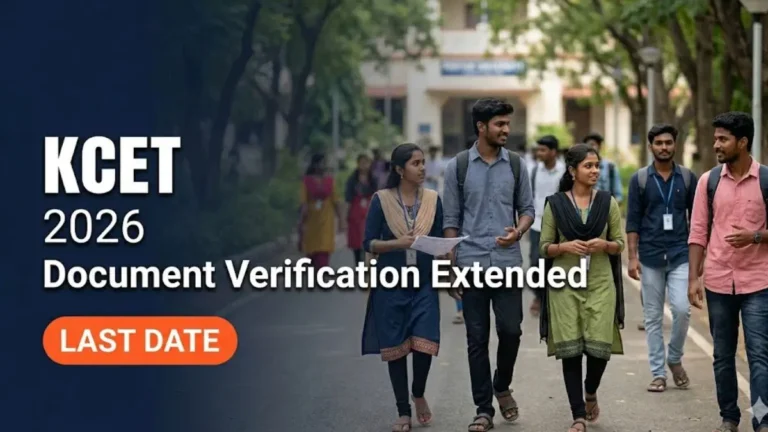
KCET 2026: KEA Extends Document Verification Deadline Till May 21

0

New Delhi, May 19, 2026: In a significant relief for thousands of professional course aspirants across Karnataka, the Karnataka Examinations Authority (KEA) has officially extended the deadline for the Karnataka Common Entrance Test (KCET) 2026 document verification process. According to the official notification issued by the KEA, candidates who have yet to verify their academic and reservation claims now have until May 21, 2026, to complete this mandatory procedure.

The KCET, which is also commonly referred to as the Undergraduate Common Entrance Test (UGCET), serves as the centralized gateway for securing admissions into state-level first-year undergraduate professional programs. These include highly sought-after fields such as Engineering (B.E./B.Tech), Pharmacy (B.Pharma/D.Pharm), Architecture, Agriculture, and Veterinary Sciences in both government and participating private colleges across Karnataka.

With the KEA emphasizing that this is the final opportunity for students, candidates are strongly advised to act promptly to avoid missing out on the seat allotment process.

Why Has the KEA Extended the Deadline?

Following the smooth conduct of the KCET 2026 examinations on April 23 and 24, alongside the Kannada Language Test on April 22, the KEA initiated the next crucial phase—document verification—on May 11, 2026. However, official tracking data indicated that a substantial number of candidates had still not completed the physical or verification verification procedures, leaving their official “Claims Certificate” status marked as “Not Verified.”

Acknowledging the technical difficulties some students faced and the influx of requests for additional time, the KEA decided to grant a final extension. The authority made it clear that this gesture aims to protect the academic interests of genuine students, ensuring that nobody loses an earned seat simply due to logistical delays. Crucially, the authority warned that no further extensions are likely to be provided beyond the May 21 deadline.

Who Must Attend the Extended Verification Phase?

The extension is not universally required for all exam takers. The KEA has classified candidates based on their verification status, which can be checked online via the official portal.

  1. Mandatory Attendance Required: * Candidates whose digital status explicitly shows “Claims Not Verified.”
    • Students claiming specific eligibility quotas under clauses A1, B1, B, C, D, E, F, G, H, I, J, K, L, M, N, and O.
    • Anyone claiming reservation benefits such as Kannada Medium Education (from Class 1 to 10), Rural Quota, Linguistic Minority Quota, or Religious Minority Quota whose statuses are unverified.
  2. Exempted Candidates: * Students whose certificates display the status “Claimed and Verified.”
    • Students whose school and academic details were automatically fetched and authenticated through the state’s SATS (Student Tracking System) number during the initial online application process do not need to repeat the process.

Step-by-Step Process to Complete the Verification

To ensure that the process is hassle-free, candidates must follow a standardized protocol laid out by the KEA:

  • Step 1: Check Your Status: Log into the official KEA website (cetonline.karnataka.gov.in) using your application credentials to evaluate your current verification remark.
  • Step 2: Slot Booking: For candidates who need physical verification, access the slot booking link on the home page. Choose an available date and time slot.
  • Step 3: Locate the Center: Physical documentation is happening at designated Government Pre-University (PU) Colleges across the state. Identify the center nearest to you.
  • Step 4: Present in Person: The personal presence of the candidate at the center is compulsory. Carry all necessary original documents along with two sets of self-attested photocopies.
  • Step 5: Obtain the Verification Slip: Upon successful processing, the designated authority will change your status to “OK” in the system. You will then be issued a KCET Verification Slip, which serves as physical proof of eligibility.

Comprehensive Checklist of Required Documents

To eliminate errors that could lead to rejection, students must organize their documents carefully. The following certificates are mandatory:

  • Printout of the completed KCET 2026 Online Application Form.
  • KCET 2026 Admit Card / Hall Ticket.
  • SSLC / Class 10 Marks Card (for proof of age and name details).
  • 2nd PUC / Class 12 Marks Card.
  • 7-Year Study Certificate: This must prove the candidate studied in Karnataka for a minimum of seven years between Class 1 and 12, and it must be strictly countersigned by the respective Block Educational Officer (BEO) or Deputy Director of Public Instruction (DDPI).
  • Valid government-issued photo identity proof (e.g., Aadhaar Card).
  • For Reservation Claims: Relevant Caste/Income Certificates featuring valid Revenue Department (RD) numbers issued by an authorized Tahasildar.
  • For Special Quotas: Kannada Medium Study Certificate, Rural Study Certificate, or relevant certificates verifying Linguistic/Religious Minority status (properly attested by school heads and educational authorities).

The Critical Role of the Verification Slip

The KEA has sent out a strict reminder highlighting that document verification is not a mere formality but a legally binding filter. The generated KCET Verification Slip contains an essential secret key or password required for the subsequent ‘Option Entry’ phase.

If a student scores a top rank in the KCET exam but fails to clear document verification before May 21, they will be entirely barred from participating in the web options entry, mock allotments, and actual seat allocation rounds. In short, missing this deadline will nullify the exam score for the current academic year.

Final Advice for Aspirants

With the clock ticking toward May 21, 2026, verification centers are expected to witness a surge in crowds. Education experts and KEA officials urge candidates not to wait until the final hours. Gathering proper signatures, particularly countersignatures from BEO offices, can take time.

Candidates should double-check that the spellings of names match across all certificates, ensure that RD numbers on caste documents are clear, and keep multiple copies of their acknowledgement slips safely. For more updates, timely notices, and direct login access, candidates should exclusively monitor the official portal at cetonline.karnataka.gov.in.

Standard Chartered to Cut Over 7,000 Jobs by 2030 in Massive AI Transformation Push

0

New Delhi, May 19, 2026 — In one of the most definitive signs of how artificial intelligence is reshaping the global financial sector, Standard Chartered Plc announced a sweeping restructuring plan that will see the lender eliminate more than 7,000 jobs over the next four years.

The London-headquartered bank revealed on Tuesday that it plans to reduce its corporate and back-office function roles by 15% by the year 2030. The reduction will primarily target support positions, moving tasks from human personnel to automated systems and advanced AI models.

Out of Standard Chartered’s total global workforce of nearly 82,000 employees, more than 52,000 are employed in corporate functions. This planned 15% reduction translates into roughly 7,000 to 7,800 redundancies, making StanChart one of the first major global banking institutions to explicitly tie such a massive workforce reduction to the adoption of artificial intelligence.

Moving from Human to Machine Capital

Speaking to reporters and investors during a strategy update event, Standard Chartered Chief Executive Officer Bill Winters clarified that the restructuring is not a traditional, desperate cost-cutting exercise. Instead, he framed the move as a strategic evolution of how the bank operates.

“It’s not cost-cutting. It’s replacing in some cases lower-value human capital with the financial capital and the investment capital we’re putting in,” Winters stated. He added that AI will serve as a “huge facilitator and enabler” as the institution continues to automate its core banking systems.

While thousands of roles will disappear, the bank emphasized that it is not completely abandoning its staff. StanChart intends to initiate extensive reskilling programs, allowing a portion of the affected employees to transition into new roles that manage, support, or complement the incoming AI technology.

Global Hubs Face the Brunt of Restructuring

Because the cuts heavily target back-office operations and corporate support staff, the impact will be felt globally, particularly in the bank’s massive operational hubs.

Winters confirmed that the most affected roles will likely be concentrated in the bank’s key global back-office centers. These include major hubs in Chennai and Bengaluru (India), Kuala Lumpur (Malaysia), and Warsaw (Poland). These centers have historically handled heavy administrative, data, compliance, and operational tasks—areas that are now prime candidates for machine learning and generative AI automation.

Conversely, some regions will see a contrasting trend. In high-margin growth hubs like Singapore, the bank is actively looking to expand its footprint in specialized divisions. A spokesperson for StanChart Singapore noted that while global back-office roles decrease, the bank will continue to hire wealth management relationship managers to capture booming affluent retail markets across Asia, aligning with broader regional trends seen in competing banks like OCBC and UOB.

Aggressive Financial Targets and Investor Response

The massive pivot toward automation is the cornerstone of StanChart’s new, highly ambitious financial goals. By replacing manual processes with AI, the lender aims to boost its internal efficiency dramatically, targeting an approximate 20% increase in income per employee by 2028.

Alongside the job cuts, the bank raised its profitability ambitions significantly:

  • Return on Tangible Equity (ROTE): The bank aims to cross a 15% ROTE by 2028—up three percentage points from its previous 2025 target. By 2030, it expects ROTE to hit approximately 18%.
  • Cost-to-Income Ratio: StanChart is targeting a streamlined cost-to-income ratio of 57% by 2028.
  • Net New Money: The bank pulled forward its target to attract $200 billion in net new money to 2028, a full year ahead of its original schedule.

Investors reacted favorably to the strategy update. Standard Chartered’s Hong Kong-listed shares rose 2.5% in Tuesday morning trade, comfortably outperforming the benchmark Hang Seng Index, which remained flat. The market’s positive reaction reflects growing shareholder confidence in AI-driven corporate efficiency.

Resilience Amid Global Uncertainty

The timing of Standard Chartered’s major announcement comes during a period of pronounced macroeconomic and geopolitical tension. Ongoing conflicts in West Asia and disruptions in critical trade corridors, such as the closure of the Strait of Hormuz, have sent oil prices fluctuating and cast a shadow of doubt over global corporate investments.

However, CEO Bill Winters dismissed concerns regarding how the geopolitical climate might derail the bank’s execution of its strategy, emphasizing that the institution remains “extremely resilient” to market shocks.

The strategy update also put an end to persistent market speculation regarding leadership succession. The bank confirmed that Winters, who has been at the helm for 11 years and has spent a decade transforming StanChart from a vulnerable takeover target into a highly profitable entity, will remain in his position to steer the bank through this critical AI transition.

A Blueprint for the Future of Banking?

Standard Chartered’s aggressive adoption of AI is part of a broader, accelerating trend across the corporate world, but it marks a significant milestone for the financial sector. Over the last two years, massive layoffs tied to AI have been heavily associated with Silicon Valley and the broader tech industry. Now, the trend is firmly taking root in banking.

Financial analysts estimate that the integration of advanced generative AI models could add upwards of $200 billion in value to the global banking sector by optimizing risk assessment, automating compliance, and handling customer queries. However, StanChart’s roadmap highlights the flip side of that efficiency: a fundamental shift where AI moves from augmenting human staff to replacing them entirely.

As the corporate functions of major lenders slim down over the next four years, the rest of the global banking industry will undoubtedly watch Standard Chartered’s transition closely to see if AI can truly deliver higher profit margins without exposing institutions to new operational or technological risks.

IT Sector Comeback: Why Infosys, TCS, and Tech Mahindra Shares Surged Up to 6% Today

0

New Delhi, May 19, 2026: In a spectacular turnaround that brought much-needed relief to investors, Indian information technology (IT) stocks staged a powerful rally today. Heavyweights like Infosys, Tata Consultancy Services (TCS), and Tech Mahindra witnessed strong buying interest, driving the benchmark Nifty IT index up by nearly 4% in intraday trade, with individual mid-cap and large-cap tech stocks surging by as much as 6%.

The sudden explosion in buying activity comes after a prolonged period of underperformance for the IT sector, which had been battered by fears of global macroeconomic slowing down and artificial intelligence (AI) disruption. However, today the tech pack emerged as the undisputed leader on Dalal Street.

Here is a comprehensive breakdown of the major factors fueling this dramatic surge in Indian IT stocks.

1. The Sweet Spot of a Record-Low Indian Rupee

The single biggest immediate trigger for today’s rally is the sharp depreciation of the Indian rupee. The domestic currency plummeted to a fresh historic low, touching ₹96.25 against the US dollar.

For India’s export-oriented IT giants, a weaker rupee is a massive operational boon.

  • Revenue Conversion: Indian IT companies command the lion’s share of their revenues from North America and Europe in US dollars. When the dollar strengthens, those foreign earnings translate into substantially higher revenue when converted back into rupees.
  • Margin Cushion: While their revenues are dollar-denominated, a massive chunk of their operational expenses—such as employee salaries and domestic infrastructure costs—are handled in Indian rupees. This structural setup automatically expands operating profit margins, presenting an immediate financial cushion that investors hurried to price into the stock valuations.

2. Geopolitical Relief and Global Market Cues

Global market sentiment experienced a notable boost following recent international political developments. Diplomatic signals hinting at a potential breakthrough and de-escalation of tensions in West Asia helped cool off global anxiety.

This directly eased the pressure on international equity markets. Concurrently, major tech indices like the tech-heavy Nasdaq in the United States have exhibited underlying resilience. Because Indian IT service players depend heavily on the financial health and confidence of US corporate clients, easing geopolitical tensions sparked broad-based buying across export-heavy sectors, with IT taking the absolute lead.

3. Decadal-Low Valuations and “Bargain Hunting”

Before today’s massive bounce-back, Indian IT stocks had taken a severe beating. The sector had declined significantly over the past few months, with multiple heavyweights touching fresh 52-week lows just last week.

According to seasoned market analysts, this intense correction compressed valuations to decadal lows.

This “buy-on-dips” strategy by domestic institutional investors effectively created a strong floor for the stocks, triggering a rapid short-covering rally.

4. Rewriting the Narrative Around Generative AI

For the past year, the threat of Generative AI (GenAI) hung like a dark cloud over Indian IT. Recent product announcements from global giants like OpenAI—including a multi-billion dollar enterprise deployment push—initially triggered panic that traditional software outsourcing and maintenance models would be completely cannibalized.

However, a visible shift in market perspective is underway. Institutional brokerages, including Nuvama Institutional Equities, highlighted that while GenAI productivity gains may cause short-term revenue shifts, the technology will ultimately act as an inflection point.

The global push to integrate artificial intelligence means Fortune 500 corporations desperately need integration, data restructuring, cloud alignment, and consulting services—capabilities that Indian IT service providers excel at delivering. Analysts project that the total addressable market (TAM) for AI deployment and enterprise transformation could scale to a staggering $300 billion to $400 billion by 2030, turning a perceived threat into a massive medium-term revenue driver.

How Individual Tech Heavyweights Performed

The rally was broad-based, lifting all 10 constituents of the Nifty IT index well into the green.

CompanyIntraday Gain RangeMarket Outlook / Brokerage Stance
Tech Mahindra4.1% – 5.8%Emerged as one of the top large-cap gainers, boosted by restructuring hopes and stable deal pipelines.
Infosys3.5% – 5.2%Led the heavy-volume buying on Dalal Street; remains a preferred choice for large digital transformation deals.
TCS2.5% – 4.0%Provided the solid index heavyweight support required to sustain the benchmark Nifty50 above key levels.
Coforge & Midcaps4.5% – 6.1%Mid-cap IT companies outpaced large-caps in percentage gains due to high agility and sharp value corrections.

Other prominent players like Oracle Financial Services Software (OFSS), LTIMindtree, Mphasis, and Persistent Systems also advanced firmly, clocking gains between 3% and 5%.

What Lies Ahead: The Analysts’ Viewpoint

While today’s single-day surge has injected massive enthusiasm back into the tech sector, prominent research houses urge a balanced and selective approach.

The near-term outlook may still witness bouts of volatility as global clients remain somewhat cautious with discretionary spending. However, the stability in underlying execution, steady deal wins, and robust digital transformation roadmaps indicate that the worst of the earnings downgrades may officially be in the rearview mirror.

Major domestic brokerages have retained their positive long-term outlook on the sector, maintaining explicit ‘Buy’ targets on heavyweights:

  • TCS: 12-month target price of ₹3,650
  • Tech Mahindra: 12-month target price of ₹1,750
  • Infosys: 12-month target price of ₹1,650

The Bottom Line

Today’s rally is a classic textbook example of structural value meeting favorable macroeconomic triggers. The combination of an all-time low rupee, deeply compressed stock valuations, and a maturing understanding of the AI landscape has brought the spotlight firmly back onto Indian IT. For investors, the sector’s defensive qualities coupled with its massive digital growth potential make it a highly compelling space to watch as the financial year unfolds.

CRPF Recruitment 2026: Registration Ends Today for 9,175 Constable Vacancies

New Delhi | May 19, 2026: The Central Reserve Police Force (CRPF) is closing the online registration window today, May 19, 2026, for the massive recruitment drive of Constable (Technical, Tradesmen, and Pioneer) cadres. With a staggering 9,175 vacancies (comprising 9,096 male posts and 79 female posts, alongside an all-India Pioneer wing) up for grabs, this remains one of the largest paramilitary hiring campaigns of the year.

Eligible and interested candidates who have not yet submitted their forms must act immediately. The application portal will be deactivated tonight. To avoid last-minute server crashes due to heavy web traffic, candidates are strictly advised to complete their registration, document upload, and fee payment without further delay.

The official application link is hosted on the CRPF’s recruitment portal: rect.crpf.gov.in.

CRPF Constable Recruitment 2026: An Overview

For an instant look at the core details of this massive hiring drive, candidates can refer to the overview table below:

Recruitment AttributeDetails
OrganizationCentral Reserve Police Force (CRPF)
Post NamesConstable (Technical, Tradesmen & Pioneer)
Total Vacancies9,175 (9,096 Male | 79 Female)
Pay ScaleLevel-3 (₹21,700 to ₹69,100)
Application DeadlineMay 19, 2026 (Today)
Application ModeOnline Only
Official Websiterect.crpf.gov.in

Post-Wise Breakdown and Trade Roles

The vacancies are distributed across an array of skill-based technical and tradesmen roles across various Indian states and Union Territories. The highest number of vacancies belongs to states like Uttar Pradesh (1,230 posts), West Bengal (754 posts), and Bihar (700 posts).

The primary roles featured in this recruitment include:

  • Driver (3,176 vacancies)
  • Cook / Water Carrier (1,426 vacancies)
  • Bugler (1,263 vacancies)
  • Motor Mechanic Vehicle (739 vacancies)
  • Safai Karamchari (547 vacancies)
  • Other Trades: Tailor, Carpenter, Barber, Painter, Cobbler, Brass Band, Pipe Band, and Mason/Electrician (Pioneer Wing).

Crucial Timeline and Dates to Remember

Missing any deadline can invalidate a candidate’s hard work. Be sure to note down the remaining lifecycle of the registration process:

  • Online Registration Closing Date: May 19, 2026 (Today)
  • Last Date for Online Fee Payment: May 19, 2026
  • Application Correction Window: May 21, 2026, to May 23, 2026
  • Computer-Based Test (CBT) Date: To be announced soon
  • Admit Card Release: Before the CBT examination

Eligibility Criteria: Age and Educational Qualifications

1. Age Limit (As of January 1, 2026)

  • For Constable (Driver): The candidate’s age must fall between 21 and 27 years.
  • For All Other Trades & Technical Posts: The applicant’s age must be between 18 and 23 years.
  • Age Relaxation: Upper age limits will be relaxed for reserved categories (SC/ST getting 5 years and OBC getting 3 years) as per standard Central Government protocols.

2. Educational and Technical Qualifications

  • General Tradesmen (Cook, Barber, Safai Karamchari, etc.): The applicant must have passed Matriculation (Class 10) or an equivalent examination from a recognized school board. Candidates must also possess proven proficiency/skill in their respective trade.
  • Constable (Driver): Class 10 pass along with a valid Heavy Transport Vehicle (HTV) Driving License.
  • Constable (Motor Mechanic Vehicle): Class 10 pass along with a 2-year Industrial Training Institute (ITI) certificate in the relevant field and work experience.
  • Pioneer Wing (Mason/Electrician): Class 10 pass with one year of relevant experience or an ITI trade certificate.

Step-by-Step Selection Process

Securing a position as a CRPF Constable requires qualifying through multiple rigorously evaluated stages. The selection structure is planned as follows:

  1. Computer-Based Test (CBT): An objective-type written exam carrying 100 marks across 4 sections: General Intelligence & Reasoning, General Knowledge & Awareness, Elementary Mathematics, and English/Hindi.
  2. Physical Standards Test (PST) & Physical Efficiency Test (PET): Checking physical parameters (such as a minimum height of 170 cm for General/OBC/SC men and 157 cm for women) alongside physical endurance sprints (e.g., a 5 km run in 24 minutes for male technical posts).
  3. Trade / Skill Test: A practical examination evaluating the candidate’s actual proficiency in the applied trade (e.g., cooking demo, driving assessment, or mechanical troubleshooting).
  4. Document Verification (DV): Cross-verifying all academic, domicile, caste, and technical certificates.
  5. Medical Examination: A final comprehensive medical evaluation to ensure candidates meet the strict physical and psychological fitness criteria required for India’s premier internal security force.

The final merit list will fundamentally be determined by the scores obtained in the Computer-Based Test (CBT), given that the candidate clears all physical, trade, and medical qualifiers.

Application Fee Details

The fee structure is highly nominal to encourage widespread participation:

  • General, OBC, and EWS Male Candidates: ₹100
  • SC, ST, Female (All Categories), and Ex-Servicemen: Fully Exempted (₹0)

The application fee must be transacted online via Net Banking, Debit/Credit cards, UPI, or CSC wallets before the portal shuts down tonight.

How to Apply Online Before the Deadline Ends

Follow these seamless steps to register and finalize your form immediately:

  1. Navigate to the official web link: rect.crpf.gov.in.
  2. Look for the active notification link reading “Recruitment for the post of Constable (Technical & Tradesmen) 2026”.
  3. Click on “Register” and input basic identification details (Full Name, active Mobile Number, and valid Email ID) to generate your login credentials.
  4. Log back into the portal using your newly generated User ID and Password.
  5. Fill in personal, state domicile, academic, and trade-specific details carefully.
  6. Upload scanned copies of required documents: recent passport-sized photograph, signature, Class 10 marksheet, and specialized certificates (like a driving license or ITI cert, if applicable).
  7. Process the registration fee of ₹100 (if you belong to unreserved male categories).
  8. Double-check all filled-in details on the preview screen, click “Submit”, and download/print the confirmation sheet for reference.

Snake Scare At Salman Khan’ Galaxy Apartments: 5-Foot Reptile Rescued Safely From Premises

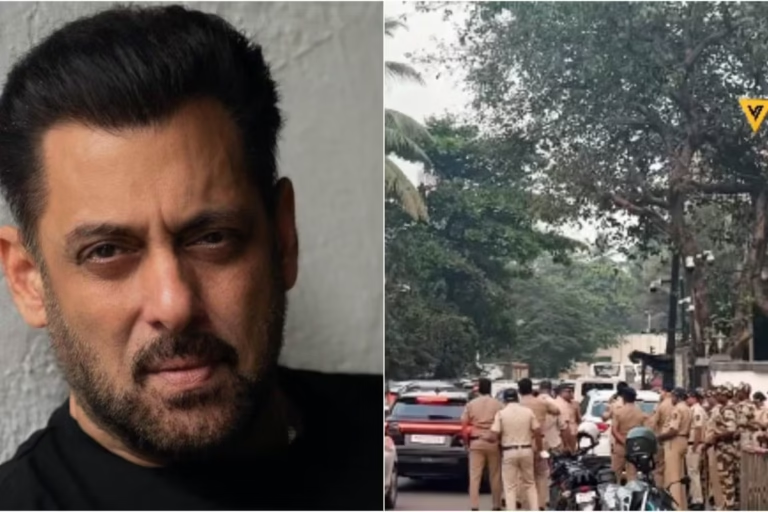
New Delhi, May 19, 2026: A wave of sudden panic gripped Galaxy Apartments in Mumbai’s upscale Bandra neighborhood on Monday when a massive 5-foot-long snake was spotted slithering inside the building complex. The high-profile residential building, which is home to Bollywood superstar Salman Khan and his family, saw immediate security deployment and locals rushing to alert emergency services.

Fortunately, wildlife experts and local authorities acted swiftly, ensuring the reptile was captured safely without causing harm to any residents or the snake itself.

High Alert At Galaxy Apartments

The incident unfolded on Monday morning when building security personnel and local residents noticed a large snake moving near the building’s lower levels. Upon inspection, the 5-foot-long reptile was found hidden inside a shutter within the car parking area of Galaxy Apartments.

Given the high-profile nature of the building and the constant presence of security staff, fans, and paparazzi outside, the discovery of the large serpent triggered a brief period of anxiety and concern. Security guards immediately cordoned off the area to prevent anyone from getting too close to the parking zone.

Building management wasted no time and promptly contacted local police, the Forest Department, and professional snake wranglers to handle the situation.

Swift Action By Wildlife Rescuers

A professional snake catcher and wildlife experts from the Resqink Association for Wildlife Welfare (RAWW) arrived at the spot shortly after being alerted. Visuals from the location showed the snake wrangler calmly assessing the situation under the supervision of local officials.

The expert wrangler managed to track the snake beneath the shutter structure. Proving his expertise, he carefully handled the large reptile by its tail, coiled it securely, and placed it inside a rescue bag.

How Dangerous Was The Snake?

The reptile has been identified as a Dhamin snake, commonly known as the Indian Rat Snake.

Snake CharacteristicDetails
Common NameIndian Rat Snake (Dhamin)
Length FoundApproximately 5 feet
Venom StatusNon-venomous
Primary DietRodents, frogs, and small birds
BehaviorFast-moving, avoids human conflict unless cornered

Export to Sheets

While its impressive five-foot length and swift movements can easily terrify onlookers, wildlife experts emphasized that the Indian Rat Snake poses no lethal threat to humans. They are highly beneficial to urban ecosystems as they control the rodent population. Experts added that the snake likely strayed into the parking lot from nearby green patches or drainage systems in search of prey.

Not The First Snake Encounter For Salman Khan

Interestingly, this is not the first time Salman Khan has made headlines involving snakes. Back in December 2021, just a day before his birthday, the Sultan actor was bitten by a non-venomous snake at his farmhouse in Panvel.

During that incident, Salman had spent six hours in a hospital for treatment and later recounted the story with humor, explaining how he had tried to gently carry the snake out of his farmhouse using a stick when it climbed up and bit him thrice. Following Monday’s event at Galaxy Apartments, fans on social media were quick to point out the bizarre coincidence.

Salman Khan’s Current Projects

While the snake scare caused a momentary stir on the home front, Salman Khan continues to remain busy with a packed professional calendar.

Following his last major theatrical release Tiger 3 in late 2023, the actor starred in the action-drama Sikandar in 2025, directed by AR Murugadoss. More recently, he surprised fans with a highly praised cameo performance as Jiva Mahala in Riteish Deshmukh’s historical drama Raja Shivaji, which has rewritten records to become the highest-grossing Marathi film of all time.

Currently, Salman is focusing on his upcoming heavy-duty project titled Maatrubhumi: May War Rest in Peace, directed by Apoorva Lakhia. The film features Salman in the role of a military officer modeled after Colonel B. Santosh Babu, and is slated for a major release on August 14.

Residents of Galaxy Apartments have expressed relief following the safe extraction of the snake, and regular activities outside the Bollywood star’s iconic residence have smoothly returned to normal.