Home Blog Page 62

Airtel Launches 5G ‘Priority’ Postpaid; Shares Dip 0.32%

0

New Delhi, May 20, 2026: In a major move to solidify its hold on premium telecom consumers, Bharti Airtel launched a first-of-its-kind feature in India: Priority Postpaid. Powered by cutting-edge 5G network slicing technology, this new feature promises retail postpaid users an uninterrupted, high-speed “Fastlane” network experience, even in heavily congested environments.

Despite making this landmark technological leap, Bharti Airtel’s stock experienced a classic case of “sell the news” on Dalal Street. The telecom giant’s shares traded lower on Wednesday, dipping 0.32% to around ₹1,913.50 in early trade on the National Stock Exchange (NSE), reversing brief pre-market gains.

The launch marks a vital evolutionary step for 5G in India. While early 5G rollouts focused heavily on broad coverage, telecom operators are now pivoting hard toward monetization and premium tiering. By rolling out Priority Postpaid, Airtel has effectively beaten its chief rival, Reliance Jio, to commercially deploy network slicing for everyday retail consumers.

Understanding ‘Priority Postpaid’ and 5G Slicing

For the average consumer, network congestion is a routine frustration. Whether trying to book a cab in a teeming marketplace, attending a critical Microsoft Teams call while stuck in traffic, or uploading a video at a packed concert, standard mobile data networks often choke under intense localized demand.

Airtel’s Priority Postpaid feature aims to solve this using 5G Network Slicing.

By utilizing network slicing, Airtel has created a dedicated virtual layer exclusively for its postpaid base. This “Fastlane” essentially ring-fences a portion of network capacity, ensuring that even when a cell tower is overwhelmed by tens of thousands of users, postpaid subscribers maintain consistent, high-bandwidth throughput.

Commenting on the launch, Shashwat Sharma, Managing Director and CEO of Airtel India, stated:

“Our focus at Airtel is on delivering meaningful innovations that enhance our customers’ experience. Priority Postpaid is our latest innovation powered by the 5G slicing technology. It provides a superior, more reliable, and dependable experience to our customers — whether they are attending a client call in traffic, or streaming at a packed concert, or booking a cab in a crowded market.”

Deep Dive: The New Priority Postpaid Plans

Airtel has integrated this feature directly into its existing postpaid portfolio, spanning from entry-level individual packages to premium multi-user family plans. Prices range from ₹449 to ₹1,749 per month (plus GST).

Crucially, existing postpaid customers will be migrated to the Priority tier automatically at no extra cost, provided they have a compatible 5G Standalone-enabled smartphone with the latest software updates. Prepaid users looking to access this network tier will need to port over to a postpaid connection.

The breakdown of the new Priority Postpaid matrix features distinct data allocations and bundled digital perks:

Plan Rental (INR)Plan TypeCore Network & Security BenefitsBundled Content & OTT Perks
₹449 + GSTIndividualPriority 5G (Fastlane), Fraud Detection, Spam Alerts, Unlimited Calling/Data, 3000 SMSAirtel Xstream Play, Adobe Express Premium, 100 GB Cloud Storage
₹699 + GSTFamily of 2Priority 5G (Fastlane), Fraud Detection, Spam Alerts, Unlimited Calling/Data, 3000 SMSAmazon Prime, JioHotstar, Airtel Xstream Play, Adobe Express, Cloud Storage
₹999 + GSTFamily of 3Priority 5G (Fastlane), Fraud Detection, Spam Alerts, Unlimited Calling/Data, 3000 SMSApple TV+, Apple Music, Amazon Prime, JioHotstar, Xstream Play, Cloud Storage
₹1,199 + GSTFamily of 4Priority 5G (Fastlane), Fraud Detection, Spam Alerts, Unlimited Calling/Data, 3000 SMSExpanded Family Sharing Benefits, Apple TV+, Apple Music, Amazon Prime, JioHotstar
₹1,749 + GSTFamily of 5Priority 5G (Fastlane), Fraud Detection, Spam Alerts, Unlimited Calling/Data, 3000 SMSNetflix (Basic/Standard), Apple TV+, Apple Music, Amazon Prime, JioHotstar, Full Suite

Device Eligibility and Technical Check

To utilize the Priority service, users must possess a smartphone that supports 5G Standalone (SA) architecture. While most mid-range and premium Android and iOS devices sold over the last two years natively support SA, users can officially verify their device’s status using the Airtel App, which now features a “Priority Readiness Check.” If an operating system patch is required, users will see a notification in their phone’s native settings menu.

The Strategic Play: Why Postpaid Matters

The launch is less about capturing immediate volume and more about defending and growing Airtel’s highly lucrative Average Revenue Per User (ARPU).

While postpaid users make up only about 7.75% of Airtel’s massive 373 million mobile subscriber base in India, they contribute disproportionately to the company’s core revenues and margins. Postpaid customers rarely churn (switch networks) and are far more willing to pay a premium for consistent service quality.

Historically, 5G slicing has been marketed globally as an enterprise-only product—tailored for smart factories, automated port operations, or remote surgeries. However, over the past year, international telcos in markets like the United States, the United Kingdom, Singapore, and Malaysia have successfully commercialized retail network slicing. By bringing this strategy to India, Airtel is positioning mobile connectivity as a tiered utility, laying the groundwork to fix a domestic telecom pricing model that industry executives have long criticized as “broken.”

Market Reaction: Why Are Shares Trading Lower?

The immediate reaction on the stock market might seem counterintuitive to a major technological rollout, but market analysts point to standard trading dynamics and macro factors.

Bharti Airtel Ltd. (NSE: BHARTIARTL)
Current Price: ~₹1,913.50 
Intraday Change: Down 0.32% (Following Tuesday's close of ₹1,913.50, down 1.27%)
Market Capitalization: ~₹11.64 Lakh Crore

1. “Sell the News” Profit Booking

Bharti Airtel has been on an absolute tear in the stock market. Earlier this week, Airtel’s market capitalization crossed that of HDFC Bank, briefly making it the second-largest listed company in India behind Reliance Industries. Over a 5-year horizon, the stock has yielded an astonishing 270%+ return, with over 137% gains coming in the last three years alone. Given that the market heavily priced in Airtel’s premiumization strategy beforehand, institutional investors chose the morning after the official announcement to lock in short-term profits.

2. Broad Market Consolidation

The minor dip in Airtel shares also aligns with broader weakness across the NIFTY50 index, which has faced a multi-session consolidation phase. Sector-wide pressures and macroeconomic variables have led foreign institutional investors (FIIs) to step back slightly, keeping large-cap stocks like Airtel under a temporary ceiling.

Long-Term Outlook Remains Robust

Despite a 9.4% contraction year-to-date in 2026, market analysts remain overwhelmingly bullish on Airtel’s long-term structure. The telecom giant has risen 3.5% over the past month and remains up nearly 7% over the last five trading sessions. Innovations like Priority Postpaid prove that Airtel can systematically command a pricing premium over Vodafone Idea and effectively match or exceed Reliance Jio’s infrastructural offerings.

As India’s 5G landscape matures, the focus has permanently shifted from who has the cheapest data to who can offer the most reliable pipeline. With network slicing now live for retail users, Airtel has redrawn the battle lines for the premium Indian consumer.


Stock Market Live Updates: Sensex and Nifty Trim Early Losses but Trade in Red; PI Industries Slumps 7%

0

New Delhi, May 20, 2026: The Indian equity benchmarks, BSE Sensex and NSE Nifty 50, witnessed an extremely volatile trading session on Wednesday, May 20, 2026. A cocktail of unfavorable global cues, surging US bond yields, a historic low in the Indian rupee, and escalating geopolitical tensions in West Asia triggered a sharp, broad-based sell-off across Indian bourses during early trade.

However, as the trading session progressed into mid-day, both benchmark indices managed to stage a recovery from their respective intraday lows, erasing a significant portion of their morning losses. Despite the recovery, the market sentiment remained highly cautious, keeping the indices confined to the negative territory.

The Morning Panic: Benchmarks Hit Intraday Lows

The market opened on a highly fragile note, deeply mirroring weak overnight cues from Wall Street and negative trading setups across major Asian markets.

The 30-share BSE Sensex opened at 74,806.49, down nearly 394 points. The selling pressure quickly intensified within the first hour of trade, dragging the index down by as much as 671 points (or 0.89%) to touch an intraday low of 74,529.

Similarly, the broader NSE Nifty 50 commenced its session at 23,457.25, slipping over 160 points. Aggressive short-building by traders forced the index to slide 220 points (or 0.93%), hitting a morning low of 23,397. This sharp drop caused the Nifty to breach its immediate support levels, sparking concern among retail investors.

Mid-Day Recovery: Trimming Losses

By late morning, institutional buying at lower levels provided a much-needed cushion to the falling market. Financial heavyweights and selective defensive sectors stepped in to arrest the slide, pulling the indices well above their structural support lines.

By 11:37 AM, the market recovered over 500 points from the day’s lowest points:

  • BSE Sensex: Traded at 75,156.28, down just 58.28 points or 0.08%.
  • NSE Nifty 50: Traded at 23,606.90, down 11.75 points or 0.05%.

While the headline indices managed to flatter the visual recovery, the broader market indices continued to feel the heat. The Nifty Midcap 100 was trading 0.14% lower, while the Nifty Smallcap 100 dropped 0.46%, showing that risk-off sentiment was still deeply integrated into mid- and small-sized companies. Reflecting this underlying nervousness, India VIX—the market’s volatility gauge—jumped over 3% to hover around the 19 level.

Corporate Spotlight: PI Industries Slumps 7%

In corporate developments, agrochemical major PI Industries emerged as one of the biggest laggards on the National Stock Exchange (NSE). The stock faced severe selling pressure right from the opening bell, plunging over 7% to touch an intraday low of ₹2,860.10 against its previous close of ₹3,124.60.

Market analysts point out that sector-wide headwinds in chemicals, combined with cautious institutional positioning ahead of global demand shifts, triggered a major exit from the counter. By mid-day, the stock was trading around ₹2,904.20, down 7.05%.

The decline wasn’t restricted to PI Industries alone. The broader Nifty Chemicals index slipped 1.53%. Other major sectoral laggards included Nifty Media (down 1.90%), Nifty Realty (down 1.63%), and Nifty Auto (down 1.42%). On the flip side, the Nifty Pharma index outperformed the market, acting as a defensive shield for investors.

Top Gainers and Losers

Top Nifty LosersTop Outperforming Sectors
PI Industries (-7.05%)Nifty Pharma
Tata SteelFast Moving Consumer Goods (FMCG) (Selective)
Bharat Electronics Limited (BEL)Information Technology (IT) (Flat to Positive)
Mahindra & Mahindra

Why is the Share Market Falling Today?

Market experts have highlighted three major macroeconomic headwinds that are keeping the domestic bourses under immense pressure today:

1. Geopolitical Uncertainties & Rising Energy Costs

Global market sentiment took a massive hit following statements from US President Donald Trump, who hinted at being “an hour away” from authorizing military action against Iran before temporarily postponing the decision. This has renewed deep fears regarding geopolitical instability in West Asia, threatening global energy supply lines. Consequently, international crude prices remained stubbornly high, with Brent crude trading near $110 a barrel, compounding inflation fears for importing nations like India.

2. Multi-Decade High US Bond Yields

The lingering US-Iran tensions have stoked fears of long-term global inflation. As a result, global investors rushed to safe-haven assets, driving the yields on longer-dated US government securities to multi-decade highs. Elevated US bond yields typically trigger foreign institutional investor (FII) capital outflows from emerging markets like India toward US debt instruments.

3. Rupee Hits Historic Low

The Indian Rupee continued its downward spiral against the greenback, depreciating heavily to touch an unprecedented lifetime low of 96.89 against the US Dollar in early trade. A weaker rupee directly impacts corporate margins by increasing the cost of imported raw materials, which significantly weighed down the sentiment in the auto, chemical, and manufacturing sectors.

Outlook for the Afternoon Session

Technical analysts suggest that the near-term bias for the Nifty remains corrective unless it decisively crosses and sustains above the 23,800–23,900 zone.

With heavyweights like Grasim Industries, Apollo Hospitals, and Bosch scheduled to report their fourth-quarter (Q4FY26) corporate earnings later today, stock-specific action is expected to dominate the second half of the trading session. Investors are advised to maintain a cautious approach and avoid aggressive overnight leveraged positions until global volatility cools down.

Three Things We Can Expect in the Honda Elevate Facelift

New Delhi, May 20, 2026: The midsize SUV segment in India remains an absolute battleground. Since its debut in late 2023, the Honda Elevate has carved out a respectable niche for itself, leveraging its muscular, old-school SUV stance, exceptional ride comfort, and bulletproof Japanese reliability. However, with heavyweights like the Hyundai Creta, Kia Seltos, and the newly updated German pairs offering heavily loaded feature sheets, the competition moves incredibly fast.

To keep its contender fresh and competitive, Honda Cars India is preparing a mid-cycle refresh for the SUV. Expected to make its official debut around mid-to-late 2026, the upcoming midsize SUV refresh aims to bridge the feature gap while sharpening its road presence.

If you are planning to buy a midsize SUV or are tracking the latest industry movements, here are the three major things you can expect from the upcoming Honda Elevate facelift.

1. Much-Needed Cabin Creature Comforts: Ventilated Seats & 360-Degree Camera

While the current Elevate gets the core ergonomics right—offering massive headroom, class-leading legroom, and an incredibly spacious 458-litre boot—it lacks some of the modern luxuries that buyers in the ₹11 lakh to ₹18 lakh bracket take for granted. Honda is set to address these exact pain points with the mid-lifecycle update.

Premium Feature Additions

The biggest interior upgrades will directly mirror the changes seen in Honda’s stablemate sedan updates.

  • Ventilated Front Seats: A near-essential feature for dealing with harsh Indian summers, ventilated seats are expected to make their way into the top-spec ZX trim of the Elevate facelift.
  • 360-Degree Camera System: The pre-facelift model features Honda’s proprietary LaneWatch camera, which displays the left-side blind spot on the screen when blinking the indicator. While helpful, it falls short of the full overhead visibility offered by competitors. The facelift will introduce a proper 360-degree camera system, making parking and navigating through tight city traffic far less stressful.
  • Repositioned Wireless Charging & Cabin Tech: Expect minor ergonomics tweaks to the center console, a better-placed wireless charging pad, and enhanced multi-color ambient lighting to give the cabin a more upmarket, modern aesthetic during night drives.

2. A Sharper, More Modern Exterior Design

The original styling of the Elevate leaned heavily into traditional, boxy SUV proportions, highlighted by an upright, massive front grille. For the 2026 facelift, Honda will not alter the structural sheet metal but will apply a sleeker, more aggressive cosmetic treatment.

Up front, expect a heavily revised front bumper with fewer cluttered elements, a downsized and re-profiled front grille finished in dark chrome or high-gloss black, and updated LED headlamp clusters featuring integrated, sleek eyebrow-style LED daytime running lights (DRLs).

Moving to the rear, the current connected-look tail lamps will receive refreshed, clear-lens smoked detailing, coupled with a reprofiled rear bumper to accentuate the SUV’s rugged stance. Additionally, fresh designs for the dual-tone diamond-cut alloy wheels will help differentiate the facelifted model from the older version on the road.

3. Retained Mechanical Reliability with a Refined Powertrain

Under the skin, Honda is playing to its strengths. Unlike its rivals, which offer a confusing maze of small-capacity turbo-petrols, diesels, and dual-clutch transmissions, the Honda Elevate facelift will keep things simple, predictable, and highly reliable.

This engine is widely celebrated for its linear power delivery and incredibly smooth performance in typical stop-and-go city traffic. While driving enthusiasts looking for aggressive turbo kicks might find it modest, the real-world fuel efficiency combined with the seamless step-shifting logic of the CVT automatic transmission makes it an ideal, hassle-free family commuter.

While rumors regarding a strong-hybrid variant (e:HEV tech borrowed from the City sedan) continue to float around, industry indicators suggest Honda might save full electrification strategies for its upcoming standalone EV platform slated for late 2027.

Market Positioning, Pricing, and Rivals

The Honda Elevate facelift will continue to challenge established segment benchmarks. It is designed to go head-to-head with a diverse lineup of compact and midsize SUVs:

  • Direct Competitors: Hyundai Creta, Kia Seltos, Maruti Suzuki Grand Vitara, and Toyota Urban Cruiser Hyryder.
  • European and Alternative Rivals: Skoda Kushaq, Volkswagen Taigun, MG Astor, and the Tata Curvv coupe-SUV.

Expected Price Bracket

The current model is priced competitively starting around ₹11.60 lakh (ex-showroom). With the addition of premium tech like the 360-degree camera, ventilated seats, and revised styling kits, expect a marginal price correction. The upcoming Honda Elevate facelift is anticipated to retail in the estimated price bracket of ₹12 lakh to ₹17.50 lakh (ex-showroom), depending on the variant.

Final Takeaway

The upcoming facelift isn’t a radical re-imagination of the car, but rather a calculated polishing of an already solid package. By retaining its high ground clearance and mechanical simplicity while injecting a healthy dose of modern interior features, Honda ensures that the Elevate remains a compelling, practical choice for practical Indian households.

The ₹60 Crore Night: Vaibhav Sooryavanshi Historic Demolition of LSG

0

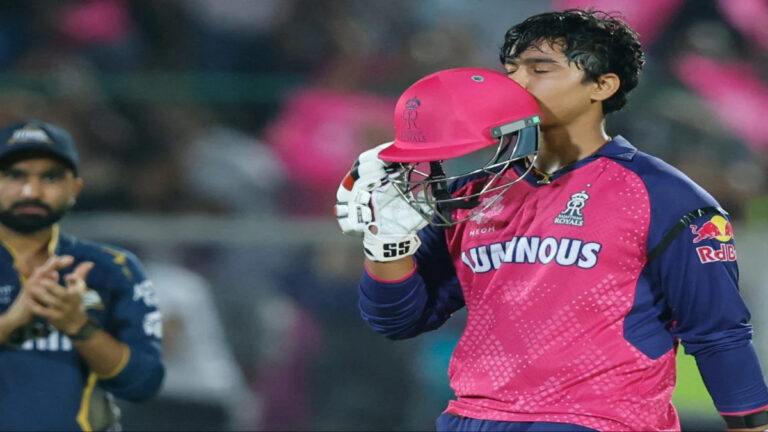
New Delhi, May 20, 2026 — There are nights in the Indian Premier League when the scoreboard tells only half the story. On Tuesday at the Sawai Mansingh Stadium, the numbers flashing across the giant screen were staggering enough: 93 runs off just 38 balls, punctuated by 7 fours and 10 towering sixes.

But behind the 15-year-old wonderkid Vaibhav Sooryavanshi’s brutal demolition of the Lucknow Super Giants (LSG) lies an even more shocking narrative—a financial and statistical evaluation that has broken the tournament’s traditional ROI (Return on Investment) metrics.

The Financial Shock: Scaling the Multiplier

In the modern landscape of corporate cricket, every run, boundary, and over is tracked on a valuation ledger. Because Sooryavanshi was retained on a modest baseline contract relative to seasoned international superstars, his match-by-match cost allocation is relatively minuscule.

According to financial performance tracking post-match, Sooryavanshi’s precise operational cost to the Rajasthan Royals (RR) for this single game stood at just ₹7.86 lakh.

However, his rating-adjusted performance worth for the night—calculated against the match scenario, pressure, and destructive strike rate—was valued at a massive ₹4.75 crore.

By clearing his baseline cost within the very first few balls of his innings, the teenage opener generated a pure surplus of ₹4.67 crore after cost, handing Rajasthan a 59.4x profit return on their match investment.

Dismantling the Target and the Record Books

The context of the game amplified the value of this performance. Chasing a daunting target of 221 runs in a must-win clash to solidify their playoff aspirations, Rajasthan Royals were staring down the barrel. LSG had built a mountain of runs courtesy of a punishing 96 from Mitchell Marsh and a quick-fire 60 from Josh Inglis.

While fellow opener Yashasvi Jaiswal set a fiery early tempo with a 16-ball 43, Sooryavanshi played the long game before exploding. In an exhibit of tactical maturity that belies his age, he started quietly, managing just 5 runs off his first 10 deliveries.

What followed was complete and utter carnage. Shifting into overdrive, Sooryavanshi targeted both express pace and spin, effortlessly dispatching the ball into the Jaipur night sky. He reserve-swept spinners and pulled pacers like Mayank Yadav over the midwicket boundary with terrifying ease.

Most Sixes in a Single IPL Season:
1. Chris Gayle (2012) – 59
2. Vaibhav Sooryavanshi (2026) – 53*
3. Andre Russell (2019) – 52

By hitting his 50th six of the season during the innings, he became the first-ever Indian batsman in IPL history to breach the 50-sixes milestone in a single edition, leapfrogging the previous Indian record holder, Abhishek Sharma (42 sixes in 2024). He now sits second on the all-time list, trailing only Chris Gayle’s historic peak of 59.

Tactical Value Over Pure Style

A batsman operating at a strike rate of 244.74 does more than just accumulate runs; he actively breaks the opposition’s defensive frameworks. LSG’s bowlers, including Akash Singh and Mohsin Khan, were forced into purely defensive fields ahead of schedule. Captains lose the luxury of waiting out matchups when a 15-year-old is clearing the boundary ropes at will.

Though his spectacular assault ended agonizingly close to a century when he mistimed a Mohsin Khan slower ball to long-on for 93, the structural damage was done. Rajasthan coasted to victory with five balls to spare.

The Verdict

As IPL 2026 heads toward its business end, Vaibhav Sooryavanshi holds the Orange Cap with 579 runs across 13 matches. Beyond the orange cap and the playoff ticket, it is the sheer economic imbalance of his performance that has captured the cricketing world’s attention. Superstars are paid premium prices to deliver premium wins, but when a teenage prodigy generates elite-tier destruction on a rookie’s budget, it turns a regular cricket match into a historic gold rush.

To watch the post-match breakdown, team celebrations, and the young prodigy’s viral reaction after guiding his team to victory, check out this Vaibhav Sooryavanshi RR vs LSG Post-Match Analysis. This video covers the emotional aftermath of the game and how the team celebrated securing their playoff spot.

Amazon Fire TV Stick HD Launched in India at ₹4,999 with Wi-Fi 6

New Delhi, May 20, 2026: In a major push to dominate India’s booming home entertainment market, Amazon has officially introduced its all-new Fire TV Stick HD in the country. Priced at ₹4,999, the e-commerce giant is marketing the device as its thinnest and fastest High-Definition (HD) streaming stick to date.

Designed specifically as a “lifeline” to breathe new life into older televisions or secondary bedroom screens that lack modern smart capabilities, the latest Fire TV Stick HD features massive hardware upgrades, a cleaner interface, and enhanced connectivity features. In a first for an Amazon HD streaming device in India, it also brings the power of console-free video gaming right to the living room.

Here is an in-depth breakdown of the pricing, availability, design upgrades, technical specifications, and key features of Amazon’s newest streaming hardware.

Price and Instant Availability: Adapting to Quick Commerce

The new Amazon Fire TV Stick HD makes its Indian debut at a competitive price point of ₹4,999. Reflecting the evolving retail landscape in India, Amazon has moved beyond its own marketplace for day-one availability.

Consumers can purchase the streaming device immediately on Amazon.in, Flipkart, Blinkit, Swiggy Instamart, and Zepto. By partnering with instant-delivery platforms, Amazon ensures that users can order the streaming stick and have it plugged into their TVs within minutes. The company has also confirmed that the device will be hitting traditional offline retail stores across India shortly.

Design: Ultra-Slim and Clutter-Free “Direct Power”

The physical evolution of the Fire TV Stick HD is one of its most compelling upgrades. Amazon has re-engineered the form factor to make it 30% slimmer than any other model in the current Fire TV lineup. Its ultra-compact, pocket-sized design means it can plug discreetly into an HDMI port behind wall-mounted televisions without awkwardly blocking adjacent ports, making it highly portable for travel.

More importantly, the new model introduces Direct Power capabilities. Thanks to a highly efficient internal architecture, the Fire TV Stick HD can draw all its required operating power directly from a television’s built-in USB port. This eliminates the necessity of running a long cable to a separate wall adapter, significantly reducing cable clutter around entertainment centers and solving the problem of limited wall sockets.

Hardware and Performance: A 30% Speed Boost

While the device is capped at a maximum resolution of 1080p Full HD at 60fps—leaving 4K capabilities exclusive to Amazon’s premium 4K sticks—it brings massive internal hardware improvements.

Powered by a 1.7GHz quad-core processor paired with 8GB of onboard storage, Amazon claims that the new Fire TV Stick HD delivers over 30% faster performance on average compared to its previous-generation HD predecessor. This results in visibly quicker boot-up times, snappy menu navigation, and rapid application loading.

For visual performance, the stick includes advanced support for high-dynamic-range formats, including HDR10, HDR10+, and HLG, alongside modern video codecs like AV1 and H.265. This ensures that even though the resolution is 1080p, colors look richer, contrast is sharper, and overall picture quality is vastly superior on compatible displays.

Connectivity: Embracing Wi-Fi 6 and Bluetooth 5.3

Buffering is the ultimate enemy of a seamless streaming experience, especially in modern Indian households where multiple smartphones, laptops, and smart appliances crowd the home network. To tackle this, Amazon has equipped the Fire TV Stick HD with dual-band Wi-Fi 6 (802.11ax). When paired with a Wi-Fi 6 compatible router, this provides a much more stable, high-bandwidth connection, resulting in smooth, lag-free streaming even over slower or heavily congested internet networks.

Additionally, the stick integrates Bluetooth 5.3. This allows users to seamlessly connect wireless accessories such as soundbars, external speakers, or Bluetooth headphones for late-night private viewing.

The Big Surprise: Xbox Cloud Gaming Arrives

Perhaps the most notable feature of this launch is the integration of Xbox Cloud Gaming. This marks the very first time Amazon has extended cloud gaming support to a budget-friendly HD tier device in India.

By downloading the official Xbox app onto the Fire TV Stick HD, users can stream and play hundreds of high-profile, console-quality video games directly on their TVs. It completely eliminates the need for an expensive gaming console like an Xbox Series X/S. To utilize this feature, users simply need a stable Wi-Fi 6 internet connection, an active Xbox Game Pass Ultimate subscription, and a compatible Bluetooth gaming controller paired directly to the stick.

Software: The Redesigned Fire TV Interface

On the software front, the streaming stick debuts Amazon’s redesigned Fire TV user interface. Moving away from cluttered grids, the updated interface features a highly organized, tile-based layout with a horizontal-scrolling mechanic.

Content is now intelligently categorized into dedicated hubs for Movies, TV Shows, Free Content, and Live Programming. This ecosystem-driven approach is designed to help users spend less time endlessly scrolling through menus and more time actually watching content.

The device supports all major global and regional Over-The-Top (OTT) platforms popular in India, including Prime Video, Netflix, YouTube, JioHotstar, and Zee5. It also provides aggregated access to thousands of free, ad-supported live channels covering news and sports. Furthermore, it syncs flawlessly with the updated Fire TV companion mobile app, allowing users to browse titles, manage watchlists, and remotely cast content directly from their smartphones.

Smart Home Integration and Alexa Voice Remote

Bundled in the box is the trusted Alexa Voice Remote. Featuring standard hotkeys for instant access to preferred streaming platforms, the remote relies heavily on voice integration.

Beyond searching for movies or controlling media playback, the Fire TV Stick HD acts as a central hub for home automation. By using simple voice commands through the remote, users can easily manage Alexa-compatible smart appliances around the house. From dimming smart lights and adjusting the temperature of a connected AC to checking security camera feeds, everything can be controlled directly from the TV screen.

The Verdict

Sayantani Choudhuri, Head of Fire TV at Amazon India, summarized the vision behind the product during the launch: “Customers expect their TV streaming experience to be fast and responsive. Our latest Fire TV Stick HD delivers exactly that. It’s over 30% faster, remarkably slim, and introduces a clutter-free setup. We’ve built this device to offer a streaming experience that is fast, smooth, and highly convenient.”

While the ₹4,999 Fire TV Stick HD might be redundant for those who already own a high-end, modern 4K smart TV, it stands out as an incredibly valuable upgrade for secondary displays, monitors, or older television units. With its combination of Wi-Fi 6 stability, a refreshed UI, direct USB power, and the unexpected addition of Xbox cloud gaming, Amazon has delivered a highly versatile and futuristic entertainment hub that fits in the palm of your hand.

Motorola Disrupts the Budget Market: Launches Moto G37 Power, Moto G37, and Moto Buds 2

New Delhi, May 19, 2026 – In a major sweep of the budget and mid-range technology segments, Motorola has officially expanded its ecosystem in India with the simultaneous launch of three highly anticipated products: the Moto G37 Power 5G, the Moto G37 5G, and the Moto Buds 2 wireless earbuds.

Promising a potent mix of robust build quality, next-generation 5G performance, and ultra-premium audio engineering, Motorola’s latest lineup aims to redefine consumer expectations in the budget tier. All three products are scheduled to go on sale starting May 25, 2026, across Flipkart, Motorola.in, and major offline retail stores.

Moto G37 Power 5G: A Massive 7000mAh Battery King

Leading the launch is the Moto G37 Power 5G, a device heavily engineered for maximum endurance. Priced at an effective launch price of INR 15,999, its marquee feature is an industry-leading 7,000mAh battery. Motorola claims this massive cell can comfortably deliver up to three days of battery life (or 62 hours of non-stop usage) on a single charge. It also features advanced Battery Care technology designed to sustain 80% battery health even after 1,200 charge cycles, and supports fast 33W TurboPower™ charging.

Despite housing a monstrous battery, Motorola has managed to keep the device remarkably slim at just 8.89mm. The phone focuses aggressively on physical durability, boasting MIL-STD-810H military-grade protection, an SGS-certified IP64 dust and splash resistance rating, and a premium back finish available in smooth PMMA and elegant vegan leather.

On the front, the G37 Power sports an immersive 6.7-inch HD+ LCD punch-hole display with a fluid 120Hz refresh rate, protected by Corning Gorilla Glass 7i. It achieves an impressive peak brightness of 1050 nits. Under the hood, the device is powered by the 6nm MediaTek Dimensity 6400 processor, paired with up to 8GB of LPDDR4X RAM (expandable up to 12GB using AI-powered RAM Boost) and 128GB of internal UFS 2.2 storage.

For photography, the phone carries a 50MP Quad-Pixel AI rear camera system backed by electronic image stabilization (EIS) and a 2-in-1 light sensor for lightning-fast focus in low light. Out of the box, it runs Android 16 with a guaranteed update to Android 17 and three years of security support.

Moto G37 5G: Sleek, Balanced Performance

For users looking for a slimmer profile without breaking the bank, the standard Moto G37 5G arrives at a highly competitive starting price of INR 13,999.

Sharing the same 6nm MediaTek Dimensity 6400 chipset and 120Hz display capabilities as its older sibling, the standard G37 targets the everyday multi-tasker. It swaps out the massive battery of the Power model for a lighter, more mainstream 5,200mAh battery paired with 20W TurboPower charging, rendering the phone noticeably lighter in hand (191 grams) and thinner (7.85mm).

The standard Moto G37 retains the outstanding structural durability of the series, including the Gorilla Glass 7i screen protection and IP64 rating. It features a capable 50MP primary rear camera, an 8MP selfie snapper, stereo speakers equipped with Dolby Atmos®, and near-stock Android 16 via Motorola’s intuitive Hello UI interface.

Moto Buds 2: Premium Audio at an Unbelievable Price

Rounding out the ecosystem launch is the Moto Buds 2. Priced at an aggressive INR 2,999, these wireless earbuds bring features usually reserved for audio products costing three times as much.

Motorola has paired up with audio legends to craft a premium acoustic architecture. The Moto Buds 2 feature a dual dynamic driver setup (11mm + 6mm) that natively supports Hi-Res Audio and the LDAC codec, ensuring rich, lossless sound delivery and deep, resonant bass. Spatial Audio is also onboard to create a wider, cinematic soundstage.

Silence is easily achieved via the earbuds’ Dynamic Active Noise Cancellation (ANC) of up to 55dB, which intelligently adapts to ambient noise. Clear communication is handled by a robust six-microphone system enhanced by Environmental Noise Cancellation (ENC) and Motorola’s software-driven CrystalTalk AI to block out background chatter during calls.

The Moto Buds 2 deliver up to 11 hours of continuous playback on a single charge, expanding to a staggering 48 hours total with the charging case. They also feature Bluetooth 6.0, dual-device pairing, smart wear detection, a dedicated gaming mode, and seamless Moto AI integration. Available in stunning Pantone-curated shades—Violet Ice, Carbon, and Grey Mist—they boast IP54 water resistance for workouts and light rain.

Verdict

With this mid-year launch, Motorola is making a definitive statement. By combining military-grade durability, groundbreaking 7000mAh battery life, and premium dual-driver ANC audio at sub-16k prices, the company has set a formidable new benchmark for value in the Indian tech market.

South OTT Releases This Week: Sathi Leelavathi, Satan: The Dark, and More to Binge-Watch

0

New Delhi, May 19, 2026: The mid-week blues are real, but for South Indian cinema lovers, the digital streaming space is bringing plenty of reasons to smile. The third week of May 2026 is delivering a highly diverse lineup of regional content across major over-the-top (OTT) platforms. Whether you are in the mood for light-hearted, chaotic marital comedy or hair-raising psychological horror that jumps across timelines, there is something fresh hitting your screens right now.

Leading the pack are the Telugu romantic comedy Sathi Leelavathi and the bone-chilling Tamil supernatural thriller Satan: The Dark. Let’s dive into the major South OTT releases you should add to your watchlist this week.

1. Sathi Leelavathi – A Chaos-Filled Marital Drama

  • Platform: Sun NXT
  • Language: Telugu (with Tamil dubbed version)
  • Genre: Romantic Comedy / Family Drama

Following its recent theatrical release earlier this month, the feel-good family entertainer Sathi Leelavathi makes its highly anticipated digital debut. Co-written and directed by Tatineni Satya, the film stars the versatile Lavanya Tripathi alongside Dev Mohan in the lead roles.

The Plot

The story revolves around a newly married couple navigating the unpredictable, playful, and often chaotic push-and-pull of married life. Leelavathi (Lavanya Tripathi) is a spirited film director, while her husband, Ram Sethu, trying to balance domestic expectations with professional ambitions. When minor misunderstandings snowball into emotional chaos and a full-blown love triangle dynamic, the film relies heavily on relatable humor and domestic wit to resolve the tension.

Why Watch It?

Backed by a vibrant soundtrack by Mickey J. Meyer—including the catchy, wedding-season favorite “Chittoor Pilla”—the movie functions as an easy-breezy weekend watch. Lavanya Tripathi anchors the film with a strong, energetic performance that holds the emotional pieces together.

2. Satan: The Dark – Double Timeline Supernatural Horror

  • Platform: Amazon Prime Video, Aha Tamil, and Tentkotta
  • Language: Tamil
  • Genre: Supernatural Horror / Psychological Thriller

If comedy isn’t your cup of tea and you prefer to keep the lights on while streaming, writer-director Manikandan Ramalingam’s Satan: The Dark is your go-to watch this week. Arriving on OTT roughly six weeks after its theatrical run, this “A”-certified thriller packs a heavy punch of ritualistic sorcery and psychological dread.

The Plot

The narrative unfolds across two distinct timelines:

  1. The Past: During the East India Company era, a dark witchcraft ritual performed in the hilly, isolated terrain of Hasthinapuram goes horribly wrong, unleashing a generational curse upon the land.
  2. The Present: The malevolent force awakens when Marcelin (played by Mona Bedre) begins displaying violent, erratic behavior after falling under the spell of a mysterious entity. Her terrifying transformation quickly puts her young daughter, Alisha, and the rest of the family in mortal peril.

Why Watch It?

Though critics noted its 144-minute runtime leans heavily on classic jump scares, the film’s production quality is top-notch. With atmospheric cinematography by Bala G. Ramasamy and a haunting, claustrophobic background score by Aswin Krishna, it promises an eerie ride for hardcore horror fans.

3. Thimmarajupalli TV – Small Village, Big Mystery

  • Platform: Aha Video
  • Language: Telugu
  • Genre: Rural Mystery / Comedy-Drama

Stepping into the heartland of rural India, Thimmarajupalli TV brings a unique and nostalgic premise. Starring Sai Tej, Veda Jalandhar, and Kiran Abbavaram, the film takes the audience back to the late 1990s.

The Plot

Set in 1996, the entire plot revolves around a single television set—a rare and prized luxury in a small village. When this newly bought community television suddenly vanishes into thin air, chaos erupts. Accusations fly, a local youth is wrongfully suspected, and the whole village turns into an amateur detective agency overnight.

Why Watch It?

It is a nostalgic, light-hearted watch that captures the essence of 90s rural life while maintaining a steady undercurrent of suspense.

4. Oru Durooha Saahacharyathil – Suspense and Survival

  • Platform: Netflix
  • Language: Malayalam
  • Genre: Suspense Thriller / Black Comedy

Malayalam cinema continues its streak of delivering grounded yet gripping narratives with Oru Durooha Saahacharyathil. Directed by Ratheesh Balakrishnan Poduval, the film features a powerhouse ensemble cast including Kunchacko Boban, Dileesh Pothan, Sajin Gopu, and Rajesh Madhavan.

The Plot

Sethu (Kunchacko Boban) is a dedicated government health worker trying to care for his bedridden brother, Madhu, in the misty hills of Wayanad. Their quiet life is completely upended when a mysterious stranger breaks into their home. What follows is a tense, claustrophobic battle for survival, uniquely tangled with a parallel local police investigation involving active Maoist movements in the region.

Why Watch It?

The film masterfully balances a high-stakes survival thriller with the pitch-black situational humor that Malayalam cinema is famous for. It remains one of the top trending South Indian titles on digital platforms this month.

Missing IPS 2025 Cadre List Sparks Questions as New UPSC Cycle Begins May 24

0

New Delhi, May 19, 2026 — With the next Union Public Service Commission (UPSC) Civil Services examination cycle set to commence on May 24, a major administrative loose end from the previous cycle has triggered widespread anxiety and speculation. Months after their peers in other civil services took charge of their respective state assignments, selected Indian Police Service (IPS) officers from the 2025 batch are still waiting for their official cadre allocations.

While the Department of Personnel and Training (DoPT) successfully released the cadre allocations for the Indian Administrative Service (IAS) and Indian Forest Service (IFoS) back in December 2025, the Ministry of Home Affairs (MHA) portal remains completely silent regarding the 2025 IPS batch.

Growing Impatience Among Trainee Officers

For a civil servant, cadre allocation is not just a routine bureaucratic formality; it dictates their entire career trajectory, determining the state where they will serve for the next three to four decades.

The extensive delay has left many newly minted police officers in limbo. Historically, the civil services structure attempts to streamline these announcements before advanced training phases begin. The contrast is particularly stark this year: while IAS officers have known their destinations for nearly five months, the incoming batch of law enforcers is heading into a new exam cycle with zero clarity on their future headquarters.

Is a New Policy Framework to Blame?

As the delay prolonged into the summer, speculation intensified within bureaucratic circles that the holdup was linked to the central government’s major overhaul of the cadre allocation policy.

In January 2026, the Centre announced a revised framework aimed at streamlining state allocations. The significant changes include:

  • A Four-Group System: Replacing the long-standing five-zone system with four newly organized state clusters.
  • Strict “Cadre Gap” Calculations: Determining vacancies precisely on January 1 of the year following the examination, factoring in a rigorous calculation of category-wise reservation rosters and insider-outsider ratios.

However, officials and policy experts note that this administrative reform is a false lead for the current crisis. The official gazette notification explicitly clarifies that the revised rules will only “come into effect with the Civil Services Examination-2026.” Because the 2025 batch is governed by the older five-zone guidelines, the root cause of the current delay points toward internal administrative bottlenecks rather than a structural policy transition.

A Recurring Pattern of Administrative Delays

Veterans of the civil services note that while the current situation is deeply frustrating for candidates, an IPS-specific delay is not entirely unprecedented. The Ministry of Home Affairs, which acts as the cadre-controlling authority for the IPS, has historically faced distinct logistical challenges compared to the DoPT.

A primary reason for these recurring delays involves the meticulous coordination required between the MHA and individual state governments. Before a final list is published, the ministry must reconcile physical and medical fitness clearances, process complex reservation rosters, and balance strict insider-outsider quotas (where only one-third of a state’s intake can be from that home state). A delay by even two or three state home departments in submitting finalized vacancy tallies can stall the entire national list.

MHA Silence Heightens Anxiety

Compounding the anxiety is a recent circular issued by the IPS ACR Cell earlier this month, which extended the timelines for Performance Appraisal Reports (PAR) for serving officers. While entirely unrelated to fresh recruitments, it has reinforced the perception among aspirants of a broader systemic slowdown within the ministry’s police division.

Thus far, formal queries directed to the Police-I Division of the Ministry of Home Affairs seeking an expected timeline or an explanation for the hold-up have gone unanswered.

With thousands of new aspirants preparing to walk into examination halls on May 24 for the next cycle, the unresolved status of the 2025 IPS batch remains a glaring reminder of the procedural hurdles that still exist behind the scenes of India’s premier civil services.

Viral: Bengali Blogger Finds Real ‘Dhurandhar’ Chai Shop in Ladakh

0

New Delhi, May 19, 2026 — Tucked away in the bustling, wind-swept markets of Leh, a humble tea stall has suddenly transformed into India’s newest viral tourist hotspot. For weeks, cinephiles and internet surfers debated whether the iconic, hilariously named eatery from Aditya Dhar’s star-studded action thriller Dhurandhar was a mere figment of a set designer’s imagination or a real place.

The mystery has officially been put to rest. A Bengali travel content creator, Soumya Chatterjee, recently tracked down the actual location in Ladakh. However, as his now-viral video reveals, grabbing a cup of tea at this cinematic landmark comes with a very specific, heartwarming condition.

The Discovery: From Silver Screen to Real Life

When Dhurandhar hit theatres on March 19, 2026—boasting an ensemble cast featuring Ranveer Singh, Akshaye Khanna, R. Madhavan, Sanjay Dutt, and Arjun Rampal—audiences were quick to spot a fleeting, one-second scene featuring an oddly named establishment: Washma Butt Biryani and Chai Shop.”

The internet instantly erupted into memes. Many viewers assumed director Aditya Dhar was cleverly trolling audiences or taking a cheeky swipe at Pakistani tropes, especially since the name can be hilariously misread phonetically as “Wash My Butt.” It was widely written off as a fictional Easter egg meant for a quick laugh.

Enter Soumya Chatterjee, a travel blogger from West Bengal who documents his wanderlust under the Instagram handle @its_naturemoto. While exploring the local markets of Leh, Chatterjee stumbled upon the exact rustic storefront featured in the movie.

The One Condition for a Cup of Chai

As Soumya stepped inside the shop, fans were stunned to see that the interiors perfectly mirrored the movie setup. The walls are still adorned with promotional posters and film stills, including the specific scene where characters Hamza Ali Mazari and Aalam Bhai sit down to plot over cups of salted tea.

But it was Soumya’s commentary that truly captured the internet’s imagination, introducing a “rule” for anyone looking to visit this unique spot. Standing inside the rustic café, he told his viewers:

This poetic “one condition” quickly resonated with travel enthusiasts. It transformed a simple pitstop into an experiential destination where visitors are encouraged to slow down, breathe in the crisp mountain air, and absorb the cinematic history embedded in the walls.

The Real Identity Behind the Reel Name

As expected, the reality behind the shop has its own fascinating backstory. In truth, “Washma Butt” was never the original name of the eatery.

FeatureDetails
Actual Shop NameS.H. Khan Restaurant
LocationLeh Market, Ladakh
Cinematic NameWashma Butt Biryani and Chai Shop
Featured MovieDhurandhar (Directed by Aditya Dhar)
Upcoming OTT ReleaseJune 4, 2026 (Jio Cinema / Jio Hotstar)

When the production crew of Dhurandhar arrived in Ladakh to shoot their high-octane sequences, they chose S.H. Khan Restaurant as a primary location. They hung up the fictional “Washma Butt” signboard for the shoot. Once the cameras stopped rolling and the crew packed up, the owners decided to leave the board and the movie posters untouched. It proved to be a brilliant business move, as the shop has now accidentally become a landmark.

Internet Stunned as Celebs React

The video has amassed millions of views across Instagram, YouTube, and X (formerly Twitter), triggering a massive wave of nostalgia and humor.

Many fans admitted they were completely fooled by the movie. “I genuinely thought the filmmakers created a set and named it Washma Butt just to troll us. To find out it’s a real shop in Leh is mind-blowing,” commented one user. Another eagerly predicted, “The crowds are coming. Line lag jani hai yaha to (Lines are going to form here soon)!”

The viral clip even caught the attention of Bollywood veteran Gaurav Gera, who plays Aalam Bhai in the film. Delighted by the real-world impact of the scene, Gera responded directly to Chatterjee’s video by dropping red heart emojis in the comments, validating the location for thousands of scrambling fans.

A New Stop on the Ladakh Itinerary

With Dhurandhar 2 scheduled to premiere on Jio Cinema (Jio Hotstar) on June 4, 2026, public excitement surrounding the franchise is at an all-time high. Soumya Chatterjee’s discovery couldn’t have been timed better.

For years, travelers flocked to Ladakh to see the famous Pangong Tso lake from 3 Idiots or the iconic roads from Jab Tak Hai Jaan. Now, the “Washma Butt” tea stall adds a gritty, meme-worthy, and pop-culture-rich flavor to the classic Ladakh itinerary.

If you find yourself wandering through the cold deserts of Leh this summer, look for the S.H. Khan Restaurant. Just remember the Bengali traveler’s golden rule: order two cups of chai, pull up a wooden stool, and take a moment to look at the posters on the wall to fully immerse yourself in the magic of Indian cinema.