

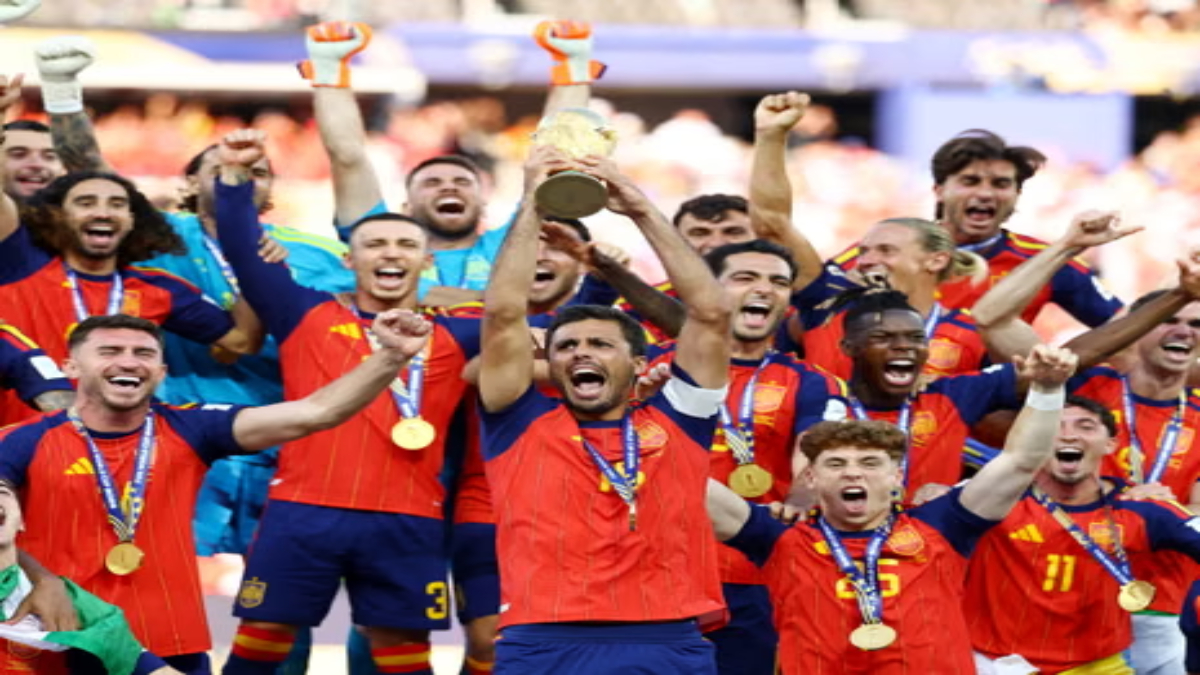
New Delhi, July 20, 2026 — In a tense, tactical clash at MetLife Stadium, European champions Spain conquered world champions Argentina 1–0 after extra time to win the 2026 FIFA World Cup. Substitute winger Ferran Torres proved to be the hero, volleying home a precise finish in the 106th minute to deliver La Roja their second World Cup star, exactly 16 years after Andrés Iniesta’s iconic extra-time winner in South Africa.
The victory seals a remarkable era of global dominance for Luis de la Fuente’s squad. Having won UEFA Euro 2024, Spain now join the elite club of nations to hold both the European and World Cup titles simultaneously for the second time in their history. For defending champions Argentina, the loss marked a heartbreaking conclusion to Lionel Messi’s final World Cup campaign, as the Albiceleste fell just short of becoming the first back-to-back champions since Brazil in 1962.
The Breakthrough Moment in Extra Time
After 90 minutes of relentless Spanish pressure and resolute Argentine defending, the final headed into extra time tied at 0–0. Argentina’s defensive task became even steeper when midfielder Enzo Fernández was sent off in stoppage time following a second yellow card for a late challenge on Pau Cubarsí.
Down to 10 men, Argentina attempted to dig deep into their reserve tanks, but Spain’s relentless passing combinations finally broke through early in the second half of extra time. Pedro Porro floated a high cross toward the far post, where Nico Williams rose high to head the ball across the face of goal. Ferran Torres reacted quickest, driving a clean, first-time strike past the outstretched hand of goalkeeper Emiliano Martínez to set off wild celebrations among the Spanish supporters.
Tactical Control and Heroic Goalkeeping
From the opening whistle, Spain established their signature rhythm, commanding possession and restricting Argentina’s ability to transition into attack. Teenage prodigy Lamine Yamal created early problems down the right wing, while Dani Olmo and Rodri controlled the central third of the pitch.
Despite Spain’s total territorial dominance, Argentina kept the scoreline level through a masterful individual performance by Emiliano Martínez. The Villa shot-stopper made 10 crucial saves in regulation time, denying clean opportunities from Yamal, Oyarzabal, and Cubarsí, including a flying tip-over from a late Yamal free-kick.
Argentina’s game plan suffered an early setback when starting center-back Lisandro Martínez went off with an injury just before halftime. Replacement Nicolas Otamendi alongside Cristian Romero fought bravely under non-stop pressure, but the physical burden of defending without the ball for over 100 minutes ultimately took its toll.
Defensive Perfection and Tournament Records
Spain’s campaign was defined by unprecedented defensive strength. Across seven matches in the tournament, La Roja allowed just one goal—setting a record for the fewest goals conceded by any World Cup-winning team in football history.
Furthermore, the victory extended Spain’s unbeaten run to 38 matches in all international competitions, underlining the tactical balance that De la Fuente has instilled.
For Argentina, the defeat ended an impressive multi-year streak of international silverware that included the 2021 Copa América, the 2022 World Cup, and the 2024 Copa América. Lionel Messi, who finished the tournament with 8 goals and 4 assists, was held quiet by Spain’s compact defensive structure, registering his side’s first shot on goal only late in the second half of extra time.
A Showpiece Event on the Global Stage
The final concluded a expanded 48-team tournament hosted jointly by the United States, Canada, and Mexico. Before kickoff, fans enjoyed entertainment featuring global stars including Jennifer Hudson and Robbie Williams, alongside high-profile attendees from sports and entertainment.
When team captain Rodri hoisted the FIFA World Cup Winner’s Trophy, it cemented Spain’s standing at the peak of international football. With a young core including Lamine Yamal, Pau Cubarsí, Nico Williams, and Pedri, Spain look well-positioned to maintain their position at the pinnacle of the sport for years to come.