

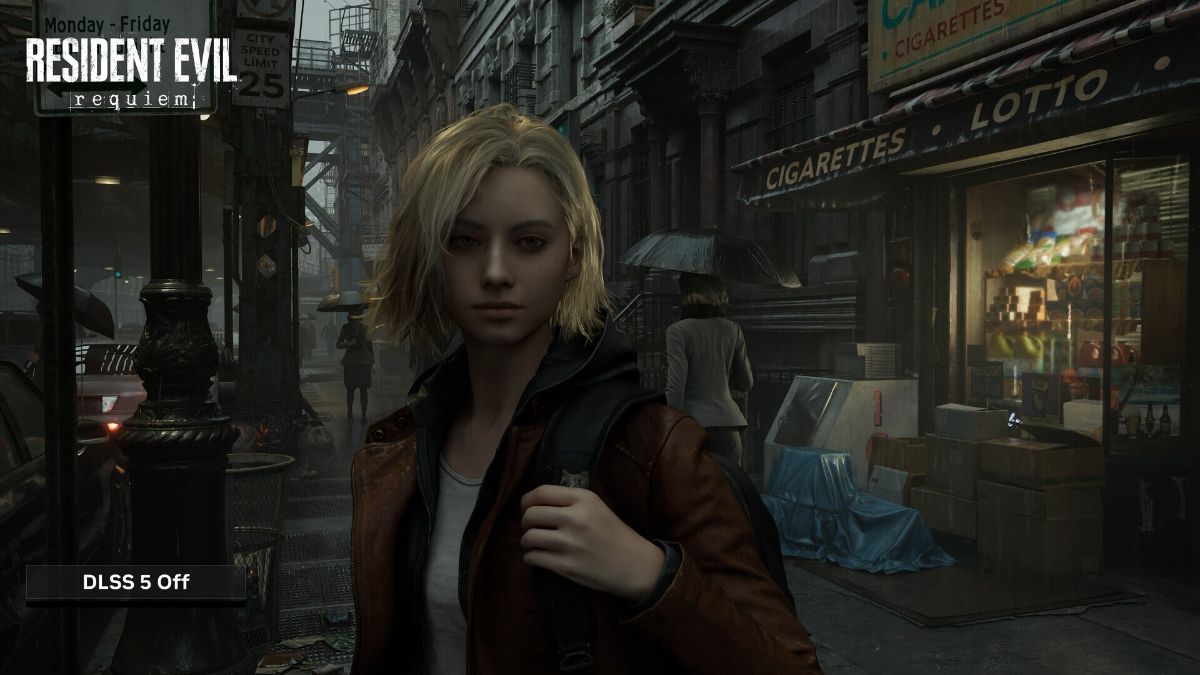
New Delhi, March 17, 2026 — NVIDIA has once again disrupted the gaming landscape with the announcement of DLSS 5, a next-generation AI technology that shifts the focus from purely boosting frame rates to delivering “photoreal” visual fidelity. Arriving this fall, DLSS 5 introduces a real-time neural rendering model designed to bridge the gap between traditional game engines and Hollywood-grade visual effects.
A Paradigm Shift in Graphics
While previous iterations like DLSS 3 and the recently released DLSS 4.5 focused on Super Resolution and Frame Generation, DLSS 5 introduces Neural Material and Lighting Reconstruction. Instead of just “filling in” pixels, the AI now understands the semantic meaning of a scene—recognizing the difference between human skin, woven fabric, and brushed metal—and applies physically accurate lighting and texture enhancements in real time.
“Twenty-five years after NVIDIA invented the programmable shader, we are reinventing computer graphics once again,” said Jensen Huang, founder and CEO of NVIDIA. “DLSS 5 blends handcrafted rendering with generative AI to deliver a dramatic leap in realism.”
Key Features of DLSS 5
The technology utilizes a game’s color and motion vectors to “infuse” pixels with light and material properties that were previously too computationally expensive to render.
- Photoreal Lighting: Reconstructs complex light interactions, such as subsurface scattering in skin and the natural sheen of hair strands.
- Semantic Awareness: The AI model is trained to identify specific scene elements, ensuring that a leather jacket reflects light differently than a stone wall, even if the underlying game assets are identical.
- Deterministic Output: Unlike “hallucinatory” AI models, DLSS 5 is anchored to the game engine’s 3D data, ensuring visual consistency and preventing the “shimmering” or artifacts often associated with early AI upscaling.
- Developer Precision: Through the NVIDIA Streamline framework, developers maintain artistic control. They can adjust the intensity of the AI enhancements or use spatial masking to ensure the AI doesn’t override the game’s specific aesthetic.
Performance and Compatibility
In a live demonstration, NVIDIA showcased DLSS 5 running on titles such as Starfield, Hogwarts Legacy, and the upcoming Resident Evil Requiem. The results showed environments that appeared flat in standard rendering gaining immense depth and tactile realism once the toggle was flipped.
While the GTC demo utilized a dual-RTX 5090 setup to showcase the tech’s ceiling, NVIDIA confirmed that DLSS 5 is being optimized to run on single GPU configurations by its launch. It is expected to be a flagship feature for the GeForce RTX 50-Series (Blackwell) and future architectures.
Upcoming Game Support
Major publishers have already committed to integrating DLSS 5 into their pipelines. The initial lineup of supported games includes:
- Assassin’s Creed Shadows
- The Elder Scrolls IV: Oblivion Remastered
- AION 2
- Phantom Blade Zero
- Black State
The Road to Fall 2026
Despite the excitement, the technology has sparked debate in the gaming community. Some early critics have dubbed it an “AI filter,” but NVIDIA insists that the developer-side controls prevent it from being a “one-size-fits-all” overlay. As the industry moves toward a “neural-first” rendering pipeline, DLSS 5 stands as the most significant milestone in graphics since the introduction of real-time ray tracing in 2018.