

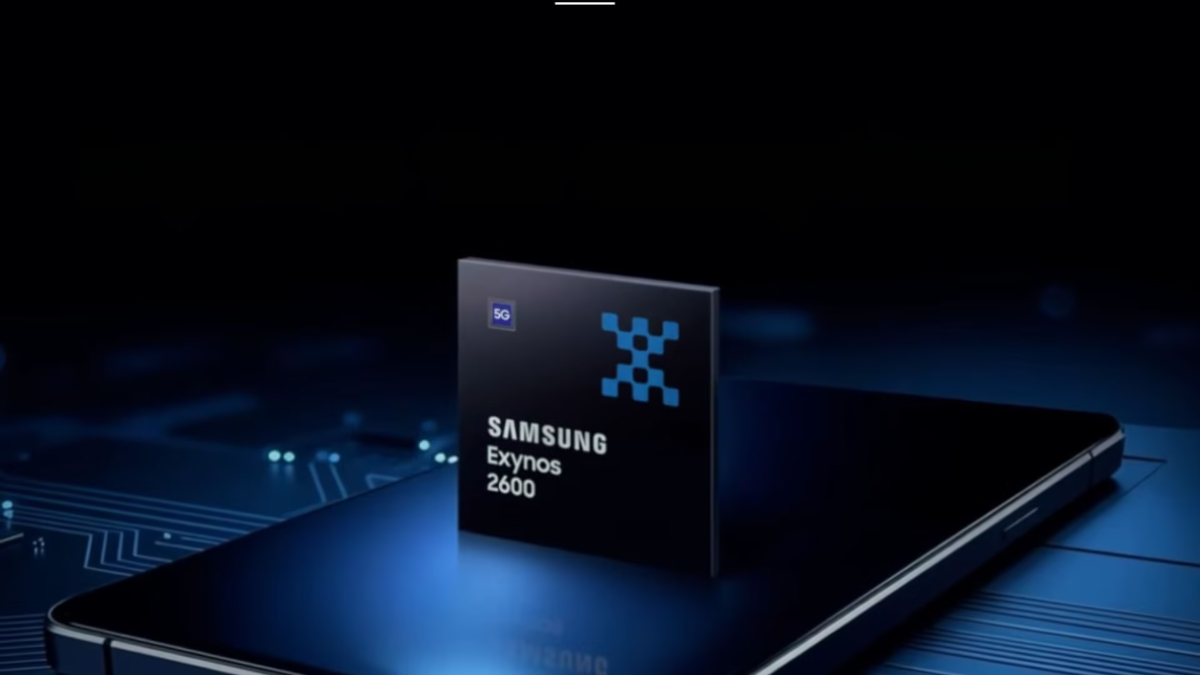
New Delhi, December 19, 2025: In a move that could redefine the smartphone performance landscape, Samsung has officially taken the wraps off its next-generation powerhouse: the Exynos 2600. Revealed on December 19, 2025, this chipset is confirmed to be the “brain” behind the upcoming Samsung Galaxy S26 series, and it brings a world-first technology that puts rivals on notice.
The 2nm Revolution
The headline-grabbing feature of the Galaxy S26 is the transition to a 2-nanometer (2nm) Gate-All-Around (GAA) manufacturing process. While current flagships operate on 3nm tech, Samsung’s jump to 2nm is a generational leap.
By shrinking the transistors even further, Samsung has managed to pack more power into a smaller space while drastically reducing heat—addressing a long-standing complaint from Exynos users. This new architecture allows the Galaxy S26 to deliver 39% better CPU performance and a staggering 113% boost in generative AI tasks compared to the previous generation.
Gaming and Graphics: The “Xclipse” Edge
For mobile gamers, the Galaxy S26 is shaping up to be a dream. The Exynos 2600 integrates a new AMD Juno-powered GPU (likely to be marketed as the Xclipse 960). Early data suggests:
- Ray Tracing: Enhanced hardware-accelerated ray tracing for console-quality lighting in games.
- Sustained Power: A redesigned thermal management system allows the phone to maintain high frame rates during long gaming sessions without throttling.
- Efficiency: The 2nm process ensures that high-intensity gaming won’t drain the battery as rapidly as before.
AI That Lives on Your Device
With the massive boost in NPU (Neural Processing Unit) performance, the Galaxy S26 will move most AI tasks on-device. This means “Galaxy AI” features—like real-time video translation, intelligent image expansion, and proactive digital assistants—will work faster and more securely without needing to send data to the cloud.
More Than Just a Chip
While the processor steals the spotlight, the S26 series (expected to launch in February 2026) is rumored to include several other “performance-first” upgrades:
- Qi2 Magnetic Charging: Bringing a “MagSafe-like” experience to Android for perfectly aligned, faster wireless charging.
- Ultra-Fast RAM: The inclusion of LPDDR5X memory with speeds up to 10.7Gbps, making multitasking across heavy apps instantaneous.
- Refined Design: The Ultra model is expected to feature more rounded corners and even slimmer bezels, maximizing the 6.9-inch display area.
The Bottom Line
Samsung’s strategy for the S26 is clear: unmatched efficiency. By being the first to market with a 2nm chip, they aren’t just chasing higher numbers; they are aiming for a phone that stays cool, lasts longer, and handles the next generation of AI with ease.
For those who felt the previous models were incremental updates, the Galaxy S26’s “performance game-changer” might finally provide the reason to upgrade.