

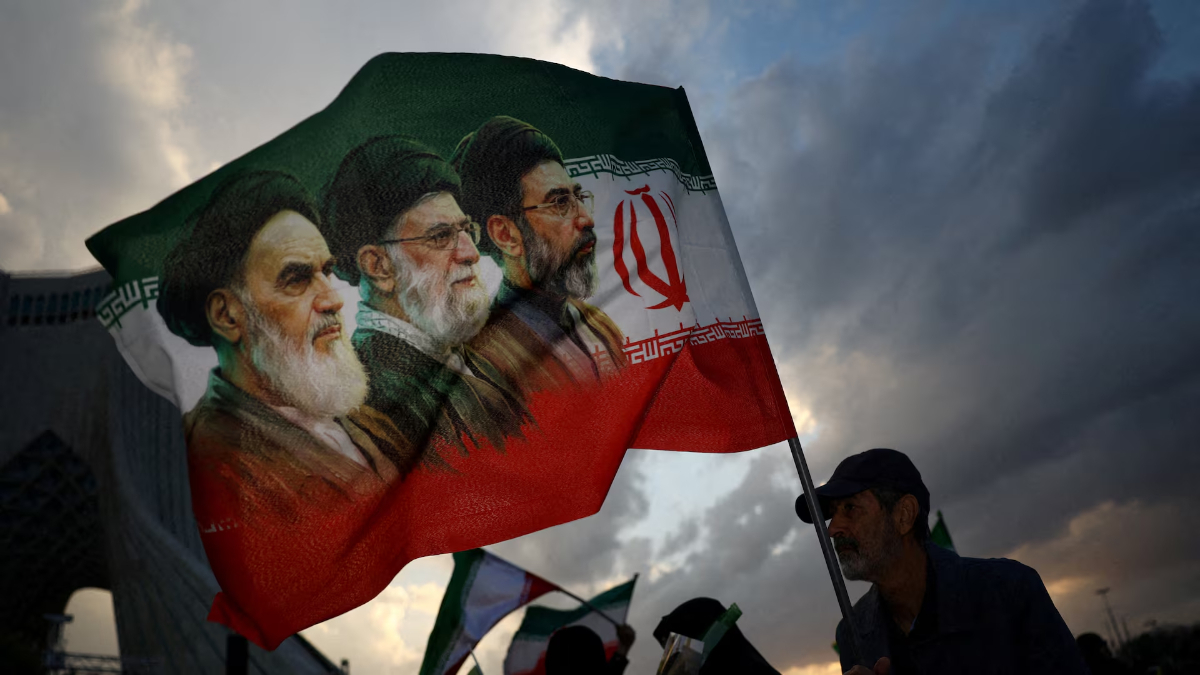
New Delhi, May 4, 2026: Tensions in the Persian Gulf have surged to a critical point this week, as the United States initiated “Project Freedom”—a major naval operation to escort stranded merchant vessels through the Strait of Hormuz. Iran has immediately responded with a stark warning, labeling any U.S. intervention in the strategic waterway a direct violation of the ongoing ceasefire.
The confrontation marks the latest escalation in a volatile conflict that has effectively choked off one of the world’s most vital energy corridors since February 2026.
The Launch of ‘Project Freedom’
On Sunday, U.S. President Donald Trump announced the launch of “Project Freedom,” a humanitarian-focused mission designed to assist hundreds of commercial vessels trapped in the Gulf. According to U.S. Central Command, the operation will deploy a formidable force to the region, including guided-missile destroyers, over 100 aircraft, multi-domain unmanned platforms, and approximately 15,000 service members.
President Trump framed the initiative as a “humanitarian gesture” for crews aboard an estimated 900 ships that have been unable to exit the region. Many of these vessels, stranded since the outbreak of hostilities in late February, are reportedly running low on food, water, and essential supplies.
“For the good of Iran, the Middle East, and the United States, we have told these countries that we will guide their ships safely out of these restricted waterways, so that they can freely and ably get on with their business,” President Trump stated in a social media announcement.
Tehran’s Harsh Response
Iran, which has effectively held a “stranglehold” over the Strait since the onset of the conflict, was swift in its condemnation. Ebrahim Azizi, head of the Iranian parliament’s national security commission, took to social media to declare that any American interference in the maritime regime of the Strait would be considered a breach of the ceasefire that has been in place since April 8.
Military officials in Tehran have used even more aggressive language. Mohsen Rezaei, a high-ranking military adviser to the Iranian leadership, warned that Iranian forces are prepared to confront any naval presence, stating, “Our ability to confront pirates is no less than our ability to sink warships.”
A Fragile Ceasefire under Pressure
The move comes at a sensitive time for diplomacy. Both nations are currently engaged in what the U.S. administration describes as “very positive discussions.” Reports indicate that Iran recently presented a 14-point proposal via Pakistani mediators aimed at ending the war, lifting economic blockades, and reopening the Strait.
While President Trump acknowledged these discussions, he has remained skeptical, publicly calling a recent Iranian proposal “not acceptable” and insisting that Tehran has not yet paid a “big enough price” for its actions.
The current situation is often described as a “dual blockade.” While Iran has restricted the Strait of Hormuz to commercial traffic, the U.S. Navy has simultaneously maintained a naval blockade on Iranian ports. This economic warfare has sent ripples through the global economy, causing energy prices to fluctuate and threatening global supply chains for oil, gas, and fertilizer.
The View from the Global Market
For the international community, the security of the Strait is non-negotiable. As a chokepoint through which approximately one-fifth of the world’s energy supply passes, its closure has created a state of deep anxiety for global markets.
Initial market reactions to the announcement were cautious but slightly optimistic. Following President Trump’s announcement of the escort operation, Brent crude oil prices dipped, reflecting a potential hope that the free flow of goods might soon resume. However, analysts warn that the risk of miscalculation remains extremely high.
“This is clearly a high-stakes pressure tactic,” noted Jamsheed Choksy, a professor at Indiana University Bloomington, in an interview with CNA. “The U.S. is forcing a scenario where Iran must choose between de-escalation through continued negotiations or an active military engagement with U.S. warships.”
What Happens Next?
As “Project Freedom” commences, the international community watches with bated breath. The presence of 15,000 U.S. personnel and advanced naval assets in such a narrow, congested waterway leaves almost no margin for error.
While the stated goal is the safe passage of civilian crews, the proximity of U.S. destroyers to Iranian coastal defenses creates a flashpoint that could reignite full-scale conflict in an instant. For the sailors and companies involved, the coming days will determine whether the “humanitarian” corridor remains open or becomes the latest theater of a widening war.
As negotiations continue behind the scenes, the world waits to see if this act of maritime escort will serve as a bridge to peace, or the trigger for a new wave of escalation in an already exhausted region.