

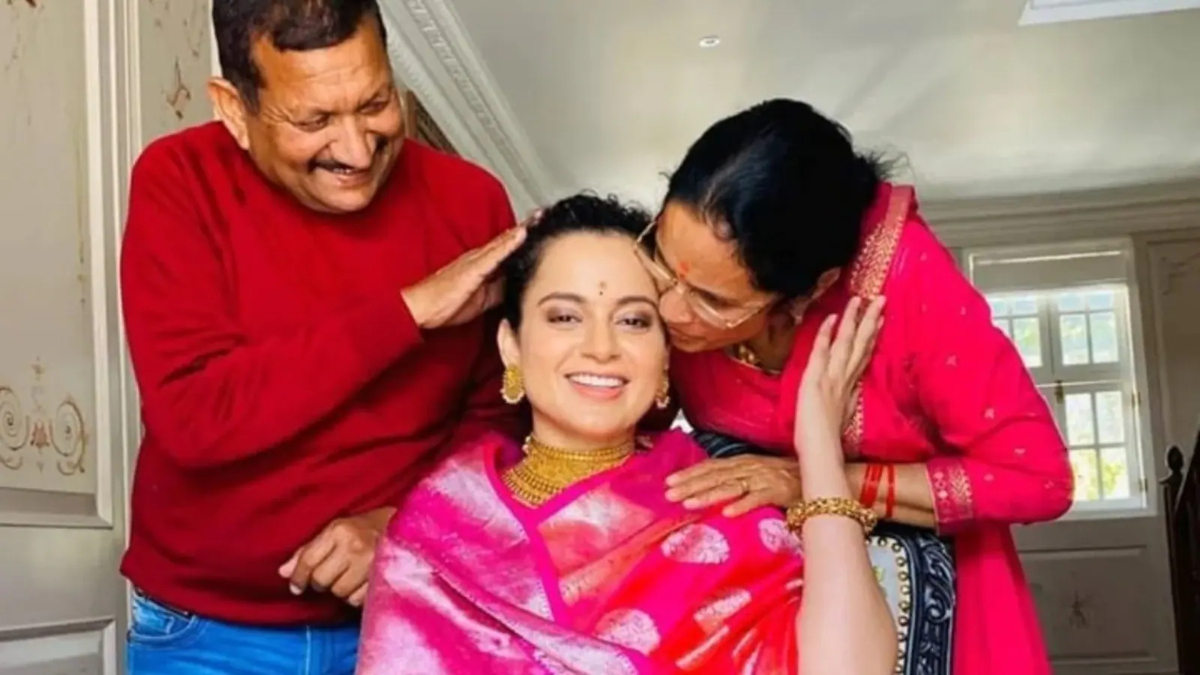
New Delhi, June 2, 2026: Two decades after storming into Bollywood with her explosive debut in Anurag Basu’s 2006 romantic-thriller Gangster, actor-politician Kangana Ranaut has opened up about the deep personal cost of her early success. In a candid promotional interaction for her upcoming film, Bharat Bhhagya Viddhaata, Ranaut walked down memory lane to recount how her family’s conservative upbringing clashed heavily with her cinematic breakthrough. Instead of celebration, her debut was met with a chilling silence from her father and heavy social anxiety from her mother—a reaction that the actress admits left her deeply heartbroken.
For an industry outsider who fought her way from a small village in Himachal Pradesh to the marquee lights of Mumbai, the initial lack of validation from her innermost circle left a lasting imprint on her fiercely independent career choices.
A Household Where Movies Were “Looked Down Upon”
To understand her parents’ reaction, one must look at the deeply traditional background Ranaut escaped. Born into an academic and politically inclined family, the arts—and cinema in particular—were viewed with immense skepticism. Her great-grandfather was an MLA, and her grandfather was associated with the Khadi Board. In their household, education and public service were the only true markers of respectability.
Ranaut revealed that during the 1990s and early 2000s, the Hindi film industry carried a highly negative reputation in rural India, frequently linked in headlines to the criminal underworld. Her parents were so fiercely opposed to the glitz of Bollywood that they would literally throw away newspapers containing film-related gossip or entertainment sections. For a young girl from Bhambla to venture into this “taboo” territory was a rebellion in itself; for her to debut in a dark, edgy film about a gangster’s lover was a cultural shock her family was entirely unprepared to handle.
The Debut That Sparked Parental Panic
When Gangster hit theaters, critics and audiences were spellbound by the raw, vulnerable performance of the teenage newcomer. Playing a deeply troubled, alcoholic woman caught between a criminal and a regular life, Ranaut’s acting was hailed as extraordinary. However, back home, the lens through which her work was viewed was entirely different.
Recalling the fateful day her parents watched the film, Ranaut shared the stark contrast in their reactions:
- Her Father’s Reaction: Total, icy silence. He offered no feedback, no praise, and no acknowledgment of the film.
- Her Mother’s Reaction: Pure social anxiety. When pressed for her thoughts, her mother voiced grave concerns regarding her age and the bold nature of certain scenes, stating:”Our society won’t accept this. You are underage and they have made you do all kinds of scenes.”
The response caught the young actress completely off guard. Instead of her performance being recognized, the conversation instantly shifted to “log kya kahenge?” (what will people say?). Ranaut admitted that she was utterly devastated that out of the entire two-hour cinematic narrative, her family only focused on a handful of intimate scenes. The realization that they valued societal gossip over her artistic dedication broke something within her. It was on that day that she made a conscious decision to stop seeking creative validation or reviews from her parents, realizing they lacked the artistic vocabulary to view films as an art form.
The Paradigm Shift: A Megastar’s Letter and the President’s Stamp
For years, the gap between Ranaut’s skyrocketing stardom and her parents’ disapproval remained wide. Even after she found footing in Mumbai, she recalled inviting her mother to live with her to combat her loneliness, only to be told, “You chose this life, now figure it out yourself.” The breakthrough in her relationship with her father came through two major external validations that her family could not ignore:
The first was a beautiful, handwritten letter from megastar Amitabh Bachchan, praising her legendary performance in Queen. Seeing an icon of Bachchan’s stature celebrate her talent helped Ranaut release her resentment toward her father. She realized that her father, not being an artist, simply couldn’t perceive cinema the way a veteran actor could.
The ultimate turning point, however, arrived when she won her first National Film Award for Best Supporting Actress for the 2008 film Fashion. For a traditional family from Himachal Pradesh, an honor bestowed directly by the President of India carried a weight that no box-office hit ever could. The official recognition legitimised her career choice in their eyes, transforming their anxiety into immense pride. This pride only deepened in the years that followed as she accumulated three more National Awards (for Queen, Tanu Weds Manu Returns, Manikarnika, and Panga) and the prestigious Padma Shri.
Shaping a Legacy on Her Own Terms
Reflecting on how her parents’ harsh criticism shaped her trajectory, Ranaut notes that coming from such a conservative background heavily influenced her professional choices. Driven by a deep desire to prove she was no less than anyone else and to protect her family lineage’s dignity, she made a strict rule never to perform in standard “item numbers” or accept superficial, two-minute roles that reduced women to mere eye candy.
Instead, she aggressively gravitated toward complex, woman-centric cinema that championed female empowerment and individuality. While she clarified that she doesn’t judge others for their career paths, her personal upbringing demanded that she seek respect over temporary glamour.
Today, as Ranaut gears up for the release of Bharat Bhhagya Viddhaata on June 12, she stands not just as an acclaimed artist, but as a Member of Parliament—fully bridging the gap between the political legacy of her ancestors and the cinematic universe she carved out entirely on her own terms. The girl whose parents once threw away entertainment newspapers has effectively forced her conservative world to rewrite the rules of what is acceptable.