

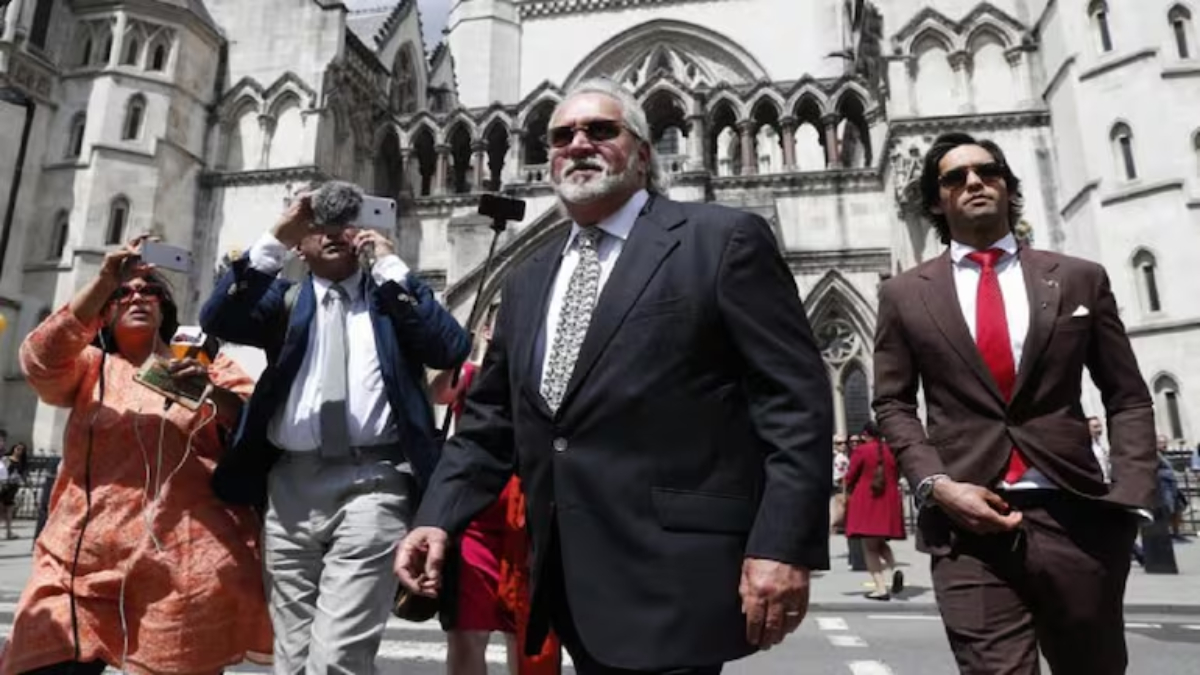
New Delhi, February 12, 2026: The division bench, comprising Chief Justice Shree Chandrashekhar and Justice Gautam Ankhad, was hearing Mallya’s petitions challenging both the order declaring him a Fugitive Economic Offender (FEO) and the constitutional validity of the Fugitive Economic Offenders Act, 2018.
The Ultimatum: No Presence, No Plea
The Court took sharp exception to the 70-year-old liquor baron’s attempt to seek “equitable relief” from Indian courts while simultaneously evading Indian authorities from his base in the United Kingdom.
“You have to come back… if you cannot come back, then we cannot hear this plea,” the bench remarked sternly.
The judges emphasized that an individual cannot “distrust the law of the country” by staying away yet expect to benefit from its legal proceedings. The bench warned that if Mallya continues to avoid the process of the court, they would be forced to record his conduct as a deliberate evasion of law, which would disqualify him from seeking any discretionary relief.
Key Highlights of the Hearing
- Affidavit Demanded: The Court has directed Mallya to file an affidavit by the next hearing, explicitly stating whether or not he intends to return to India.
- “One Last Chance”: Despite Mallya’s failure to file a compliance affidavit as previously directed in December 2025, the bench granted him one final opportunity “in all fairness” before passing further orders.
- Jurisdiction Matters: The Court observed that while Mallya’s counsel argued he has a right to be heard even in absentia, the bench remains of the view that a challenge to the vires (legal power) of the FEO Act cannot be entertained while the petitioner is actively avoiding jurisdiction.
The Prosecution’s Stand
Solicitor General Tushar Mehta, representing the Enforcement Directorate (ED), strongly opposed Mallya’s petitions. He argued that the former Kingfisher Airlines boss only challenged the FEO Act after being declared a fugitive and when his extradition proceedings in London reached an “advanced stage.”
Mehta highlighted that Mallya’s attempt to turn the criminal matter into a “recovery proceeding” by disputing bank claims was a tactic to stall the inevitable. “He is free to return to India and raise all his arguments here,” Mehta submitted.
The Road Ahead
Vijay Mallya has been in the UK since March 2016 and is wanted in India on charges of fraud and money laundering amounting to thousands of crores. While a UK court cleared his extradition years ago, he has remained in London due to “confidential legal matters.”
The Bombay High Court has scheduled the next hearing for February 18, 2026. This upcoming date serves as a deadline for Mallya to clarify his intentions. Should he fail to provide a definitive plan for his return, the court may move to dismiss his petitions entirely, effectively upholding his “Fugitive Economic Offender” status and allowing the government to proceed with the confiscation of his assets without further legal hurdles in the High Court.
What This Means for the Case:
- Asset Seizure: The “fugitive” tag is critical because it empowers the state to confiscate properties regardless of whether they are “proceeds of crime.”
- Extradition Pressure: The High Court’s refusal to provide a “legal shield” adds significant pressure on Mallya as his options in India dwindle.
- Legal Precedent: This hard line reinforces the principle that those who flee the law cannot use the same law to protect their interests from abroad.