

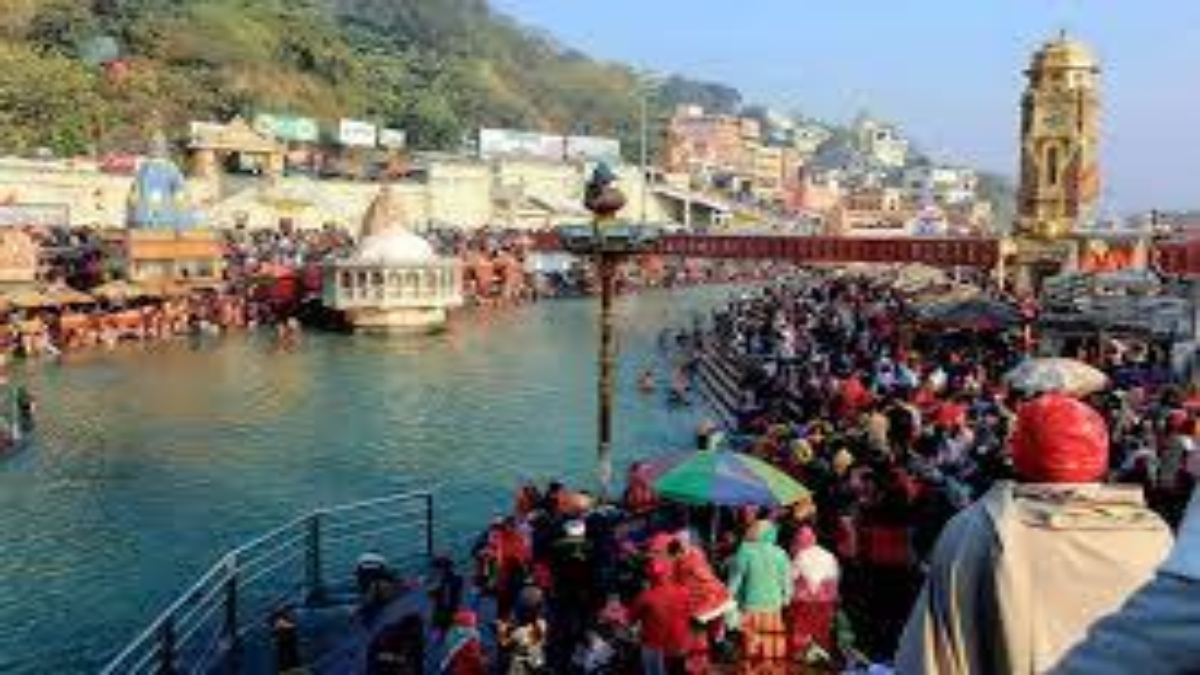
May 16, 2026 — The sacred banks of the River Ganga in Haridwar transformed into a sea of faith today as thousands of devotees gathered at the iconic Har Ki Pauri to mark the auspicious occasion of Shani Amavasya. Falling on a Saturday this year, the day coincides with Shani Jayanti, the birth anniversary of Lord Shani, making it a rare and highly significant celestial alignment for millions of Hindus across the country.
Since the early hours of the morning, despite the humid pre-monsoon air, pilgrims from Uttarakhand, Uttar Pradesh, Haryana, and Delhi-NCR began congregating at the ghats. By sunrise, the resonant chants of “Ganga Maiya Ki Jai” and “Jai Shani Dev” echoed through the holy city, signaling the start of the massive bathing ritual.
A Rare Alignment of Faith
In the Hindu calendar, when a New Moon day (Amavasya) falls on a Saturday (Shanivar), it is celebrated as Shani Amavasya. This year, the event holds double the spiritual weight because it marks Shani Jayanti. According to Vedic astrology, Lord Shani is the deity of justice and karma, and the planet Saturn is believed to influence one’s destiny based on their deeds.
“Taking a dip in the Ganga today is not just about physical purification; it is about seeking mercy for past karmas,” said Acharya Rajesh Sharma, a local priest at Har Ki Pauri. “The confluence of Saturday and Amavasya provides a powerful window to appease Lord Shani and mitigate the effects of Sade Sati or Shani Dosha.”
Rituals and Traditions at the Ghats
The rituals began well before dawn, at approximately 5:11 AM, marking the start of the Amavasya Tithi. Devotees performed the traditional ‘Snan’ (holy bath) by immersing themselves three times in the cold, flowing waters of the Ganga.
Following the dip, the ghats were lined with people performing Tarpan—a ritual involving water and black sesame seeds to honor their ancestors. The significance of Shani Amavasya is deeply tied to ancestral peace, and many families were seen offering prayers for the departed souls.
Later, devotees flocked to the Shani shrines located within the city. Long queues were observed at the Shani Temple near Kushavarta Ghat and the ancient shrines in Kankhal. The traditional offerings included:
- Mustard Oil: Poured over the idol of Shani Dev.
- Black Sesame and Urad Dal: Symbolic of the planet Saturn.
- Charity: Donating black umbrellas, footwear, and food to the needy, which is considered a primary way to earn the grace of the “God of Justice.”
Tight Security and Efficient Management
The Haridwar district administration and local police remained on high alert to manage the massive influx of pilgrims. With the Char Dham Yatra already in full swing, the city faced a dual challenge of managing local devotees and transit pilgrims.
Manoj Kumar, a senior police official stationed at Har Ki Pauri, stated:
“We have divided the mela area into various zones. Drone surveillance is being used to monitor crowd density at the ghats to prevent any stampede-like situations. Divers from the SDRF (State Disaster Response Force) are stationed in boats to ensure the safety of those venturing deep into the river.”
Traffic diversions were also implemented on the Delhi-Haridwar National Highway to ensure a smooth flow of vehicles, as thousands of private buses and cars entered the city since Friday night.
The Voice of the Devotees
The atmosphere remained one of vibrant spirituality. For many, the journey to Haridwar is an annual pilgrimage.
“I traveled from Meerut overnight to be here,” said Suman Lata, a devotee waiting in line for the Shani temple. “We believe that on this specific day, the Ganga carries special energy. By bathing here and offering oil to Shani Dev, I pray for the well-being and health of my children.”
Another pilgrim, Rameshwar Singh from Punjab, shared a similar sentiment: “There is a sense of peace you find here that you won’t find anywhere else. Despite the crowd, when you touch the water, everything else fades away.”
Looking Ahead
The Amavasya Tithi is set to continue until 1:30 AM on May 17. Authorities expect the crowd to remain steady throughout the evening, especially during the famous Ganga Aarti, where the number of attendees is expected to double.
As the sun sets over the Shivalik hills, the flicking lamps (diyas) floating on the Ganga will serve as a visual testament to the enduring faith of a nation that finds solace in its ancient rivers and celestial traditions.
For those unable to make it to Haridwar today, astrologers suggest performing simple rituals at home, such as lighting a mustard oil lamp under a Peepal tree and chanting the Shani Mantra: Om \ Sham \ Shanaishcharaye \ Namah.