

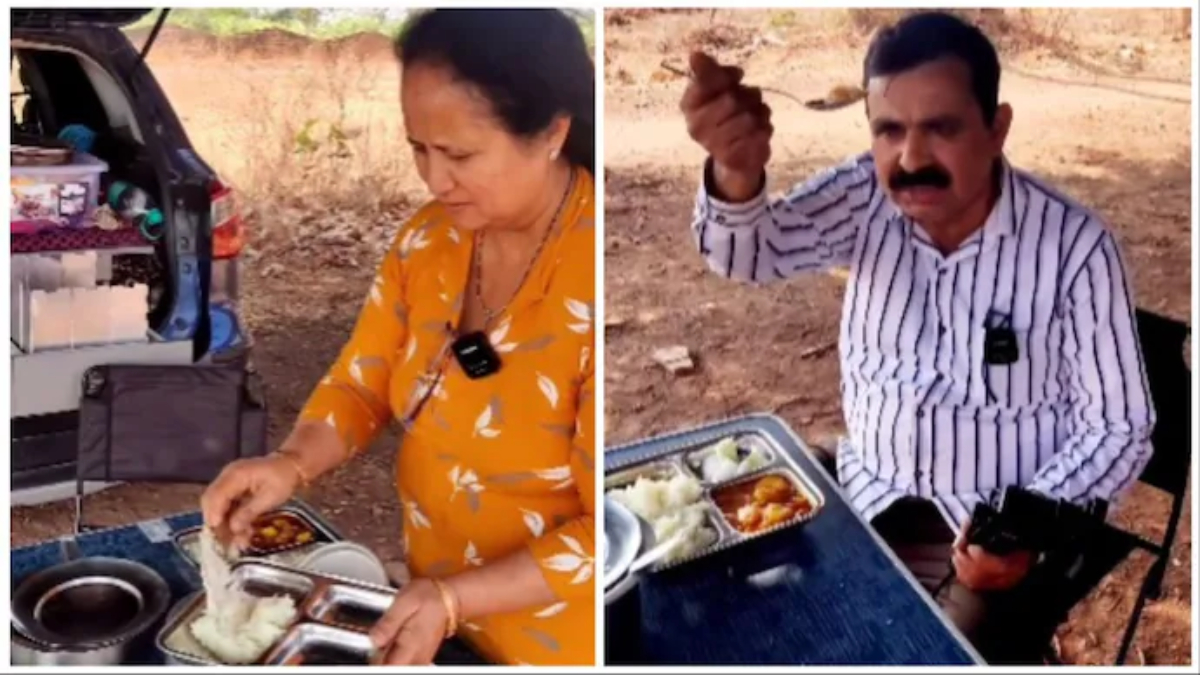
New Delhi, December 09, 2025: A video showing an Indian couple cooking a full meal by the roadside on a National Highway has recently gone viral, igniting a fiery debate across social media about public civic sense, road safety, and the use of ‘rest areas.’
The video, which circulated widely, shows a man relaxing next to a child while a woman is busy preparing food over a portable stove. The footage attracted sharp criticism from many online viewers, who questioned the safety and appropriateness of setting up a kitchen in a public space adjacent to a busy road.
The Couple’s Justification
In response to the growing criticism, the couple in the video defended their actions. The man is heard acknowledging the messages and comments about cooking on a road, which he admits could be a distraction for drivers. However, the woman quickly clarifies their position, stating, “Wo to hume bhi pata hai ki hume road par khana nahi banana chahiye, aap dekh sakte hain ye pura rest area hai aur pura main road udhar hai.” (We know we shouldn’t cook on the road, but you can see this is an entire rest area and the main road is over there.)
They insisted they were within a designated ‘rest area’ and were not blocking the flow of traffic or creating an immediate danger. They also mentioned that this was not the first time they had done this, suggesting it was a planned part of their road trip routine, ensuring they remained within the safe zone of the rest stop.
The Wider Debate: Safety vs. Convenience
The incident has opened up a significant discussion on how public spaces, particularly rest areas on national highways, are utilized in India.
- Concerns about Safety: Critics argue that even if it is a designated rest area, setting up open fires and cooking equipment on a paved surface, especially near where vehicles might stop and maneuver, still poses a risk. The presence of a family, including a young child, so close to the highway also raises safety alarms.
- The Civic Sense Argument: Many social media users strongly voiced a lack of ‘civic sense,’ arguing that public property is not meant to be used as a personal home or kitchen, leading to potential mess and setting a bad example for others.
- A Familiar Sight on Indian Roads: On the other hand, the practice of families cooking their own meals during long road trips is not entirely new, especially for those who prefer fresh, home-cooked food or wish to save money. The increasing popularity of road trips and the rise of car-camping culture in India have made scenes of roadside meal preparation more common. However, the line between a quick, safe stop and a full-fledged kitchen setup remains blurry and controversial.
Regulatory Context
The incident highlights a wider regulatory challenge for the National Highways Authority of India (NHAI). While there are official service areas, some stretches of highways feature informal or poorly defined rest spots. The Supreme Court has previously taken notice of the rising number of accidents caused by unauthorized eateries and vehicles parked haphazardly along highways, indicating a need for clearer rules and stricter enforcement regarding roadside activities.
For now, the couple’s video remains a viral flashpoint, continuing the online debate over whether their actions were a simple, safe convenience for travelers or a clear violation of public safety and civic norms.