

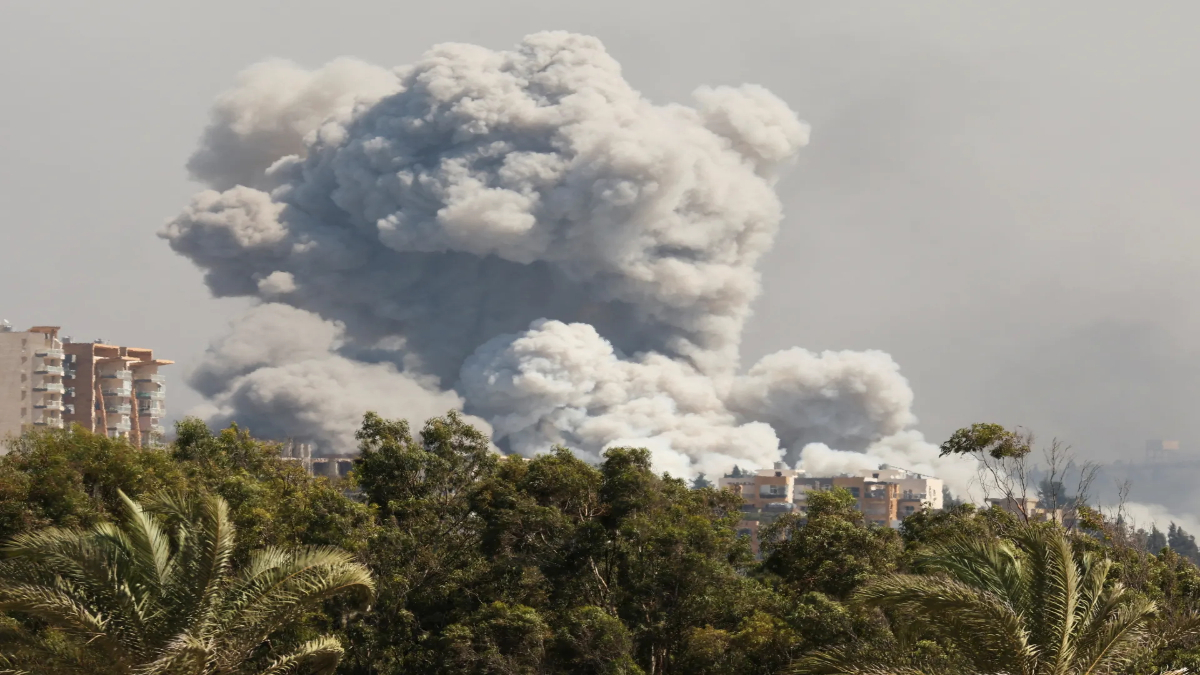
New Delhi, April 11, 2026 – The village of Zefta, located in the Nabatieh District of southern Lebanon, became the latest flashpoint in the ongoing conflict between Israel and Hezbollah following a series of intense Israeli airstrikes. Local reports and social media footage captured the immediate aftermath, showing residential structures engulfed in flames and thick plumes of smoke rising over the skyline.
The strikes on Zefta are part of a broader, renewed aerial campaign by the Israel Defense Forces (IDF) that has targeted multiple locations across the south. According to local witnesses, the bombardment occurred with little to no warning, leading to widespread panic among residents who remain in the border regions.
Video Footage Reveals Widespread Destruction
Videos circulating on digital platforms, verified by local news agencies, depict the moment of impact and the subsequent fires. In one widely shared clip, a multi-story building is seen partially collapsing as secondary explosions—often cited by military analysts as an indication of hit munitions—send sparks into the air.
Emergency responders from the Lebanese Red Cross and the Civil Defense were seen battling the blazes well into the evening. While the exact casualty count from the Zefta strike is still being determined, local medical sources indicate that several civilians were treated for smoke inhalation and shrapnel wounds at nearby hospitals in Nabatieh and Sidon.
Escalation Amid Diplomatic Deadlock
The attack on Zefta comes during a period of extreme volatility in the Middle East. Despite international efforts to broker a lasting ceasefire, the southern front of Lebanon remains a theater of active combat.
- IDF Statement: The Israeli military has maintained that its operations are “precision strikes” aimed at Hezbollah infrastructure, including weapons storage facilities and command centers.
- Lebanese Response: The Lebanese government has condemned the strikes, labeling them a violation of national sovereignty and a direct threat to civilian lives.
Earlier this week, a massive wave of strikes—referred to by some as “Black Wednesday”—saw over 150 missiles hit targets across Lebanon in just two hours. The focus has now shifted toward the Nabatieh governate, with Zefta and surrounding towns like Kfar Roummen and Haboush bearing the brunt of the recent sorties.
Humanitarian Impact and Displacement
The humanitarian situation in southern Lebanon continues to deteriorate. The United Nations has expressed grave concern over the safety of civilians as the “buffer zone” of conflict expands further north from the Blue Line.
Many families who had returned to their homes during brief lulls in fighting are once again fleeing toward Beirut or the Bekaa Valley. Local infrastructure, including power lines and water networks in Zefta, has reportedly sustained significant damage, leaving the remaining population without essential services.
What’s Next?
As the international community watches closely, all eyes are on the upcoming high-level talks in Washington and Islamabad, where delegates are expected to discuss the possibility of a formalized truce. However, with the smoke still rising from Zefta and retaliatory rocket fire continuing from the Lebanese side, the path to a ceasefire remains fraught with uncertainty.