

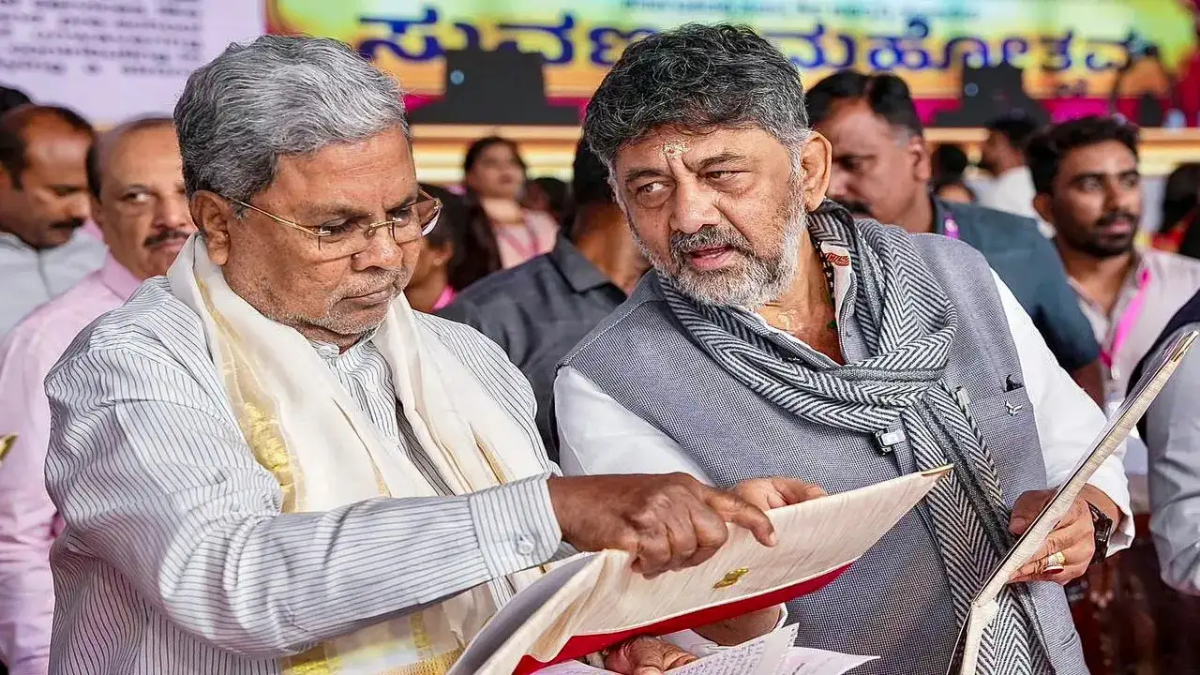
New Delhi, November 29, 2025: The Congress government in Karnataka, led by Chief Minister Siddaramaiah, has hit the halfway mark of its five-year term, triggering a fresh and intense power tussle with Deputy Chief Minister D.K. Shivakumar. The core of the conflict revolves around an alleged “rotational Chief Minister” agreement made when the party came to power in May 2023. The escalating situation has forced the Congress high command to intervene, leading to dramatic developments.
Here are the five key points on the ongoing political drama:
1. The Alleged ‘Rotational CM’ Deal
The central point of friction is the unconfirmed but widely reported agreement that the Chief Minister post would be shared between Siddaramaiah and Shivakumar for two-and-a-half years each. Since the government completed the first half of its term in November 2025, Shivakumar’s supporters have intensified their demand for him to take the top office, claiming the time has come to honour the pact.
- Shivakumar’s Claim: Deputy CM D.K. Shivakumar has hinted at a “secret deal between five-six of us” within the party regarding power sharing. While he hasn’t publicly demanded the CM post, his subtle remarks and the actions of his loyalist MLAs have put pressure on the central leadership.
- Siddaramaiah’s Stance: CM Siddaramaiah, on the other hand, has dismissed the buzz as “speculation and media creation.” While initially stating he would complete the full term, his recent comments suggest he will abide by the party high command’s decision.
2. High Command’s Intervention and the Breakfast Invite
The open friction and lobbying by both camps led to the intervention of the Congress high command. Party President Mallikarjun Kharge stated that he, along with Sonia Gandhi and Rahul Gandhi, would discuss the issue and “resolve it.”
- Mandated Meeting: Acting on the high command’s instructions, CM Siddaramaiah invited D.K. Shivakumar for a breakfast meeting at his residence. This meeting is seen as a crucial step to “break the deadlock” and is the first formal, high-profile dialogue between the two leaders on the matter, following the central leadership’s directive to sort out their differences.
3. Cabinet Reshuffle vs. Leadership Clarity
The immediate point of conflict at the administrative level is the demand for a Cabinet reshuffle.
- Siddaramaiah’s Push: The CM is reportedly keen on carrying out a cabinet reshuffle to consolidate his position.
- Shivakumar’s Demand: The Deputy CM and his supporters want clarity on the leadership change before any reshuffle. They view the approval of a reshuffle as a signal that Siddaramaiah is set to complete the full five-year term, which would undercut Shivakumar’s claim.
4. Lobbying in Delhi
The political battle has shifted its focus from Bengaluru to New Delhi.
- Shivakumar’s Camp: A number of MLAs reportedly aligned with Shivakumar travelled to the national capital to meet Congress President Mallikarjun Kharge and push for the Deputy CM’s elevation.
- Siddaramaiah’s Camp: Ministers and MLAs considered close to Siddaramaiah have also met with Kharge, making a case for the CM to continue in his role.
5. Broader Political Implications
The public power struggle is seen by many, including former Congress veterans, as causing “national embarrassment” and threatening the stability of the government.
- Past Precedents: The situation is reminiscent of similar leadership tussles the Congress has faced in states like Rajasthan and Madhya Pradesh, where the party’s inability to resolve internal conflicts led to political instability or loss of power.
- Opposition’s Attack: The opposition BJP and JD(S) have seized on the confusion, accusing the ruling party of neglecting governance in favour of the Chief Minister’s chair. Both Siddaramaiah and Shivakumar, however, have publicly maintained that the party remains united and their focus is on winning the upcoming elections.