

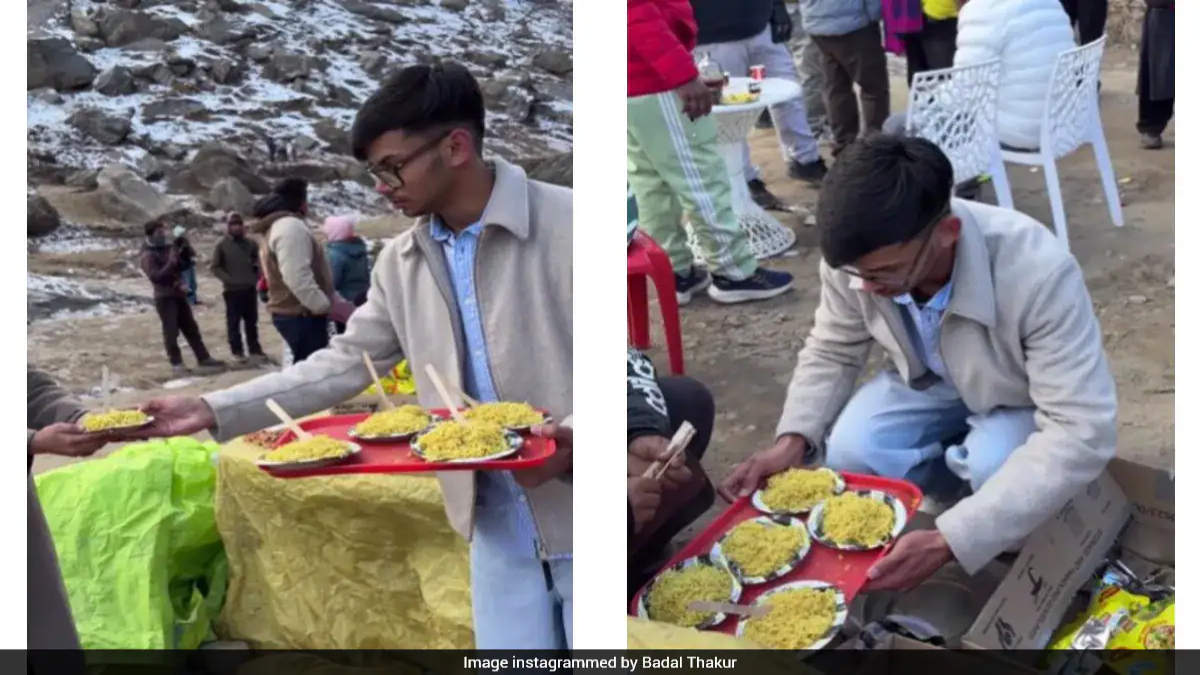
Jan 27, 2026 — In the mist-covered hills where Maggi is more of a cultural staple than a mere snack, one content creator decided to swap his camera for a spatula. What started as a “one-day challenge” for Badal Thakur has now turned into a viral sensation, sparking a heated debate about the hidden goldmine of hill-station street food.
The premise was simple: set up a makeshift stall in the mountains for a few hours and see how much a “Maggi Point” actually rakes in. The results, however, were anything but ordinary.
The Experiment: 5 Hours, 200 Plates
Setting up at an undisclosed high-footfall location with just an LPG cylinder, a foldable table, and stacks of yellow noodle packets, Thakur began his shift. His pricing was standard for the terrain:
- Classic Maggi: ₹70 per plate
- Cheese Maggi: ₹100 per plate
Within just four to five hours, the creator reported selling over 200 plates to hungry tourists and hikers looking for a warm fix in the chilly weather. By the time he packed up, that number had climbed to nearly 350 plates.
The Math That Broke the Internet
The viral video, which has already garnered over 3.5 million views, showca5ses the staggering revenue potential of such a small-scale operation. At an average price of ₹70 per plate, selling 300 plates translates to a daily revenue of ₹21,000.
Social media users were quick to pull out their calculators, and the projections were eye-watering:
“If a vendor earns ₹21,000 a day and works 30 days a month, we are looking at a monthly revenue of over ₹6.3 lakhs,” one user commented.
While this figure is gross revenue—not accounting for the cost of raw materials (Maggi packets cost roughly ₹15), LPG, disposable cutlery, and travel—the profit margins remain significantly higher than many entry-level corporate jobs in India’s metros.
“Should I Quit My Job?”
The comments section of Thakur’s post has become a hub for corporate employees jokingly (and some seriously) contemplating a career shift.
- “Job chod dun fir?” (Should I quit my job then?) asked one Instagram user, whose comment received thousands of likes.
- “Main toh chala Maggi bechne,” (I’m off to sell Maggi) another chimed in, highlighting the contrast between the high earning potential of street vending and the “9-to-5 grind.”
Why Maggi Rules the Hills
Experts note that Maggi has a unique “monopoly” in high-altitude tourism. It requires minimal water, cooks fast at low boiling points, and offers high-calorie comfort that is difficult to replicate with other snacks. According to recent market data, India remains the largest market for Maggi globally, and the “mountain Maggi” experience has become a bucket-list item for domestic travelers.
However, seasoned hill vendors warn that it isn’t all easy money. The logistical nightmare of transporting supplies to remote spots, the seasonal nature of tourism, and the physical toll of working in freezing temperatures are the hidden costs behind those “surprising” earnings.